

Maddy summaryHouse Bill 1397 amends Pennsylvania law to allow individuals to use media devices to record, transmit, or broadcast images, video, or audio of judicial proceedings without needing court approval. This change directly affects attendees of court proceedings and the judiciary by altering rules for public access and recording. However, the bill specifies several exceptions where this permission does not apply, including proceedings related to sexual abuse, domestic violence, protection from abuse, sexual violence or intimidation, and testimony from child witnesses or confidential informants.
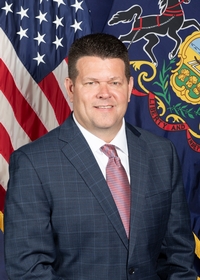
Rep. Jamie Walsh
Sponsored bills
Maddy summaryHB 1394 proposes to repeal the inheritance tax in Pennsylvania, directly affecting estates and beneficiaries who would no longer be subject to this tax on inherited assets. The bill also modifies procedures for taxpayers to petition for a reassessment of taxes. Additionally, it updates existing provisions related to how government-issued obligations are treated for tax purposes.
Maddy summaryHB 1370 amends Pennsylvania's Clean Streams Law to exempt construction sites building single-family residential homes from requiring a National Pollutant Discharge Elimination System (NPDES) permit. This change directly affects residential construction companies and developers building standalone single-family homes. The bill adds a new provision (Section 402(c)(3)) specifying that such sites are exempt from otherwise applicable NPDES permit requirements under the Clean Streams Law. The exemption takes effect 60 days after the bill's enactment.
Maddy summaryHB 1355 would increase tax discounts for businesses that file and pay Pennsylvania sales tax on time. Currently, businesses receive $25 for monthly filings, $75 for quarterly filings, and $150 for semiannual filings. The bill would double these amounts to $50, $150, and $300 per return, respectively. This change directly affects businesses required to collect and remit sales tax under Pennsylvania’s Tax Reform Code.
Maddy summaryHB 1354 requires Pennsylvania public school districts to allow private school students who reside in the district to participate in after-school sports, clubs, and other extracurricular activities if their private school does not offer the same activity and they meet all participation requirements. The law directly affects private school students seeking access to public school programs and public school districts managing extracurricular offerings. It mandates inclusion only when the private school does not provide equivalent opportunities, without changing funding or administrative requirements. The bill takes effect 60 days after enactment.
Maddy summaryHB 1316 amends Pennsylvania's sales tax filing rules to adjust deadlines based on a business's previous year's tax liability. It requires businesses with annual tax bills between $25,000 and $100,000 to file monthly returns starting in 2025, including a 50% prepayment of their expected tax for the month. Businesses with bills over $100,000 follow similar monthly filing rules with the same prepayment requirement. This change replaces quarterly filings for these businesses and adds a 5% penalty for late payments on the prepayment amount. The bill affects businesses meeting specific tax liability thresholds under Pennsylvania's Tax Reform Code.
Maddy summaryHB 1134 requires food products containing specific synthetic colors (Blue 1, Blue 2, Green 3, Red 40, Yellow 5, or Yellow 6) to display a warning label on the front of the package. The warning must state: "WARNING: This product contains synthetic colors, which may have an adverse effect on activity and attention in children," in bold type at least as large as the "serving size" declaration. This law directly affects food manufacturers and retailers selling products with these dyes in Pennsylvania. The requirement applies to all such products sold within the state and takes effect one year after enactment.
Maddy summaryHB 1131 amends Pennsylvania's Public School Code to prohibit public schools from selling or offering competitive foods containing specific artificial dyes during the school day. The bill bans six dyes (Blue 1, Blue 2, Green 3, Red 40, Yellow 5, and Yellow 6) in foods sold on school grounds that compete with federally reimbursable meals like school lunches. It defines "competitive food" as any food sold during school hours that competes with National School Lunch Program meals. The prohibition applies to all public schools in Pennsylvania and takes effect July 1, 2027. This is a direct policy change restricting certain food additives in school food sales, not a health recommendation.
Maddy summaryHB 1132 prohibits Pennsylvania public schools from selling or offering "unhealthy ultra-processed foods" as competitive foods during the school day. It defines "ultra-processed food" as items containing specific additives like artificial colors, stabilizers, non-nutritive sweeteners, or flavor enhancers (excluding natural seasonings), and "unhealthy" as failing FDA standards for the term "healthy" on labels. Competitive foods - such as vending machine snacks or cafeteria items sold alongside school meals - are banned if they contain these unhealthy items. The law takes effect July 1, 2027, directly affecting public school food vendors, students, and school nutrition programs across Pennsylvania.
Maddy summaryHB 1133 amends Pennsylvania's food protection laws to require a specific cancer warning on food products containing Butylated Hydroxyanisole (BHA). The bill mandates that any food bearing BHA (identified by CAS number 25013-16-5) must display the warning "WARNING: This product contains BHA, which may cause cancer" in bold type on the principal display panel, using a font size no smaller than the required "serving size" declaration. This directly affects food manufacturers and retailers selling products with BHA, requiring them to update labeling to comply with the new rule. The policy change focuses on enhancing consumer transparency about a specific ingredient's potential health risk through mandatory labeling.