

Maddy summaryHB 1130 requires food manufacturers to report "Generally Recognized as Safe" (GRAS) substances used in food to Pennsylvania's Department of Agriculture, including safety data. This affects companies adding GRAS substances to food products, with exemptions for small businesses and certain FDA-approved substances. The bill mandates a searchable public database on the state website where all submitted reports will be accessible to consumers. It creates new transparency requirements for substances deemed safe without full FDA food additive approval, aligning with federal GRAS reporting standards.
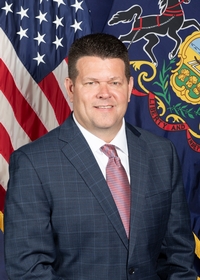
Rep. Jamie Walsh
Sponsored bills
Maddy summaryHB 1265 revises Pennsylvania's teacher certification rules under the Public School Code, effective after December 31, 2027. It establishes four new certificate types with defined grade spans: Early Childhood (pre-K to grade 3), Elementary/Middle (K-8 with subject limits in upper grades), Middle/Secondary (grades 6-12), and Specialized Areas (pre-K to grade 12). Existing certificates remain valid, and current teacher preparation program students enrolled before December 31, 2025, may complete under prior rules. The bill directly affects public school teachers, certification programs, and the Pennsylvania Department of Education.
Maddy summaryHB 1193 proposes a constitutional amendment to update voter qualifications in Pennsylvania. It would lower the voting age from 21 to 18, reduce residency requirements to 30 days for state and local election districts (from 90 and 60 days), and require government-issued ID for in-person voting and mail-in ballots (with signature matching). Voters must also register at least 30 days before an election, with registration requiring pre-confirmation of eligibility. The amendment must be approved by the General Assembly and then by voters in a statewide election.
Maddy summaryThis is a House Resolution (not a bill), urging Pennsylvania State University (Penn State) leadership to be transparent about any potential closure of its 12 Commonwealth campuses. It asks the university president to publicly share criteria for closures, demonstrate alignment with Penn State’s land-grant mission, and detail plans to maintain educational access for affected students and communities. The resolution emphasizes that campus closures would disproportionately impact rural and underserved areas, reduce local economic activity, and undermine public trust. It does not create new laws or funding but formally requests Penn State to engage communities and provide clear, open communication before making closure decisions.
Maddy summaryHB 1116 (Study of PFAS Chemicals in Biosolids Act) requires Pennsylvania's Department of Environmental Protection to study PFAS chemicals (a group of persistent industrial chemicals) in biosolids used on farmland. The study must test PFAS levels in biosolids and soil/water near treated fields compared to untreated areas, analyze contamination pathways to food (including crops, livestock, and milk), and evaluate testing/treatment methods. The Department must coordinate with the Department of Agriculture and other agencies and submit a report to relevant legislative committees within 180 days. This bill directly affects Pennsylvania farmers applying biosolids to fields, food safety systems, and state environmental monitoring practices.
Maddy summaryThis Pennsylvania House resolution (HR 160) urges Congress to amend the PACT Act to include veterans exposed to toxic substances at Camp Carroll military base in South Korea. It specifically seeks to extend the PACT Act's health benefits - which currently cover veterans exposed to toxins at other sites - to veterans who served at Camp Carroll during the Vietnam War era and developed related illnesses like cancer or diabetes. The resolution cites a 2011 report confirming chemical burial at Camp Carroll and notes these veterans remain excluded from PACT Act benefits despite documented health impacts. It does not create new law but formally requests congressional action to correct this exclusion.
Maddy summaryThis Pennsylvania House Resolution (HR 2) designates March 25, 2025, as "National Medal of Honor Day" within the state. It symbolically recognizes the Medal of Honor - the military's highest award for valor - as first presented on March 25, 1863, and highlights Pennsylvania's 379 Medal of Honor recipients (second-highest in the U.S.). The resolution has no binding effect or new policy requirements; it solely serves to honor recipients and their service through a ceremonial designation. It does not directly affect any individuals or alter existing laws.
Maddy summaryThis Pennsylvania House resolution (HR 146) urges Congress to cooperate with efforts to eliminate the U.S. Department of Education. It argues that education policy should be managed by states like Pennsylvania, citing federal funding mandates and claims that the Department has not improved student outcomes (referencing NAEP data). The resolution does not change any laws or funding but formally requests federal action to transfer education authority to states. It reaffirms Pennsylvania's constitutional duty to manage its public education system for 1.7 million students across 500 school districts.
Maddy summaryThis bill proposes a constitutional amendment to Pennsylvania that would ban all taxes on real property, including land and buildings owned by individuals or businesses. The change would take effect on July 1, 2030, and would apply to taxes imposed by the state government, local municipalities, school districts, or any other political subdivision within the Commonwealth. To become law, the amendment must pass both houses of the General Assembly and then be approved by voters in a statewide election. The bill argues that taxing property violates the inherent right to own and protect property, a principle recognized since Pennsylvania's founding in 1776.
Maddy summaryHB 1033 prohibits healthcare providers from performing gender transition procedures on minors under 18, including surgeries, cross-sex hormones, and puberty blockers. It also requires government health programs (like Medicaid) and health insurance policies to stop covering these procedures for minors. The bill defines "gender transition procedures" to include genital/nongenital surgeries, cross-sex hormones, and puberty blockers. Individuals aged 18 or older are not affected by the ban and may continue receiving such care.