

Maddy summaryThis bill authorizes Pennsylvania to join the Counseling Compact, a national agreement designed to allow licensed professional counselors to practice across state lines without needing separate licenses in each state. Under the compact, a counselor's ability to work in another member state would depend on their primary home state license, while still maintaining the authority of each state to regulate practice and protect public safety. The legislation includes specific provisions to share information about disciplinary actions and investigations among states, supports military families by easing licensure barriers for spouses, and promotes the use of telehealth services. By adopting this compact, Pennsylvania aims to increase access to counseling services and streamline the regulatory process for counselors working in multiple jurisdictions.
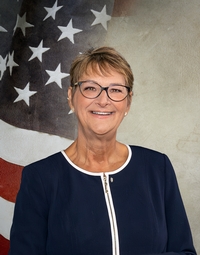
Rep. Maureen Madden
Sponsored bills
Maddy summaryThis bill updates the rules for selling and using high-PAH sealants, which are used in roofing and waterproofing projects, by setting a sales ban effective January 1, 2025, and an application ban starting January 1, 2026. It allows local governments to create their own laws to enforce these restrictions, provided they are at least as strict as a model ordinance that the state Department of Environmental Protection will draft. The bill also changes how fines are handled, permitting municipalities to collect and keep penalties for violations of their local rules rather than sending them to the state department. Additionally, it establishes a Safer Sealant Fund to manage money collected from these penalties.
Maddy summaryHB 1172 amends Pennsylvania's General Provisions to update a specific legal definition by removing the phrase "thermal or other dissolution" and replacing it with just "or thermal." This change directly affects how certain terms are interpreted within the state's consolidated statutes. The bill does not introduce new policies or alter existing laws beyond this textual correction to the rules of construction.
Maddy summaryThis bill is a minor technical correction that changes the word "within" to "of" in a specific section of the Administrative Code of 1929. The amendment does not introduce new policies or alter the powers of the Department of General Services regarding water bottle filling stations. Instead, it simply fixes a grammatical error in the existing text of the law. No new programs or funding are created by this change.
Maddy summaryHB 1463 amends Pennsylvania's health and safety laws to update and clarify the definitions of various emergency service roles and organizations. The bill specifically revises how terms such as "fire company," "volunteer fire company," "emergency responder," and "telecommunicator" are defined across multiple sections of state statutes. By standardizing these descriptions, the legislation ensures consistency in how the state categorizes firefighters, medical workers, dispatchers, and other personnel involved in emergency response and mutual aid. This update applies to all volunteer, municipal, and nonprofit agencies that provide fire protection, rescue, or emergency medical services within the Commonwealth.
Maddy summaryThis bill establishes the PA VETConnect Program, which requires employers with more than 50 full-time employees to display a standardized poster about veterans' benefits and services. The poster must be placed in a visible area and include contact information for the Department of Military Affairs, resources for mental health and education, tax benefits, driver's license options, unemployment insurance details, legal services, and crisis line contacts. By mandating this workplace posting, the legislation aims to make support resources for veterans and their families more accessible within Pennsylvania workplaces.
Maddy summaryThis bill modifies the Mixed-Use Revitalization Program in Pennsylvania to require developers using program funds to prioritize American-made supplies. It establishes a process where developers must notify their local municipality if a needed supply is not available domestically, allowing the public to file objections if they believe a suitable American alternative exists. The legislation defines "American-made" as items produced, manufactured, mined, grown, or performed within the United States. Ultimately, the requirement to use domestic supplies is waived for specific items only after a formal review confirms they are unavailable or insufficient in the U.S. market.