

Maddy summaryThis bill updates Pennsylvania laws regarding the compensation and eligibility rules for borough and town council members and mayors. It clarifies that council members do not receive pay for unexcused absences from meetings, while allowing excused absences for reasons like illness, emergencies, or travel. The legislation also ensures that a borough cannot be forced to lower a mayor's or council member's salary if the town's population decreases, though it maintains that council pay cannot exceed the mayor's salary. These changes aim to provide clearer guidelines on how local officials are paid and when they are eligible for that pay.
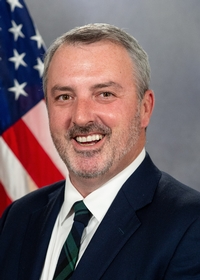
Rep. Kyle Donahue
Sponsored bills
Maddy summaryThis bill establishes the Pennsylvania-Ireland Trade Commission and creates a dedicated fund to cover its administrative costs. It assigns the Department of Community and Economic Development the responsibility of managing the commission and appointing its members, including six individuals selected by the Governor. The legislation also introduces the Entertainment Economic Enhancement Program and includes minor corrections to the text, such as fixing spelling errors and updating section numbering.
Maddy summaryThis bill updates Pennsylvania's Public School Code to require schools to notify parents when a student is diagnosed with type 1 diabetes. It mandates that schools provide education about the condition and ensures parents are informed of any medical treatments or care plans involving their child. The legislation also clarifies that these requirements apply to both public and nonpublic schools, including those that operate health units. By making these changes, the law aims to improve communication between schools and families regarding diabetes management.
Maddy summaryThis bill expands the ability for various organizations in Pennsylvania, such as colleges, sports leagues, restaurants, and law enforcement agencies, to legally obtain and use epinephrine auto-injectors for people experiencing severe allergic reactions. It allows health care providers to prescribe these devices to these entities and designates specific staff members who have completed required training to store and administer them. The legislation also provides legal protection from liability for these organizations and trained individuals who use the devices in good faith, while clarifying that administering the medication does not constitute the practice of medicine. Additionally, the bill mandates that day-care facilities provide informational materials to parents about allergy symptoms and the new rules regarding auto-injectors.
Maddy summaryThis document is a set of amendments to House Bill 2594 that standardizes terminology by replacing the phrase "residual waste" with "residuals" throughout the text. The changes also update specific definitions to align with the term "food processing waste" and adjust references from "secretary" to "department." These edits do not introduce new policies or alter the bill's core functions but rather refine the language for consistency and clarity.
Maddy summaryThis bill requires Pennsylvania school districts to set the same starting salary for teachers who hold the same certification, grade span, and class and step for the 2025-2026 school year and all future years. By mandating uniform starting pay across districts for equivalent positions, the legislation aims to standardize compensation for new educators statewide. The law applies to all public school districts and takes effect 60 days after passage.
Maddy summaryThis bill requires the Pennsylvania Department of General Services to provide free menstrual hygiene products in at least 50% of bathrooms across all state buildings. The department must install dispensing machines and disposal receptacles while posting signs to inform the public that these items are available at no cost. The law defines menstrual hygiene products as tampons, sanitary napkins, or pads, and excludes unused or non-public buildings from this requirement. It takes effect 60 days after passage.
Maddy summaryThis bill creates a competitive grant program to help nonprofit early childhood education groups and public school districts start or expand child care centers in rural Pennsylvania counties with low population density. The funding can be used for buying land, building or renovating facilities, and paying staff salaries for two years to ensure fair wages for teachers and child development associates. To receive the money, applicants must partner with a local business that agrees to cover part of the child care fees for its employees after the grant period ends.
Maddy summaryThis bill creates a new tuition assistance program in Pennsylvania to help current early childhood educators earn associate degrees or certifications. To qualify, applicants must work at least 25 hours per week in an approved early childhood program, have a household income at or below 400% of the federal poverty level, and commit to working in the state for two years after finishing their studies. The program provides grants that cover the cost of attendance minus any other financial aid received, paid in two installments per semester. Funding for the program comes from an annual state appropriation, federal money, and other grants, with the Pennsylvania Higher Education Assistance Agency responsible for administering it and reporting on student outcomes.
Maddy summaryThis bill directs the Pennsylvania Legislative Budget and Finance Committee to conduct a study on the management, structure, and finances of the Pennsylvania Interscholastic Athletic Association. The study will examine the association's financial records, including bank accounts and tax filings, and review its competition classification formula. It also requires the committee to protect privileged legal communications during the investigation and limits PIAA's cooperation costs to $25,000.