

Maddy summaryHB 1123 updates Pennsylvania's 1921 Insurance Company Law to require casualty insurance policies to cover colorectal cancer screening without cost-sharing. This affects insured residents in Pennsylvania who need preventive screenings, ensuring they face no copays or deductibles for this specific health service. The key provision mandates insurers to include coverage for colon cancer screenings as a standard benefit under casualty insurance policies. The bill passed final passage on October 29, 2025, and is now pending implementation under the Banking & Insurance committee. This change directly removes financial barriers for early detection of colorectal cancer through existing insurance coverage.
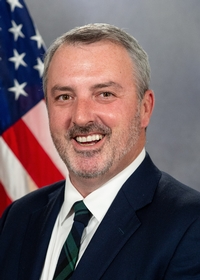
Rep. Kyle Donahue
Sponsored bills
Maddy summaryThis bill designates November 2026 as Pancreatic Cancer Awareness Month within the state of Pennsylvania. It aims to increase public understanding of the disease by encouraging educational programs and support initiatives for those affected. The resolution does not change laws or allocate funding but serves as a formal statement to highlight the importance of early detection and research.
Maddy summaryHB 928 amends Pennsylvania law to expand access to epinephrine auto-injectors for severe allergic reactions. It adds schools, sports organizations, and other public venues to the list of "authorized entities" allowed to store these devices and train staff. The bill clarifies who can access the injectors during emergencies and specifies training requirements for personnel. This directly affects schools, youth programs, and public facilities serving individuals at risk of anaphylaxis.
Maddy summaryThis bill updates the Pennsylvania Public Utility Code by formally defining "commercial data centers" and refining the legal definition of "public utility." It specifically categorizes large data facilities with a peak demand of 25 megawatts or more as commercial data centers, while simultaneously clarifying that such facilities are not considered public utilities if selling electricity to the grid is not their primary business. These changes aim to provide clearer regulatory boundaries for utility providers and data center operators without altering existing operational requirements.
Maddy summaryHB 2198 repeals the Computer Data Center Equipment Incentive Program from Pennsylvania's Tax Reform Code of 1971. This bill eliminates tax exemptions and refunds previously available for investments in data center equipment, such as servers, cooling systems, and energy infrastructure. The repeal directly affects computer data centers and their owners/operators who previously qualified for these tax benefits under Article XXIX-D. The policy change removes a specific tax incentive program without creating new provisions. This is a procedural change to the tax code, ending an existing program for data center equipment investments.
Maddy summaryThis bill prohibits Pennsylvania state agencies from using text messages to collect unpaid fines, fees, or tolls or to notify individuals about such charges. It defines a text-based communication as any written message sent on a mobile device, explicitly excluding standard email. The law applies to all Commonwealth agencies as currently defined by state statute and will become effective 60 days after passage.
Maddy summaryThis bill removes outdated Pennsylvania laws regarding insurance that are no longer in effect. It specifically repeals the Flood Insurance Education and Information Act of 1996 and certain sections of the Insurance Company Law of 1921. The changes take effect immediately upon passage, streamlining the state's insurance code by eliminating expired provisions.
Maddy summaryHB 1127 authorizes Pennsylvania to join the Dentist and Dental Hygienist Compact, enabling dentists and dental hygienists licensed in Pennsylvania to practice in other participating states without obtaining separate licenses. The bill establishes a "Compact Privilege" that allows qualified professionals to practice across state lines while maintaining each state's regulatory authority over scope of practice and disciplinary actions. Key mechanisms include streamlined licensure pathways, shared disciplinary information between states, and protection of public health standards. This affects licensed dental professionals seeking to work in multiple compact states, particularly addressing workforce mobility and access to care.
Maddy summaryHB 1925 regulates how healthcare facilities, insurance companies, and Medicaid/CHIP managed care plans can use artificial intelligence. It requires the Department of Health, Insurance Department, and Department of Human Services to create rules for AI safety and transparency in these sectors. The bill imposes penalties for failing to comply with these new requirements. It directly affects providers and insurers operating in Pennsylvania's health and insurance systems.
Maddy summaryThis bill requires employers in Pennsylvania to inform the state labor department if any mass layoffs are caused by the use of artificial intelligence or other technological changes. When an employer submits a standard notice about a plant closing or mass layoff, they must also specify whether automation was the reason for the job losses. The law applies to most businesses but excludes seasonal and temporary workers, and it sets daily fines ranging from $500 to $5,000 depending on company size for failing to provide this information.