

Maddy summaryHB 2064 amends the Older Adults Protective Services Act to update how financial institutions handle accounts for older adults. The bill removes specific language regarding beneficiaries and adjusts numerical limits on account protections from fifteen to seven. These changes directly affect banks and other financial entities by modifying the rules they must follow when managing funds for elderly clients.
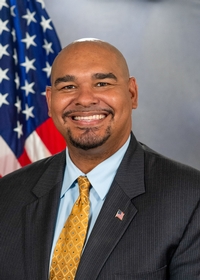
Rep. Justin Fleming
Sponsored bills
Maddy summaryThis bill updates Pennsylvania's driver licensing laws to better support minors and homeless youth. For minors, it requires a signed certification from a parent or guardian confirming that the driver has completed 65 hours of supervised practice, including specific amounts of night and bad weather driving, before taking their license test. The legislation also allows homeless children and youth to use temporary addresses like schools or shelters when applying for licenses and exempts them from paying the associated fees. Additionally, it clarifies that the adults who sign these certifications are not legally liable for the minor's driving behavior.
Maddy summaryThis bill updates Pennsylvania's Public School Code to strengthen policies against bullying and cyberbullying for all public, private, and parochial schools. It requires school districts to adopt or revise their anti-bullying rules by January 1, 2009, to include clear definitions of bullying and cyberbullying, specific disciplinary consequences, and procedures for notifying parents within five days of an incident. The law defines bullying as severe or persistent acts that disrupt a student's education or school environment, while cyberbullying specifically involves these acts committed through computers or mobile devices during school hours. Additionally, the bill mandates that schools designate a staff member to receive bullying reports and ensures parent notifications comply with federal privacy laws.
Maddy summaryThis bill expands the authority of Pennsylvania's intermediate units to acquire and lease property for school facilities and establishes a funding mechanism for these capital projects. It creates a program that allows nonpublic schools to receive grants for safety and security enhancements, which can be used for violence prevention, mental health initiatives, and hiring security personnel. Additionally, the legislation sets a minimum funding level for these targeted grants and clarifies that intermediate units can only use a small percentage of the funds for administrative costs.
Maddy summaryThis bill amends Pennsylvania's Unfair Trade Practices and Consumer Protection Law to update definitions of deceptive acts and explicitly ban pyramid schemes. It clarifies that businesses cannot mislead consumers about product origins, quality, or availability, nor can they use false claims to disparage competitors. The legislation specifically targets pyramid promotional schemes by defining them as plans where compensation comes primarily from recruiting others rather than selling actual goods or services. Additionally, the bill strengthens rules against deceptive telemarketing by requiring sellers to clearly state their identity and the purpose of the call before asking for any information. These changes directly affect businesses and consumers by establishing clearer boundaries for lawful marketing and sales practices.
Maddy summaryThis bill establishes a School Meal Debt Fund and creates new rules to ensure all students in Pennsylvania public schools can access meals regardless of their ability to pay. It requires schools to provide meals to any student who requests one unless a parent has explicitly asked for them to be withheld, and it mandates that schools help families apply for free or reduced-price meal programs if a student owes money. The legislation strictly prohibits schools from stigmatizing students with debt by using wristbands, denying participation in activities, or threatening legal action, while also banning the use of collections agencies or credit reporting to recover unpaid meal costs. Additionally, the bill directs the Department of Revenue to share confidential household income data with schools to better determine eligibility for federal assistance and to identify students who need help paying off meal debts.
Maddy summaryThis bill updates Pennsylvania laws to clarify how medical records can be obtained and the fees associated with them. It directly affects patients, their attorneys, and healthcare providers by setting specific prices for copying and retrieving medical charts. Under the new rules, patients and their representatives can access their own records without needing a subpoena, while other parties must pay a set fee for search, retrieval, and copying services. The act also establishes different rates for paper copies versus electronic records and requires these fees to be adjusted annually based on inflation.
Maddy summaryThis bill amends Pennsylvania's domestic relations laws to redefine marriage as a civil contract between two individuals, removing the previous legal requirement that it be between one man and one woman. It directly affects couples by eliminating state barriers to same-sex marriage and repeals the specific provision that declared such unions void within the Commonwealth. The legislation also updates the statutory definition of marriage to reflect this inclusive language while removing the section that stated it was public policy to restrict marriage to opposite-sex couples.
Maddy summaryThis bill updates Pennsylvania's existing law to strengthen legal protections for individuals who donate food to charitable or religious organizations. It clarifies that donors are immune from civil or criminal liability if they donate food in good faith after a reasonable inspection confirms it is safe to eat. However, this immunity does not apply if the donor was negligent, reckless, intentionally harmful, or knew the food was contaminated. The legislation also explicitly covers donations of food that is not easily sold due to appearance, age, or expiration dates, while maintaining the government's right to regulate such food.
Maddy summaryThis Pennsylvania bill creates a new Alzheimer's, Dementia and Related Disorders Office within the Department of Aging to coordinate state efforts for people affected by these conditions. The office will oversee existing programs, identify service gaps, manage grants, and update the state's strategic plan every five years based on expert advice. To support this work, the law also establishes a large advisory committee made up of government officials, healthcare providers, researchers, and individuals with personal experience caring for those with dementia. This committee will guide the office's activities, review progress, and ensure that the state's approach remains current and effective.