

Maddy summaryHB 1409 updates the Pennsylvania Fish and Boat Commission's authority to set fees for fishing licenses, permits, and issuing agents. The bill allows the commission to adjust specific amounts for various licenses, such as resident annual and senior resident lifetime licenses, as well as different tourist and replacement options, by referencing existing administrative rules. It also establishes fixed fees for special permits, including those for trout fishing and charter boat guides, while capping transaction costs for the automated licensing system at one dollar. This legislation directly impacts anglers and fishing businesses by defining the current fee structure and providing the legal framework for the commission to manage these costs.
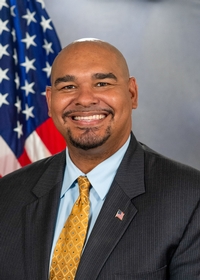
Rep. Justin Fleming
Sponsored bills
Maddy summaryThis Pennsylvania law updates the rules for filling empty seats on township commission boards to ensure positions are filled promptly. If a township board fails to appoint a replacement within 30 days, a temporary "vacancy board" must be formed within the next 15 days to make the appointment, consisting of the original commissioners and one local voter who chairs the group but cannot vote for themselves. If this temporary board also fails to act or if most commissioner seats are vacant at once, the matter moves to a county court where a judge appoints a replacement based on a petition from remaining officials or local voters. The changes take effect 60 days after the law is signed.
Maddy summaryThis bill updates Pennsylvania laws regarding the compensation and eligibility rules for borough and town council members and mayors. It clarifies that council members do not receive pay for unexcused absences from meetings, while allowing excused absences for reasons like illness, emergencies, or travel. The legislation also ensures that a borough cannot be forced to lower a mayor's or council member's salary if the town's population decreases, though it maintains that council pay cannot exceed the mayor's salary. These changes aim to provide clearer guidelines on how local officials are paid and when they are eligible for that pay.
Maddy summaryThis bill establishes a new chapter within Pennsylvania's emergency management laws to formalize counterterrorism planning, preparedness, and response efforts. It creates structures for regional and statewide teams, including specialized medical and mortuary units, to handle potential terrorist incidents or disasters. The legislation defines specific agreements that allow local governments and private entities to contribute personnel and resources while receiving compensation and access to state communication centers. Additionally, the bill incorporates federal standards for incident management and authorizes the construction of necessary facilities to support these new emergency response capabilities.
Maddy summaryThis bill expands medical assistance coverage to include doula services for eligible recipients during pregnancy, labor, delivery, and for up to one year after childbirth. To oversee this expansion, the legislation requires the creation of a Doula Advisory Board composed of government officials, doula representatives, and community members to advise on best practices and address disparities in maternal health. The state must also seek federal approval or a waiver to implement these changes, with the new coverage provisions taking effect once approved. Additionally, the bill includes provisions for third-party liability and data matching to help prevent fraud and abuse within the program.
Maddy summaryThis bill establishes the Pennsylvania-Ireland Trade Commission and creates a dedicated fund to cover its administrative costs. It assigns the Department of Community and Economic Development the responsibility of managing the commission and appointing its members, including six individuals selected by the Governor. The legislation also introduces the Entertainment Economic Enhancement Program and includes minor corrections to the text, such as fixing spelling errors and updating section numbering.
Maddy summaryThis bill updates the definition of "income" within Pennsylvania's State Lottery Law to determine eligibility for pharmaceutical assistance for the elderly. It explicitly includes various sources of money like pensions, Social Security benefits, and interest, while excluding items such as surplus food, savings bond principal, and veterans' benefits. By clarifying what counts as income, the law helps officials accurately assess which seniors qualify for lottery-funded prescription drug aid. The changes take effect on July 1, 2024, or later if that date is not reached.
Maddy summaryThis bill updates Pennsylvania's Public School Code to require schools to notify parents when a student is diagnosed with type 1 diabetes. It mandates that schools provide education about the condition and ensures parents are informed of any medical treatments or care plans involving their child. The legislation also clarifies that these requirements apply to both public and nonpublic schools, including those that operate health units. By making these changes, the law aims to improve communication between schools and families regarding diabetes management.
Maddy summaryThis bill creates the Returning Heroes Supplemental Tax Credit Program in Pennsylvania to provide additional state tax credits to businesses that hire qualified veterans. To qualify, a taxpayer must receive a federal Work Opportunity Tax Credit for a veteran and submit an application with proof by September 15 of the relevant year. Eligible businesses can receive a supplemental credit of up to $2,000 per veteran, which can be carried forward for up to 15 years if not fully used in the current tax year. The program is limited to a total of $20,000,000 per fiscal year and is allocated on a first-come, first-served basis. Additionally, the bill requires the Department of Revenue to publish an annual report listing all businesses that received these credits and the amounts approved.
Maddy summaryThis bill amends Pennsylvania's State Lottery Law to expand eligibility for the Pharmaceutical Assistance Contract for the Elderly Needs Enhancement Tier. It directly affects elderly residents whose income currently falls between $14,500 and $33,500 for single individuals or $17,700 and $41,500 for married couples, raising the upper income limits to $43,500 and $51,500 respectively. The legislation also clarifies that income figures reported for eligibility purposes can be rounded to the nearest whole dollar. The changes are set to take effect 60 days after the bill becomes law.