

Maddy summaryHB 1022 amends Pennsylvania's Human Services Code to clarify when licensed facilities (like childcare centers or care homes) can face license refusal, revocation, or penalties. It adds specific new violations that trigger these actions, including repeated breaches of children's rights, improper use of restraints, or failures in staff background checks and training. The bill also expands penalties to allow fines against facilities and mandates disciplinary action against staff responsible for violations. Facilities must receive written notice explaining the reason for any license denial, revocation, or penalty. The changes take effect 60 days after enactment.
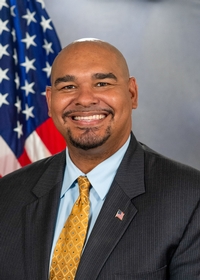
Rep. Justin Fleming
Sponsored bills
Maddy summaryHB 1021 replaces Pennsylvania's current requirement for separate rooms for juvenile offenders awaiting trial with a new system mandating counties to provide dedicated rooms or buildings exclusively for juvenile confinement, detention, and care. It requires county commissioners to establish a board of managers for each facility, composed of county officials and six private citizens with expertise in juvenile development, mental health, and substance use disorders. The board oversees operations, appoints a superintendent, and reports annually to county officials, while counties fund all expenses through annual appropriations. This bill directly affects all Pennsylvania counties, particularly those previously governed by the repealed provisions for second-class A counties. The law focuses on structural changes to juvenile detention facilities rather than altering sentencing or legal procedures.
Maddy summaryThis bill proposes a constitutional amendment allowing counties (of first and second class) to create special property tax exemptions for longtime owner-occupants in neighborhoods where home values have risen significantly due to renovations or new construction nearby. It would let local governments establish uniform tax rules for these homeowners without increasing overall property tax rates to fund the exemptions. The amendment requires approval by the General Assembly and then a vote by Pennsylvania voters before taking effect.
Maddy summaryHB 972 requires Pennsylvania to catalog state and county-owned assets (like land and buildings) that could support high-speed internet service in areas without reliable access (defined as "unserved" or "underserved"). It establishes a dedicated fund, the Broadband Services Restricted Account, to be filled with lease payments from these assets and used to expand internet infrastructure in those areas. The bill also sets rules for leasing assets to qualified internet providers, directly affecting state agencies, local governments, and companies building broadband networks. This law focuses on making concrete policy changes to leverage public assets for broadband deployment without advocating for specific outcomes.
Maddy summaryHB 948 amends Pennsylvania's vehicle code to create specific rules for parking at electric vehicle (EV) charging stations. It prohibits non-electric vehicles from parking in spaces designated exclusively for EV charging unless the vehicle is actively charging. Violators face fines of $50-$200 (or $150 max without posted signage), and illegally parked vehicles may be towed after a sign indicates towing is permitted. This directly affects drivers who park in EV charging spots without using the charger. The law takes effect 60 days after enactment.
Maddy summaryHB 936 modifies Pennsylvania's child care subsidy program by reducing copayments for parents who work in the child care field. It requires that families where a parent or caretaker is employed as a child-care worker or direct support professional (in either family child-care homes or licensed centers) pay no more than 15% of their annual income for subsidized care, regardless of their income level. This change applies to all qualifying child care settings defined in the bill, including family child-care homes (serving 4-6 unrelated children) and centers (serving 7+ children). The policy aims to lower financial barriers for child care workers seeking subsidized care for their own children.
Maddy summaryHB 915 creates a new supplemental funding program under Pennsylvania's Public School Code to support childcare facilities serving meals through the federal Child and Adult Care Food Program. The bill establishes a "Supplement" administered by the Department of Education, providing additional financial reimbursements to facilities that demonstrate they can serve more meals or improve care for enrolled children and adults. Facilities must meet specific criteria, such as expanding meal service or enhancing educational opportunities (with separate standards for nonprofits vs. for-profits), and must report annually to multiple legislative committees on participation, meals served, and funding needs. This bill directly affects licensed childcare centers, shelters, and similar facilities receiving federal meal reimbursements.
Maddy summaryHB 111 prohibits life insurance companies in Pennsylvania from denying coverage, limiting benefits, or charging higher rates to applicants or policyholders solely because they have been prescribed an opioid overdose reversal agent (like naloxone). The bill directly affects individuals who use these medications, including those with opioid use disorder or at risk of overdose. It defines "adverse action" to include these discriminatory practices and makes such actions violations of existing laws against unfair insurance practices. The law takes effect 60 days after enactment.
Maddy summaryHB 33 amends Pennsylvania's Medical Marijuana Act to clarify definitions and strengthen oversight of testing labs and practitioners. It defines key terms like "independent laboratory" (requiring no ties to marijuana businesses) and "approved laboratory" (testing medical marijuana samples under department approval). The bill gives the Department of Health new authority to impose conditions on medical practitioners, such as limiting certifications or requiring supervision, to protect patient safety. These changes directly affect medical marijuana patients, healthcare providers who certify them, and labs testing products for quality and safety. The updates aim to improve accountability in the program through clearer rules for lab accreditation and practitioner oversight.
Maddy summaryHB 884 establishes Pennsylvania's Four-Day Workweek Pilot Program, allowing private and public employers to test a four-day workweek for at least 30 employees without pay or benefit cuts. Employers participating must apply to the Department of Labor and Industry, submit a transition plan, and allow the department to study impacts through surveys. Qualifying employers receive tax credits of either $250,000 per business or $5,000 per participating employee, capped at $15 million total annually. The program requires the Department of Labor and Revenue to coordinate administration, study outcomes, and encourage public-sector adoption, with the pilot set to expire after its initial implementation period.