

Maddy summaryHB 460 requires all teachers in Pennsylvania public schools to complete child abuse recognition and reporting training as part of their certification process. It amends the Public School Code of 1949 to integrate this training into both initial certification and ongoing educator requirements. The bill directly affects educators by mandating specific training to identify and report suspected abuse, ensuring schools meet updated child safety standards. This change applies to all public school teachers, including those seeking certification or renewing credentials.
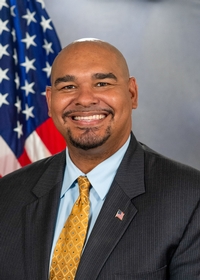
Rep. Justin Fleming
Sponsored bills
Maddy summaryHB 1935 requires individuals convicted of terroristic threats to pay restitution for costs incurred during evacuations, including emergency response, transportation, and employee wages for first responders. It also mandates a sentencing enhancement for threats targeting schools or institutions of higher education, which the Pennsylvania Commission on Sentencing must consider. The bill defines "school entity" to include public, charter, private, and cyber charter schools, and "institution of higher education" to cover specific universities like Penn State, Pitt, Temple, and others. These changes directly affect offenders who make terroristic threats in educational settings, holding them financially accountable for the costs their actions trigger.
Maddy summaryHB 1556 amends Pennsylvania's Tax Reform Code of 1971 to add new tax credits under the PA EDGE program specifically for "advanced clean manufacturing projects." This bill directly affects businesses constructing or expanding facilities that produce clean energy technology, such as solar panels or battery components. The key change expands the existing PA EDGE tax credit program to include these advanced clean manufacturing projects, providing financial incentives for qualifying investments. The bill does not alter other existing PA EDGE provisions or create new tax credit categories beyond this specific addition.
Maddy summaryHB 1936 amends Pennsylvania's juvenile justice laws to change procedures for handling cases involving minors. It specifies when courts must hold hearings before releasing or committing a juvenile, alters where juveniles can be placed for treatment or supervision, and adds requirements for reviewing dispositions (how cases are resolved) after commitment. The bill directly affects juveniles charged with offenses, their families, and juvenile court judges and probation officers who manage these cases. Key changes include setting clearer timelines for hearings, limiting where juveniles can be committed (e.g., away from home), and mandating periodic reviews of their case plans. These provisions aim to standardize court processes while prioritizing youth safety and appropriate supervision.
Maddy summaryHB 1909 updates Pennsylvania's criminal code by clarifying and adjusting definitions and penalties for several existing offenses. It specifically addresses simple assault, reckless endangerment, terroristic threats, harassment, stalking, unlawful restraint, false imprisonment, indecent assault, and disorderly conduct. The bill aims to refine how these crimes are defined and prosecuted under current law. It directly affects individuals charged with these specific offenses in Pennsylvania courts. The changes focus on improving legal clarity without creating new criminal categories.
Maddy summaryHB 2215 requires AI chatbot providers to verify user age using reliable methods like government-issued ID, not just birth dates, to prevent minors from accessing AI companions designed for emotional interaction. The bill prohibits creating or distributing AI chatbots that risk encouraging minors to engage in or share sexually explicit content or violent behavior, with penalties of up to $100,000 per violation. It defines "AI companion" as chatbots simulating friendship or therapy and mandates that age verification must reliably block minors without relying on IP addresses or other technical indicators. This law applies to any entity making AI chatbots available in the U.S., focusing on protecting minors from harmful content through concrete verification requirements.
Maddy summaryHB 2195 establishes a $1,000 tax credit for Pennsylvania resident individuals who adopt a child under 18 years old in the year the adoption is finalized. The credit applies only once per adopted child and may be claimed jointly by filing spouses, but not for children who are the spouse's biological child. To claim the credit, taxpayers must submit proof with their tax return, and the Department of Revenue must annually report usage statistics (including total claims and amounts) to the General Assembly starting in 2027. The credit applies to tax years beginning after December 31, 2025.
Maddy summaryThis House Resolution (HR 413) commemorates the 50th anniversary of the closure of Freedom House Ambulance Service, the first U.S. ambulance service staffed by professionally trained paramedics, which operated in Pittsburgh's Hill District from 1967 to 1975. It honors the service's role in pioneering emergency medical care in predominantly Black neighborhoods - where prior response times were slow and medical treatment was unavailable - and its influence on modern emergency medical systems nationwide. The resolution recognizes the service's 1968 founding (training 25 Black paramedics), its high response standards, and its legacy of advancing community health equity. As a commemorative resolution, it does not create new laws but formally acknowledges this milestone during Pennsylvania's Black History Month.
Maddy summaryHB 2169 amends Pennsylvania's Fiscal Code to update terminology in funding provisions for special education schools. It replaces references to "approved private school" with "approved special education school" in Section 1923(5), which governs how funds from the Public School Code (Section 2509.8) are allocated. The bill directly affects approved special education schools with day tuition under $32,000, requiring funding to be no less than 175% of the 2015-2016 allocation. This is a technical correction to align statutory language with current educational terminology, with no change to the underlying funding mechanism or eligibility criteria.
Maddy summaryHB 2167 is a purely editorial amendment to Pennsylvania's Public School Code of 1949. It updates references from "approved private school" to "approved special education school" in multiple sections (including Section 1376) that govern funding for students with disabilities. The bill makes no changes to funding formulas, payment amounts, or eligibility rules - only correcting outdated terminology to specifically reference special education schools. This adjustment ensures the law accurately reflects the type of institutions providing specialized education services.