

Maddy summaryThis Pennsylvania House Resolution designates May 4, 2026, as "Youth Advocacy Day" to recognize the role young people play in advocating for issues affecting their lives. The resolution acknowledges youth involvement in various social movements, including environmental, civil rights, and public safety initiatives, and affirms their right to participate in civic engagement. It does not create new laws or funding but serves as a symbolic designation to highlight youth advocacy efforts within the state.
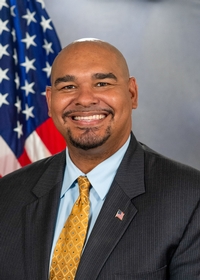
Rep. Justin Fleming
Sponsored bills
Maddy summaryThis bill amends Pennsylvania's tax code to establish a new licensing requirement for tobacco retailers, mandating that applicants meet specific criteria to obtain or renew their retail licenses. The law introduces a distance restriction effective January 1, 2027, prohibiting tobacco retailers from operating within 1,000 feet of any school property line, while also requiring applicants to demonstrate adequate premises for revenue protection, maintain accurate tax reporting, and have no history of tax violations. The measure directly affects tobacco retailers and applicants seeking to sell tobacco products in Pennsylvania, adding compliance steps to the existing licensing process.
Maddy summaryHB 554 would authorize Pennsylvania to join the Social Work Licensure Compact, a multi-state agreement that allows social workers licensed in one member state to practice in others without additional exams. The bill provides Pennsylvania with the legal framework to adopt the compact's standard terms, directly affecting licensed social workers seeking to practice across state lines. Key provisions include aligning Pennsylvania's licensing requirements with the compact's uniform standards, simplifying the process for social workers to obtain reciprocal licenses in participating states. This change would streamline professional mobility for social workers while maintaining consistent regulatory oversight.
Maddy summaryThis bill establishes a fee system for Pennsylvania municipalities that receive patrol services from the State Police, requiring towns without their own full-time police forces to pay for those services. The legislation creates new definitions for different types of patrol services and sets fee amounts based on the difference between 2021-2022 and current Motor License Fund appropriations to the State Police. Small municipalities with limited local police hours and those that have existing patrol agreements with the State Police are exempt from paying fees. The bill also requires the State Police to submit annual reports on these services and includes provisions for penalties and intermunicipal police response coordination.
Maddy summaryThis bill amends Pennsylvania law to allow individuals and married couples filing for bankruptcy to choose between federal exemptions or a new state-specific set of protections for their assets. The state options include up to $650,000 in home equity, $50,000 to $100,000 in personal property, $20,000 to $40,000 in vehicle equity, and various protected items like wages, Social Security benefits, and government assistance programs. Dollar amounts in the state exemptions will automatically adjust every three years based on inflation data published by the federal government. The changes take effect 60 days after the bill is enacted, applying to bankruptcy proceedings filed in Pennsylvania courts.
Maddy summaryThis resolution designates March 31, 2026, as Transgender Day of Visibility in Pennsylvania to honor the contributions and lives of transgender individuals. The measure does not change laws or policies but serves as a symbolic recognition of the date, which is already observed nationally to celebrate transgender accomplishments and raise awareness about challenges the community faces. It is sponsored by multiple representatives and referred to the Committee on State Government for consideration. The resolution highlights the importance of transgender visibility and acknowledges the ongoing discrimination and violence the community experiences.
Maddy summaryHB 2253 requires Pennsylvania public high schools to hire school life support coaches to provide daily nonclinical emotional support to students. High-need schools (defined by factors like poverty rates, attendance issues, or dropout risk) must employ one coach for every 300 students, while other schools must have one for every 500 students. Coaches must hold specific educational qualifications (e.g., bachelor's degree with two years of experience), complete training in trauma-informed care and crisis response, and focus on mentorship and resource connection without providing therapy or diagnosis. The Department of Education will guide districts on equitable compensation, and coaches must refer students needing clinical services to licensed staff.
Maddy summaryHB 2251 amends Pennsylvania law to update reimbursement rules for municipal police training costs. It requires the state commission to reimburse municipalities for 60% of police officers' regular salaries during approved training and for the full cost of tuition, living, and travel expenses. Municipalities must provide documentation and undergo annual audits to qualify for reimbursement. Additionally, the law mandates that at least 25% of state funds for this purpose be allocated to townships and boroughs with populations under 20,000 residents.
Maddy summaryHB 2249 amends Pennsylvania's Solid Waste Management Act to clarify the definition of "biosolid" and establish new requirements for its management. The bill prohibits land application of biosolids if levels of perfluorooctane sulfonate (PFOS) or perfluorooctanoic acid (PFOA) exceed state limits, and mandates resampling and treatment before land application if those limits are exceeded. It also creates regulations for the beneficial use of municipal waste, requiring monitoring for up to one year, notification of property changes, and departmental oversight for waste stored beyond that period. Additionally, the bill directs the Department of Environmental Protection to propose a state fund for hazardous waste site cleanup if federal funding proves inadequate.
Maddy summaryHB 660 establishes minimum energy and water efficiency standards for specific products sold in Pennsylvania, directly affecting businesses that sell or install these items. The bill covers commercial equipment like dishwashers, fryers, and ovens, as well as residential products including faucets, showerheads, and water coolers. It requires these products to meet defined efficiency levels to reduce energy/water waste, save consumers money, and lower environmental impact, with fines for non-compliance. The law updates existing rules but excludes products sold outside Pennsylvania, used items, and certain installations like mobile homes.