

Maddy summaryThis Pennsylvania bill establishes new pension benefits for retired public employees starting in 2025. It provides an additional monthly payment to eligible retirees from state education and government systems who retired before 2001, with the amount calculated as a percentage of their July 2025 annuity based on their original retirement date. The legislation also creates a special one-time adjustment for retired municipal police officers and firefighters, ensuring these groups receive increased benefits. Funding for these new payments will be spread over ten years beginning in 2025, and the benefits are not available to survivors of members who died before that date.
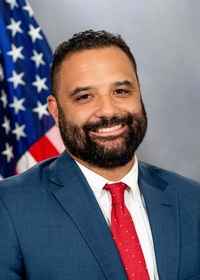
Rep. Dave Madsen
Sponsored bills
Maddy summaryThis bill amends Pennsylvania's State Lottery Law to expand eligibility for the Pharmaceutical Assistance Contract for the Elderly Needs Enhancement Tier. It directly affects elderly residents whose income currently falls between $14,500 and $33,500 for single individuals or $17,700 and $41,500 for married couples, raising the upper income limits to $43,500 and $51,500 respectively. The legislation also clarifies that income figures reported for eligibility purposes can be rounded to the nearest whole dollar. The changes are set to take effect 60 days after the bill becomes law.
Maddy summaryThis bill requires the Pennsylvania Department of General Services to provide free menstrual hygiene products in at least 50% of bathrooms across all state buildings. The department must install dispensing machines and disposal receptacles while posting signs to inform the public that these items are available at no cost. The law defines menstrual hygiene products as tampons, sanitary napkins, or pads, and excludes unused or non-public buildings from this requirement. It takes effect 60 days after passage.
Maddy summaryThis bill establishes a new state program to provide insurance and financial assistance for property damage caused by landslides and subsidence resulting from coal and clay mining. It creates a dedicated insurance board and fund to administer coverage for homeowners and businesses in affected areas, particularly in southwestern Pennsylvania. The legislation outlines how premiums will be set, how claims will be processed, and how the program will be funded through an insurance fund and a separate assistance fund. Additionally, the bill assigns oversight duties to the Auditor General and allows insurance companies to offer coverage for these specific risks.
Maddy summaryThis bill directs the Pennsylvania Legislative Budget and Finance Committee to conduct a study on the management, structure, and finances of the Pennsylvania Interscholastic Athletic Association. The study will examine the association's financial records, including bank accounts and tax filings, and review its competition classification formula. It also requires the committee to protect privileged legal communications during the investigation and limits PIAA's cooperation costs to $25,000.
Maddy summaryThis bill designates October 12, 2024, as "1982 Cheyney State College Lady Wolves Women's Basketball Team Day" in Pennsylvania to honor the team's historic achievements. It recognizes the 1982 squad as the first HBCU women's basketball team to reach the NCAA Division I Final Four during the inaugural tournament. The resolution also highlights the legacy of Coach C. Vivian Stringer and acknowledges the team's induction into the Women's Basketball Hall of Fame. This measure serves as a commemorative tribute rather than implementing new laws or funding changes.
Maddy summaryThis Pennsylvania bill creates a new Employee Misclassification Working Group to coordinate efforts among state agencies in identifying and addressing cases where workers are incorrectly classified as independent contractors rather than employees. The legislation mandates that the Department of Revenue share tax information with specific labor and unemployment offices to help investigate these misclassification issues and requires the use of federal identification numbers to streamline data matching. The working group itself will be led by a representative from the Department of Labor and Industry and will include members from the Department of Revenue and the Office of Attorney General, with optional participation from local prosecutors and labor enforcement officers. Meetings of the group are required to occur at least every three months to develop and oversee enforcement strategies.
Maddy summaryThis bill establishes the Health Insurance Access Protection Act to prevent insurance companies from discriminating against people based on their health status, medical history, or preexisting conditions. It requires insurers to allow individuals and their dependents to enroll in or renew health plans without denying coverage or charging higher premiums due to these health factors. The law also limits how much insurance rates can vary based on age and tobacco use while giving the Insurance Department authority to set specific rating rules and enforce penalties for violations.
Maddy summaryThis bill updates Pennsylvania's insurance laws to expand health coverage for adult children of policyholders. It requires health insurance policies to keep covering children up to age 26 without denying them based on factors like marital status, residency, or employment. Additionally, the law allows insurers to offer continued coverage until age 29 for unmarried adult children who are full-time students or residents, provided they meet specific eligibility requirements. These changes primarily affect individuals purchasing or renewing health insurance plans and the insurance companies that issue them.
Maddy summaryThis Pennsylvania bill, known as the Health Insurance Protection Against Limitations Act, requires health insurers to remove annual and lifetime dollar limits on core medical benefits for both individual and group plans. The law specifically applies to policies that were first offered or issued in the state in 2024, ensuring that essential services are not capped over time. To enforce these rules, the Insurance Department is authorized to create regulations and impose penalties, including fines up to $500,000 for insurers, on companies that violate the coverage protections. Additionally, the bill mandates that the Insurance Commissioner notify the state legislature if federal laws protecting against such limits are repealed or invalidated.