

Maddy summaryHB 324 amends Pennsylvania's 1956 Poultry Technician Licensure Law to modernize requirements for professionals collecting poultry samples and conducting disease surveillance. It expands technicians' duties to include "regulatory sampling and testing procedures" for poultry diseases (beyond just pullorum testing), requires applicants to prove legal work authorization in the U.S. (replacing citizenship requirements), increases the license fee from $5 to $10, and allows Spanish-language training via quarantine orders. The bill directly affects poultry technicians seeking or renewing licenses to legally collect samples or conduct on-site disease monitoring. Key provisions update eligibility, fees, and the Secretary of Agriculture's authority to oversee licensing and enforce standards.
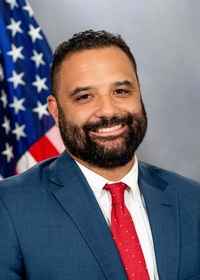
Rep. Dave Madsen
Sponsored bills
Maddy summaryThis resolution recognizes January 27, 2025, as "International Holocaust Remembrance Day" in Pennsylvania. It symbolically aligns Pennsylvania with the United Nations' 2005 designation of January 27 as a day to honor Holocaust victims, educate about genocide prevention, and condemn hate based on ethnicity or religion. The resolution has no binding effect or policy changes - it is a formal statement of recognition. It directly affects Pennsylvania by designating this date for state-level commemoration.
Maddy summaryHR 12 is a ceremonial resolution recognizing February 2025 as "Black History Month" in Pennsylvania. It does not create new laws or policies but formally acknowledges the month through the House of Representatives. The resolution highlights the historical origins of Black History Month, including Dr. Carter Godwin Woodson's founding of the Association for the Study of African American Life and History, and notes the 2025 theme focused on African Americans and labor. This resolution directly affects Pennsylvania residents by designating the month for commemoration, without altering any legal rights or obligations.
Maddy summaryThis bill designates March 9, 2025, as "Charter Day" and Pennsylvania's 344th birthday, commemorating the 1681 charter granted to William Penn by King Charles II. It urges residents, schools, and historical organizations to participate in existing events hosted by the Pennsylvania Historical and Museum Commission and other state heritage institutions. The resolution has no binding legal effect and does not create new policies or obligations; it solely recognizes a historically observed date through ceremonial designation.
Maddy summaryHB 201 amends Pennsylvania's Public School Code to update how intermediate units (regional education agencies) manage facilities and receive state funding. It expands boards' authority to acquire land/buildings through purchase, lease, or gift (Section 914-A(11)), and requires pre-approval from the Secretary of Education for lease/loan agreements involving office, classroom, or warehouse space (Section 919.1-A(a)). The bill revises the capital subsidy calculation: the state will allocate funds based on each intermediate unit's student enrollment multiplied by the median per-student instructional cost across all districts, then applying a 0.03% rate. This directly affects intermediate units and school districts using their facilities, changing both facility management rules and state funding distribution.
Maddy summaryHB 190 requires Pennsylvania schools to annually provide eating disorder awareness and education materials to parents, guardians, and key school staff (like counselors and principals) for students in grades 6-12. The bill mandates that schools share this information via email, mail, or website, using materials developed by the Department of Health in collaboration with an advisory committee of experts from groups like the National Alliance for Eating Disorders and school health organizations. These materials must explain warning signs, resources, prevention, and be available in multiple languages. The law directly affects all public, charter, cyber, and nonpublic schools in Pennsylvania, aiming to improve early recognition and support for students facing eating disorders.
Maddy summaryHB 443 modifies Pennsylvania's sentencing for second-degree murder convictions, including murder of an unborn child or a law enforcement officer. It reduces maximum sentences: for adults, from life imprisonment to 50 years; for offenders under 18, it sets a maximum of 40 years for those 15+ at the time of crime and 30 years for those under 15. The bill also establishes new parole timelines - 25 years for standard life sentences under this section, 20 years for those under 18 aged 15+, and 15 years for those under 15 - requiring the parole board to prioritize public safety, victim safety, and consider the offender's culpability before granting parole. Additionally, it mandates that victims be notified and given a chance to be heard before parole decisions for these cases.
Maddy summaryHR 47, a resolution amending House Rule 14, updates reimbursement rules for Pennsylvania House members and employees related to legislative expenses. It caps travel and daily allowances at the federal government’s maximum rate, requires detailed receipts for all claims, and restricts district office staff reimbursements to approved training or conferences. The resolution also mandates public disclosure of the total funds allocated for members’ expenses on a House website. These changes standardize reporting and increase transparency in how legislative expenses are handled.
Maddy summaryThis resolution designates January 23, 2025, as "Maternal Health Awareness Day" in Pennsylvania. It aims to recognize women who die from pregnancy or childbirth complications, highlighting Pennsylvania's maternal mortality rate of 82 deaths per 100,000 live births and the significantly higher rate (163 per 100,000) for Black women. The resolution does not create new laws or funding but seeks to increase public and healthcare awareness about maternal health risks. It references existing efforts like the Maternal Mortality Review Committee established under Act 24 of 2018.
Maddy summaryHB 232 establishes the Sustainable Community Safe House Grant Program, providing local governments (counties, cities, townships, and councils of governments) with grants of up to $250,000 to install renewable energy backup systems at community facilities. The bill transfers $100 million from the state's General Fund to the State Sustainable Energy Fund to finance these grants, requiring applicants to submit detailed plans for energy generation, storage, and community impact. Applications must include project locations, proposed uses, and how the system serves the community, with awards determined within 20 days based on geographic diversity and community benefits. The program expires December 31, 2026, and requires a public report by September 2026 listing all grant recipients and project details.