

Maddy summaryHB 884 establishes Pennsylvania's Four-Day Workweek Pilot Program, allowing private and public employers to test a four-day workweek for at least 30 employees without pay or benefit cuts. Employers participating must apply to the Department of Labor and Industry, submit a transition plan, and allow the department to study impacts through surveys. Qualifying employers receive tax credits of either $250,000 per business or $5,000 per participating employee, capped at $15 million total annually. The program requires the Department of Labor and Revenue to coordinate administration, study outcomes, and encourage public-sector adoption, with the pilot set to expire after its initial implementation period.
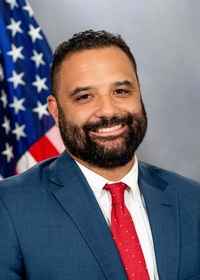
Rep. Dave Madsen
Sponsored bills
Maddy summaryHB 876 proposes a constitutional amendment to change how civil officers in Pennsylvania can be removed from office. It replaces the current requirement of "conviction of misbehavior in office" with a standard requiring a "finding or verdict of guilt" (including pleas of nolo contendere) for crimes related to an officer's official duties. This affects appointed civil officers (excluding judges of record courts) and elected officials like mayors or county officials, but not the Governor, Lieutenant Governor, legislators, or judges of record courts. The amendment would require removal by the Governor for "reasonable cause" after a hearing, with approval from two-thirds of the Senate. The bill also outlines the procedural steps for submitting the constitutional change to voters.
Maddy summaryHB 863, the Healthy Workplace Act, creates legal protections against abusive work environments for most Pennsylvania employees (excluding agricultural, domestic, and family employment), directly affecting employers and employees in covered workplaces. It defines "abusive conduct" as repeated verbal abuse, threats, sabotage, or conduct causing physical/psychological injury (not covered by workers' compensation), and prohibits such behavior that creates a hostile workplace. Employers face liability for abusive conduct by their employees but can defend by showing reasonable preventive measures were taken and the employee failed to use available remedies. The bill also prohibits retaliation against employees who report abuse or participate in investigations, with additional defenses for reasonable performance evaluations or workplace investigations.
Maddy summaryHB 829 amends Pennsylvania's Public School Code to require school districts to offer full-day kindergarten for children aged three to five, lowering the age limit from four years. It updates the definition of "compulsory school age" to explicitly allow children as young as three to attend kindergarten without tuition, while maintaining the upper age limit at 18. The bill also adjusts transportation provisions to include free bus service for full-day kindergarten students, similar to existing rules for other grade levels. These changes directly affect public school districts, early learning programs, and families with children aged three to five.
Maddy summaryHB 778 establishes a three-year pilot program to increase pre-kindergarten (Pre-K) teacher salaries in Pennsylvania to match those of elementary school teachers with similar qualifications. It directly affects Pre-K teachers working in programs located in high-poverty areas (school districts with ≥20% poverty or census tracts at ≤80% of the statewide median poverty level). The program requires the Department of Education to calculate salary gaps using a specific formula, provide subsidies to eligible Pre-K programs to close those gaps, and collect data for a legislative report. The bill mandates strict use of funds solely for teacher salary increases and includes requirements for reporting program outcomes to the legislature.
Maddy summaryHB 779 establishes a three-year pilot program to increase salaries for Head Start teachers in Pennsylvania. It targets Head Start programs located in school districts with at least 20% poverty or census tracts with 80% or lower median poverty. The program calculates a salary supplement by comparing Head Start teachers' qualifications to public elementary school teachers in the same district, then provides funds to align their pay. The Department of Education will select participating programs, collect data, and report findings to the legislature after one year.
Maddy summaryHB 744 amends Pennsylvania's ethics laws to restrict gifts to public officials. It prohibits public officials, employees, nominees, or candidates from accepting cash gifts or non-cash gifts exceeding $50 in value from a single source in a year (Section 1103.1). Key exceptions include gifts from family members (excluding cash for candidates), lobbyists for major life events like weddings, and election contributions made under state law (Section 1103.2). The bill aims to prevent undue influence by clarifying what constitutes a prohibited gift under the state's financial disclosure framework.
Maddy summaryHB 77 updates Pennsylvania's food protection laws to align with the 2022 FDA Food Code. It requires retail food facilities (like restaurants and grocery stores) to prominently display employee allergy awareness posters detailing major allergens and symptoms, and to include allergen information on menus or written materials for customers. The bill also revises definitions of "potentially hazardous food" and mandates that the Pennsylvania Department of Agriculture adopt the FDA Food Code standards, with updates published in the Pennsylvania Bulletin. The law takes effect 60 days after enactment.
Maddy summaryHB 560 amends Pennsylvania's Equal Pay Law to require employers with 15 or more employees to disclose pay ranges for job postings and internal transfer or promotion opportunities. Specifically, employers must provide the pay range to job applicants when a position is advertised and to current employees considered for internal moves. The bill also mandates that employers give new hires and update annually in writing the pay range for the employee's job title and for substantially similar positions within the company. This amendment, which would take effect 60 days after enactment, aims to increase pay transparency under the existing Equal Pay Law.
Maddy summaryHB 530 modifies Pennsylvania's criminal codes to adjust penalties for property damage crimes and create a new process for removing trespassers. It reclassifies criminal mischief as a felony if financial damage exceeds $1,000 (for building entry) or $5,000 (for public services), and as a misdemeanor for smaller losses. The bill also establishes a formal procedure allowing property owners to request law enforcement to remove trespassers by submitting a signed affidavit proving the person isn't a tenant, has been asked to leave, and lawful eviction occurred if applicable. This directly affects property owners seeking to remove unauthorized occupants, tenants facing potential unlawful removal, and law enforcement officers handling such requests. The law requires officers to provide individuals removed a chance to prove lawful occupancy and prohibits violations of Pennsylvania's Landlord and Tenant Act.