

Maddy summaryHB 1610 amends Pennsylvania's corporate tax rules to change how businesses with multiple related entities (unitary businesses) calculate their state tax liability. Starting in 2026, these businesses will determine Pennsylvania tax based on their total sales within the state relative to their nationwide sales, using a new "water's-edge" apportionment method. The bill specifically revises definitions and tax calculation rules for corporations, including adjustments to how income from intercompany transactions is treated and how nonbusiness income is allocated. This primarily affects large corporations operating across state lines as unified business groups. The changes aim to align Pennsylvania's tax calculation with federal reporting requirements for such entities.
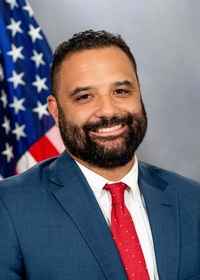
Rep. Dave Madsen
Sponsored bills
Maddy summaryThis bill modifies Pennsylvania's Human Services Code to change how medical providers are reimbursed for specific services provided to public assistance recipients. It updates reimbursement rules for certain medical items and services while replacing outdated regulations that conflicted with these changes. The primary effect is on healthcare providers who bill state assistance programs, streamlining the process for claiming payments. The bill does not create new benefits but adjusts existing reimbursement procedures under public assistance programs.
Maddy summaryHB 27 amends the Health Care Facilities Act to require hospitals and surgical clinics to install systems that remove smoke generated during certain medical procedures. This directly affects healthcare facilities performing surgeries where smoke is produced, such as those using lasers or electrosurgery. The bill mandates these evacuation systems as part of facility licensing standards under the existing 1979 law. The change focuses on improving air quality and safety for both patients and medical staff during operations.
Maddy summaryHB 1539 creates a new grant program to help school districts purchase electric school buses, funded through a dedicated "Electric School Bus Grant Program Fund." It directly affects public school districts seeking to replace diesel buses with electric models by providing financial assistance for vehicle purchases and related infrastructure. The bill requires the Department of Education to administer the program, including setting eligibility rules and distributing funds. The bill is currently pending in the Energy committee after being re-referred there from Education.
Maddy summaryHB 968 allows active duty military members and disabled veterans to use their home state fishing and hunting licenses in Pennsylvania without purchasing separate Pennsylvania licenses. The bill amends Pennsylvania’s Fish (Title 30) and Game (Title 34) statutes to create reciprocity for annual licenses, directly benefiting these groups when fishing or hunting in the state. Key provisions remove the need for these individuals to pay additional fees for Pennsylvania licenses, streamlining access to outdoor recreation. The bill passed in June 2025 and is now law.
Maddy summaryHB 1403 modifies Pennsylvania's teacher certification rules to make it easier for educators between jobs to maintain their licenses. It creates "inactive certification" for teachers not employed by a school district, allowing them to reactivate their license by either completing 30 hours of professional development within 18 months or securing a job offer that guarantees 30 hours of training during their first two years. The bill directly affects currently licensed teachers who are not actively teaching but wish to preserve their certification status. Key provisions include eliminating cost for inactive status and establishing two clear pathways to reactivation, with specific guidelines for schools to follow. The changes take effect 60 days after enactment.
Maddy summaryHB 350 updates Pennsylvania's laws on inheritance, parentage, and court procedures. It establishes the Uniform Parentage Act, creating new rules for establishing parent-child relationships through assisted reproduction, surrogacy agreements, and genetic testing, while repealing outdated paternity acknowledgment provisions. The bill modifies hearing requirements for adoption and parental rights termination, requiring specific notice to putative fathers and clarifying when parental rights may be terminated without their presence. It also adds protections for executors who fail to notify estates about assisted reproduction births that could affect inheritance. These changes directly affect families navigating adoption, surrogacy, inheritance disputes, and court cases involving parentage.
Maddy summaryThe provided context does not include the substantive provisions or specific policy changes of HB 1306. The bill's title only indicates it amends definitions and classes of income under the 1971 Tax Reform Code, but no concrete details about tax rates, brackets, affected groups, or mechanisms are described in the available information. The recent actions (e.g., "Second consideration," "Final passage") reflect procedural steps, not policy content. Without specific language or policy changes outlined in the context, a factual summary of what the bill actually does cannot be provided.
Maddy summaryHB 1095 modifies Pennsylvania court records to limit public access to eviction information in dockets and indices. It directly affects tenants, landlords, and court clerks by restricting how eviction history is shared while requiring the Administrative Office of Pennsylvania Courts to process these records under the new rules. The key provision creates a "limited access" system for eviction data, meaning the public cannot freely view these records as they currently can. This change applies specifically to eviction-related court documents within the state's judicial system. The bill passed the House on June 23, 2025, and was referred to the Judiciary Committee.
Maddy summaryHB 811 would create civil liability for political candidates who make false statements about themselves or others during campaigns. It allows affected individuals or entities to sue for damages if a candidate knowingly makes a fraudulent misrepresentation. The bill directly affects candidates running for office and voters who may be misled by false claims. Key provisions establish a legal pathway for civil lawsuits rather than criminal penalties, requiring proof of intentional falsehoods. This bill is currently in the Communications & Technology committee after passing final passage.