Issue · Labor & Employment

Labor & Employment

Every labor & employment bill, vote, and legislator stance in Pennsylvania, automatically classified by Maddy, our AI policy reader.

Total bills
325
2025-2026 Regular Session
Top supporter
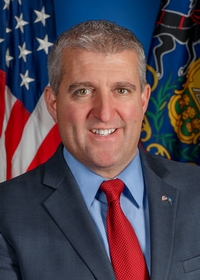
Frank Farry
93% support rate
Top opponent
Dawn Keefer
15% support rate
Ranked legislators
10
5 support · 5 oppose
Key legislators

Who's moving labor & employment in Pennsylvania

Legislators moving labor & employment in Pennsylvania
Legislator Party Stance Support rate Votes
Frank Farry
Frank Farry Senate · District 6
R
Strong +
93% 45
Devlin Robinson
Devlin Robinson Senate · District 37
R
Strong +
90% 52
Camera Bartolotta
Camera Bartolotta Senate · District 46
R
Strong +
89% 51
Joe Pittman
Joe Pittman Senate · District 41
R
Strong +
89% 55
Elder Vogel
Elder Vogel Senate · District 47
R
Strong +
88% 56
Dawn Keefer
Dawn Keefer Senate · District 31
R
Strong −
15% 46
Scott Hutchinson
Scott Hutchinson Senate · District 21
R
Oppose
29% 46
Charity Krupa
Charity Krupa House · District 51
R
Oppose
29% 256
Jarrett Coleman
Jarrett Coleman Senate · District 16
R
Oppose
29% 54
Stephanie Borowicz
Stephanie Borowicz House · District 76
R
Oppose
31% 214
Showing 41–50 of 325 bills

All labor & employment bills

in committee · Pennsylvania · Senate Mar 2, 2026

SB 1204: An Act providing for regulations for employers to protect employees from heat-related injury or heat-related illness caused by heat stress; imposing duties on the Department of Labor and Industry and the Secretary of Labor and Industry; establishing the Heat Protection Enforcement Fund; and imposing penalties.

This bill establishes workplace heat protection standards in Pennsylvania to safeguard employees from heat-related injuries and illnesses caused by heat stress. It requires the Department of Labor and Industry to create regulations within one year that mandate employers implement cooling measures, such as job rotation, misting equipment, and access to water, when heat index levels reach 80 degrees Fahrenheit or higher. The law applies to all employers except emergency responders and fire service personnel during nonemergency situations, while also creating a dedicated enforcement fund and setting penalties for noncompliance.
in committee · Pennsylvania · Senate Mar 23, 2026

SB 1241: An Act providing for mandatory Statewide paid parental leave for eligible employees; establishing the Paid Parental Leave Account and the Small Business Grant Program; imposing duties on the Department of Labor and Industry; making an appropriation; and imposing penalties.

This Pennsylvania bill establishes a statewide paid parental leave program requiring employers to provide eligible employees with up to 12 weeks of paid leave for the birth, adoption, or foster care placement of a child within the first year. Eligible employees must have worked for their employer for at least 12 months and completed 1,250 hours of service in the previous year, and they will receive their full pre-leave pay rate during the leave period. The Department of Labor and Industry will administer the program, enforce compliance through complaints and penalties, and maintain a Paid Parental Leave Account to fund the initiative. Additionally, the bill creates a Small Business Grant Program to assist smaller employers with the costs of providing paid parental leave, and requires employers to notify employees about their rights and post information about the program in the workplace.
Sub-Topics Paid Leave
in committee · Pennsylvania · House Mar 30, 2026

HB 2332: An Act requiring certain warehouses to provide written descriptions of employment quotas; imposing powers and duties on the Department of Labor and Industry; and imposing penalties.

This Pennsylvania bill, known as the Warehouse Worker Protection Act, requires warehouses with 100 or more employees to provide written and verbal notice of employment quotas to workers upon hiring or within 30 days. The law defines quotas as specific production standards tied to time periods where failure to meet them could lead to disciplinary action, and mandates that employers explain these quotas, potential consequences, and any associated bonuses in a language the employee understands. Additionally, the bill prohibits employers from taking adverse employment actions against workers if they fail to provide adequate notice of quotas as required, while also requiring employers to notify employees of any quota changes at least five business days before enforcement. The Department of Labor and Industry gains authority to enforce these requirements and impose penalties on non-compliant employers.
signed · Pennsylvania · House Jun 12, 2026

HB 2404: An Act making appropriations from the Workmen's Compensation Administration Fund to the Department of Labor and Industry and the Department of Community and Economic Development to provide for the expenses of administering the Workers' Compensation Act, The Pennsylvania Occupational Disease Act and the Office of Small Business Advocate for the fiscal year July 1, 2026, to June 30, 2027, and for the payment of bills incurred and remaining unpaid at the close of the fiscal year ending June 30, 2026.

This bill allocates $81.3 million from the Workmen's Compensation Administration Fund to the Department of Labor and Industry to cover operating expenses for the fiscal year 2026-2027. The funds will support salaries, wages, travel, and contractual services needed to administer the Workers' Compensation Act and the Pennsylvania Occupational Disease Act. An additional $550,000 is designated for the Office of Small Business Advocate within the Department of Community and Economic Development to fund its operations during the same period. The legislation also authorizes payment of any outstanding bills from the previous fiscal year that remain unpaid as of June 30, 2026.
in committee · Pennsylvania · Senate Mar 30, 2026

SB 1255: An Act amending the act of March 4, 1971 (P.L.6, No.2), known as the Tax Reform Code of 1971, in personal income tax, further providing for classes of income and providing for exclusion of tips from taxable income.

This bill amends Pennsylvania's Tax Reform Code to exclude tips from taxable personal income. It directly affects employees who receive tips, such as restaurant and hospitality workers, by removing these earnings from their taxable income calculations. The legislation defines tips as voluntary customer payments and explicitly excludes employer-mandated fees or service charges from this exclusion. The Department of Revenue will create regulations to implement the change and prevent fraud or misclassification of wages as tips. The law takes effect 60 days after passage and applies to the next fiscal year following that date.
Sub-Topics Income Tax Gig Economy
in committee · Pennsylvania · House Mar 26, 2026

HB 2321: An Act providing for job posting requirements; and imposing penalties.

This Pennsylvania bill, known as the Ghost Job Postings Prevention Act, requires employers with 50 or more employees to include specific details in public job postings and prohibits keeping filled positions open indefinitely. Key provisions mandate that job ads disclose whether the role is existing or anticipated, provide salary ranges and funding status, state how long the posting will remain active, and inform applicants about AI use in hiring decisions. Employers must also remove filled job postings within two weeks, notify job boards of closures, and send status updates to applicants within set timeframes after interviews. Violations could result in fines ranging from $1,000 to $5,000 per violation, with higher penalties up to $25,000 per applicant for data mining or selling applicant information.
in committee · Pennsylvania · House Mar 26, 2026

HB 2319: An Act amending the act of June 24, 1976 (P.L.424, No.101), referred to as the Emergency and Law Enforcement Personnel Death Benefits Act, further providing for title of act; and adding provisions relating to telecommunicators.

This bill expands death benefit eligibility under Pennsylvania's Emergency and Law Enforcement Personnel Death Benefits Act to include telecommunicators, who are now formally recognized as covered personnel alongside firefighters, law enforcement officers, and other first responders. The legislation adds telecommunicators to the list of individuals presumed to have died in the line of duty if they suffer a fatal heart attack or stroke while on duty or within 24 hours of responding to an emergency. It also clarifies that telecommunicators are considered to be acting in the performance of their duties when following 911 emergency communication service protocols, ensuring they receive the same death benefits as other covered emergency personnel.
Sub-Topics Unemployment
in committee · Pennsylvania · Senate Jun 22, 2026

SB 906: An Act establishing the Pennsylvania Family and Medical Leave Program and the Family and Medical Leave Fund; conferring powers and imposing duties on the Department of Labor and Industry; creating a right of action; and imposing penalties.

This bill establishes a new paid family and medical leave program in Pennsylvania, creating a fund to support workers who need time off for family care or medical reasons. It requires employers to contribute to the program and sets rules for how long employees can take leave, how much money they receive, and what situations qualify for benefits, including care for family members with serious health conditions or recovery from domestic violence. The Department of Labor and Industry will administer the program, handle claims, and enforce rules, while employees have the right to take legal action if their rights are violated. The legislation also includes provisions for self-employed individuals to opt into the program and establishes an advisory board to guide program development.
in committee · Pennsylvania · House Mar 13, 2025

HB 904: An Act providing for school-to-work programs; establishing the CareerBound Program; providing for the CareerBound Tax Credit Program; and conferring powers and imposing duties on the Department of Community and Economic Development and the Department of Labor and Industry.

This bill creates the CareerBound Program to connect Pennsylvania students with high-priority job opportunities through school-to-work partnerships. It establishes a formal framework where schools, local workforce boards, and businesses collaborate to provide career exploration, relevant curriculum, and workplace exposure for students. The legislation also creates a tax credit program to encourage businesses to participate in these partnerships by offering financial incentives for hiring students in high-demand occupations. State agencies including the Department of Labor and Industry and the Department of Community and Economic Development will administer the program and oversee its implementation.
passed · Pennsylvania · Senate Jun 12, 2026

SB 908: An Act amending the act of August 15, 1961 (P.L.987, No.442), known as the Pennsylvania Prevailing Wage Act, further providing for definitions, for specifications and for duty of secretary.

This bill amends Pennsylvania's Prevailing Wage Act to clarify definitions and requirements for public works projects. It expands the definition of "public work" to include custom fabrication of nonstandard goods or materials for projects costing more than $25,000, while excluding structural steel and precast concrete. The law requires contractors and subcontractors performing custom fabrication to follow the same wage, reporting, and compliance rules as other public works contractors. Additionally, the bill clarifies that the Secretary of Labor and Industry must determine prevailing wage rates for all crafts, including those involved in custom fabrication, and must consider employee benefit contributions from collective bargaining agreements when setting these rates.
Showing 41 to 50 of 325 bills
Previous 1 4 5 6 33 Next