Issue · Healthcare

Healthcare

Every healthcare bill, vote, and legislator stance in Pennsylvania, automatically classified by Maddy, our AI policy reader.

Total bills
703
2025-2026 Regular Session
Top supporter
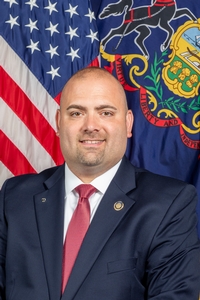
Joe Pittman
96% support rate
Top opponent
Eric Weaknecht
14% support rate
Ranked legislators
10
5 support · 5 oppose
Key legislators

Who's moving healthcare in Pennsylvania

Legislators moving healthcare in Pennsylvania
Legislator Party Stance Support rate Decisive votes
Joe Pittman
Joe Pittman Senate · District 41
R
Strong +
96% 24
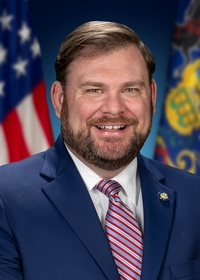
Bridget Malloy Kosierowski
Bridget Malloy Kosierowski House · District 114
D
Strong +
94% 113
Devlin Robinson
Devlin Robinson Senate · District 37
R
Strong +
93% 29
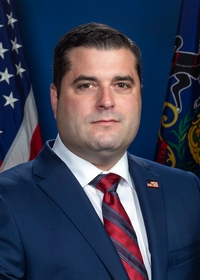
Steve Malagari
Steve Malagari House · District 53
D
Strong +
93% 95
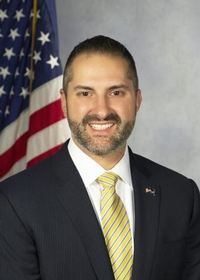
Kyle Mullins
Kyle Mullins House · District 112
D
Strong +
92% 91
Eric Weaknecht
Eric Weaknecht House · District 5
R
Strong −
14% 66
Jamie Walsh
Jamie Walsh House · District 117
R
Strong −
14% 80
Scott Barger
Scott Barger House · District 80
R
Strong −
14% 72
Ryan Warner
Ryan Warner House · District 52
R
Strong −
14% 77
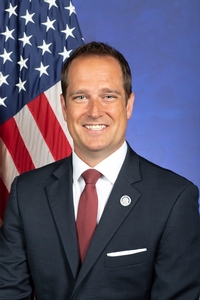
Joe Hamm
Joe Hamm House · District 84
R
Strong −
14% 76
Showing 411–420 of 703 bills

All healthcare bills

in committee · Pennsylvania · House Nov 18, 2025

HB 1652: An Act amending the act of September 9, 1965 (P.L.497, No.251), known as the Newborn Child Testing Act, further providing for Newborn Child Screening and Follow-up Program.

HB 1652 adds Gaucher disease to Pennsylvania's mandatory newborn screening program under the Newborn Child Testing Act. The bill expands the existing program to require screening for this genetic disorder in newborns, directly affecting all infants born in Pennsylvania. Key provisions include updating the list of covered conditions under Section 3(a)(1) of the 1965 Act, ensuring healthcare providers screen for Gaucher disease to identify it early. This change aims to enable timely treatment to prevent intellectual or physical disabilities, aligning with the program's existing purpose. The bill does not alter funding or implementation processes, only adding one specific condition to the screening list.
in committee · Pennsylvania · Senate Jun 6, 2025

SR 121: A Resolution designating August 31, 2025, as "Overdose Awareness Day" in Pennsylvania.

This resolution designates August 31, 2025, as "Overdose Awareness Day" in Pennsylvania. It requests the Governor to issue a proclamation encouraging public officials and residents to observe the day through appropriate activities, and to order flags flown at half-staff. The resolution aims to raise awareness about drug overdoses, reduce stigma around substance use, and acknowledge the impact of overdose deaths on families and communities. It does not create new laws or funding but serves as a symbolic recognition of the overdose crisis.
Sub-Topics Substance Abuse
in committee · Pennsylvania · Senate Jun 24, 2025

SB 850: An Act amending the act of November 3, 2022 (P.L.2135, No.150), known as the Childhood Blood Lead Test Act, further providing for legislative purpose, for definitions, for lead poisoning prevention, assessment and testing and for blood lead assessment and testing coverage.

SB 850 amends Pennsylvania's Childhood Blood Lead Test Act to require all children under 72 months to receive at least one blood lead test by age 2 (or by 72 months if never tested), and mandates confirmatory testing if initial results indicate elevated lead levels. It directly affects children under 72 months and pregnant women, ensuring no out-of-pocket costs (like copays or deductibles) for covered blood lead tests. The bill updates testing requirements to be mandatory (replacing "encourage" with "require") and clarifies that health insurance must cover these tests without cost-sharing. These changes aim to improve early detection of lead exposure, a preventable health risk linked to developmental issues in young children.
Sub-Topics Insurance
passed · Pennsylvania · House Mar 25, 2025

HB 535: An Act providing for health care insurance coverage protections; imposing duties on the Insurance Department and the Insurance Commissioner; and imposing penalties.

HB 535 bans Pennsylvania health insurers from setting annual or lifetime dollar limits on core health benefits for enrollees, whether services are provided by in-network or out-of-network providers. It applies to all individual and group health insurance policies (excluding specific types like Medicare supplements or dental/vision-only plans) and prohibits limits on benefits that were already covered without such caps in 2025 policies. The Insurance Department can enforce this through fines up to $5,000 per violation (or $10,000 for willful violations), with annual caps of $500,000 for insurers. The law does not require coverage of specific benefits but eliminates existing dollar limit practices for covered services.
Sub-Topics Insurance Medicare
in committee · Pennsylvania · Senate May 22, 2025

SB 781: An Act amending the act of March 10, 1949 (P.L.30, No.14), known as the Public School Code of 1949, in pupils and attendance, further providing for definitions and providing for mental health days.

SB 781 creates a new "mental health day" category allowing Pennsylvania students to miss school excused for mental or physical fatigue due to mental health needs, whether diagnosed (like anxiety or depression) or not (such as trauma from school incidents or academic stress). It permits up to two consecutive days per week for mental health days, with schools required to adopt policies by the 2026-2027 school year. The bill defines "uncertified" mental health needs broadly to include un-diagnosed stressors like grief, bullying, or burnout, while limiting additional days beyond the two-day weekly cap. The state department must develop model policies and guidelines within 90 days of the bill's effective date.
in committee · Pennsylvania · Senate Oct 15, 2025

SB 1039: An Act amending the act of March 10, 1949 (P.L.30, No.14), known as the Public School Code of 1949, in student supports, further providing for definitions and for student supports and providing for the Pennsylvania Mental Health First Aid Training Program; and, in school safety and security, further providing for the School Safety and Security Grant Program.

SB 1039 amends Pennsylvania's Public School Code to enhance student supports and school safety. It creates a new Pennsylvania Mental Health First Aid Training Program for school staff and updates the School Safety and Security Grant Program to fund safety improvements. The bill directly affects public schools, teachers, and students by requiring mental health training for staff and providing grant opportunities for school safety projects. These changes aim to improve student well-being and school safety infrastructure through concrete program additions.
in committee · Pennsylvania · House Jun 25, 2025

HR 274: A Resolution urging the Congress of the United States to expand Medicare to include coverage of hearing aids.

This Pennsylvania House resolution urges Congress to expand Medicare to cover hearing aids. Currently, Medicare does not cover hearing aids or their fittings - only limited diagnostic exams under Part B. It specifically targets the gap affecting over 48 million Americans with hearing loss who rely on Medicare. The resolution requests Congressional action to amend Medicare policy but has no legal force.
Sub-Topics Medicare
passed · Pennsylvania · House Jul 23, 2025

HB 1697: An Act amending the act of June 13, 1967 (P.L.31, No.21), known as the Human Services Code, providing for liability for false claims, for adoption of congressional intent of the Federal False Claims Act, for damages, costs and civil penalties, for powers of Attorney General, for qui tam actions and for civil investigative demands; and establishing the Fraud Prevention and Recovery Account.

HB 1697 amends Pennsylvania's Human Services Code to create a state-level False Claims Act, directly affecting healthcare providers, contractors, and organizations receiving state funds (like Medicaid or welfare programs). It makes individuals or entities liable for three times the damages plus penalties if they knowingly submit false claims, make false records, or conceal obligations to the state. The bill establishes "qui tam" lawsuits allowing whistleblowers to sue on behalf of the state and creates a Fraud Prevention and Recovery Account to hold recovered funds. These provisions align Pennsylvania's law with the federal False Claims Act to combat fraud in public spending.
in committee · Pennsylvania · Senate Feb 26, 2025

SB 318: An Act amending the act of May 17, 1921 (P.L.682, No.284), known as The Insurance Company Law of 1921, in casualty insurance, providing for coverage for postacute neurorehabilitation.

SB 318 requires most health insurance policies in Pennsylvania to cover postacute neurorehabilitation services for individuals with acquired brain injuries. This includes specific therapies like cognitive rehabilitation, neurobehavioral treatment, community reintegration, and day rehabilitation programs, as determined medically necessary by a patient's doctor. Insurers cannot impose arbitrary limits on the number of covered days or apply stricter deductibles/copays for these services than for other covered benefits. The law applies to group/individual health plans but excludes accident-only, dental, vision, Medicare supplements, and certain other limited policies.
Sub-Topics Insurance Medicare
in committee · Pennsylvania · Senate Apr 11, 2025

SB 608: An Act amending Title 40 (Insurance) of the Pennsylvania Consolidated Statutes, in regulation of insurers and related persons generally, providing for association health plans.

SB 608 creates new rules for "association health plans" in Pennsylvania, which are group health coverage offered by employer associations (like industry groups or local business networks) rather than individual employers. It requires these associations to have existed for at least two years, not deny coverage based on health status, and offer plans to all members regardless of health. The bill defines key terms like "small employer" (1-50 employees) and clarifies that association plans must meet specific policy requirements under state insurance law. This directly affects employer associations and their members (employees of small businesses or sole proprietors) seeking group health coverage through these structures.
Sub-Topics Insurance
Showing 411 to 420 of 703 bills
Previous 1 … 41 42 43 … 71 Next