Issue · Environment

Environment (Drinking Water)

Every environment bill, vote, and legislator stance in Pennsylvania, automatically classified by Maddy, our AI policy reader.

Total bills
20
2025-2026 Regular Session
Top supporter
Joe Webster
80% support rate
Top opponent
Charity Krupa
25% support rate
Ranked legislators
10
5 support · 5 oppose
Key legislators

Who's moving drinking water in Pennsylvania

Legislators moving drinking water in Pennsylvania
Legislator Party Stance Support rate Votes
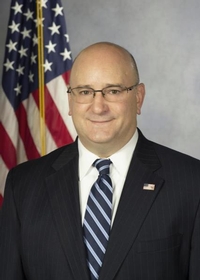
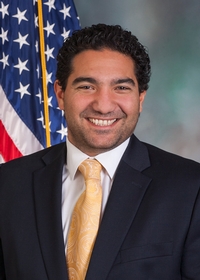
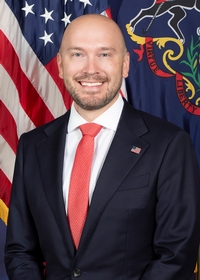
Joe Webster
Joe Webster House · District 150
D
Strong +
80% 5
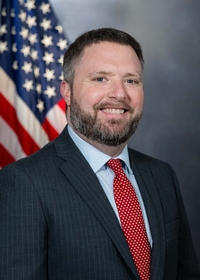
Ben Sanchez
Ben Sanchez House · District 153
D
Support
75% 4
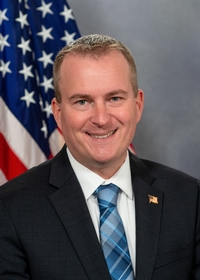
Ben Waxman
Ben Waxman House · District 182
D
Support
75% 4
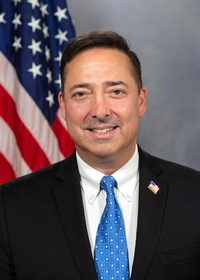
Brian Munroe
Brian Munroe House · District 144
D
Support
75% 4
Chris Pielli
Chris Pielli House · District 156
D
Support
75% 4
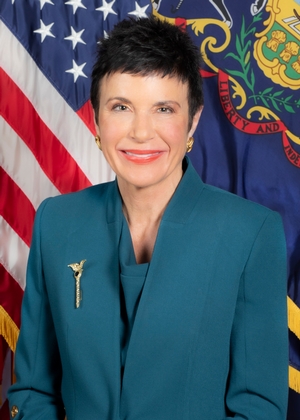
Charity Krupa
Charity Krupa House · District 51
R
Oppose
25% 4
Jake Banta
Jake Banta House · District 4
R
Oppose
25% 4
Josh Kail
Josh Kail House · District 15
R
Oppose
25% 4
Marla Brown
Marla Brown House · District 9
R
Oppose
25% 4
Roman Kozak
Roman Kozak House · District 14
R
Oppose
25% 4
Showing 1–10 of 20 bills

All environment bills

in committee · Pennsylvania · Senate Jun 4, 2026

SR 333: A Resolution designating the week of June 7 through 13, 2026, as "Chesapeake Bay Awareness Week" in Pennsylvania.

This Senate Resolution designates the week of June 7 through 13, 2026, as "Chesapeake Bay Awareness Week" in Pennsylvania. The measure encourages residents to hold events and educational programs to highlight the bay's importance as a source of drinking water, recreation, and economic activity. It does not create new laws or funding but serves as a symbolic gesture to recognize the watershed's ecological and historical significance.
in committee · Pennsylvania · House Apr 22, 2026

HB 2442: An Act amending the act of May 1, 1984 (P.L.206, No.43), known as the Pennsylvania Safe Drinking Water Act, providing for temporary operating license; and imposing duties on the Department of Agriculture.

HB 2442 amends Pennsylvania's Safe Drinking Water Act to allow the Department of Agriculture to issue temporary operating licenses to applicants seeking retail food facility permits. To qualify, applicants must prove they have submitted a complete public water system permit application and provide certified lab tests showing their water system meets federal standards. The temporary license remains valid only while the permit application is pending and automatically expires if the permit is issued, denied, or if the applicant fails to submit required compliance tests every six months.
in committee · Pennsylvania · House Feb 20, 2026

HB 2236: An Act amending Title 66 (Public Utilities) of the Pennsylvania Consolidated Statutes, in service and facilities, providing for alerting residential customers to potential water leaks.

HB 2236 requires Pennsylvania public utilities to notify residential customers when their water usage significantly exceeds typical levels (by 200% or $200 above average over 12 months), as it may indicate a property leak. Notifications must include a leak warning, an estimate of future bills if usage continues, and tips for preventing/identifying leaks. Utilities may offer a free, non-intrusive site visit (with customer consent) to inspect for leaks but cannot disturb property or be held liable for missed leaks. The bill defines "atypical water consumption" and prohibits utilities from using this data for purposes beyond leak alerts.
Sub-Topics Drinking Water
in committee · Pennsylvania · Senate Feb 27, 2026

SB 1157: An Act amending the act of October 18, 1988 (P.L.756, No.108), known as the Hazardous Sites Cleanup Act, providing for spill response and residential environmental protection; and, in fund, further providing for Hazardous Sites Cleanup Fund.

SB 1157 amends Pennsylvania's Hazardous Sites Cleanup Act to require immediate action for hazardous substance spills in residential areas. The bill mandates that responsible parties (such as owners, operators, or transporters) must promptly contain, clean up, and remove discharges threatening public health, drinking water, or residential environments. It imposes strict liability on these parties without requiring proof of fault and authorizes the Department of Environmental Resources to issue cleanup directives. The law aims to ensure faster responses to spills endangering homes, water supplies, and residents, aligning with Pennsylvania's constitutional environmental protections.
passed · Pennsylvania · House Jun 11, 2026

HB 2145: An Act amending Title 12 (Commerce and Trade) of the Pennsylvania Consolidated Statutes, providing for consumer protection and prohibiting the use of perfluoroalkyl and polyfluoroalkyl substances in certain products; and imposing penalties.

HB 2145 prohibits the use of perfluoroalkyl and polyfluoroalkyl substances (PFAS) in specific consumer products sold in Pennsylvania, directly affecting manufacturers of these items. The bill bans intentionally added PFAS in cosmetics, dental floss, juvenile products (like baby mattresses and strollers), and menstrual products, while defining these terms precisely in Chapter 71 of Pennsylvania’s Commerce and Trade code. The Department of Environmental Protection will enforce the ban and impose penalties for violations. This law aims to protect consumers from potential health risks associated with PFAS chemicals, which are linked to environmental contamination and health concerns.
Sub-Topics Drinking Water
in committee · Pennsylvania · House Feb 20, 2025

HB 675: An Act amending Title 35 (Health and Safety) of the Pennsylvania Consolidated Statutes, in Commonwealth services, providing for firefighting personal protective equipment; and imposing penalties.

HB 675 bans the sale or distribution of firefighting personal protective equipment (PPE) containing intentionally added PFAS chemicals in Pennsylvania starting January 1, 2028, directly affecting manufacturers, sellers, and distributors of such gear. The law includes an exception if the State Fire Commissioner determines PFAS use is unavoidable and issues official guidance. Violations carry civil penalties of up to $5,000 for first offenses and $10,000 for repeat offenses, with fines split equally between the Fire Company Grant Program and Emergency Medical Services Grant Program. This bill aims to reduce exposure to harmful PFAS chemicals while maintaining safety standards for firefighters.
Sub-Topics Drinking Water
in committee · Pennsylvania · House Mar 11, 2025

HB 874: An Act amending the act of May 1, 1984 (P.L.206, No.43), known as the Pennsylvania Safe Drinking Water Act, further providing for definitions and for variances and exemptions.

HB 874 amends Pennsylvania's Safe Drinking Water Act to clarify definitions and update rules for temporary exemptions. It specifically revises the definition of "public water system" to exclude religious facilities (like churches) using private wells for drinking water, while clarifying that systems serving at least 15 connections or 25 daily users qualify as public systems. The bill also modifies how the Department can grant exemptions from water quality standards, requiring proof that exemptions won’t risk health (including no microbial contaminant evidence) and setting federal expiration dates for such exemptions. These changes directly affect public water systems, small communities, and religious organizations relying on private wells, with the law taking effect 60 days after passage.
in committee · Pennsylvania · House Jun 23, 2026

HB 1213: An Act amending Titles 53 (Municipalities Generally) and 66 (Public Utilities) of the Pennsylvania Consolidated Statutes, in municipal authorities, providing for customer notice of atypical water usage; and, in rates and distribution systems, providing for customer notice of atypical water usage.

HB 1213 requires municipal water authorities and public utilities to notify residential customers when their water usage increases by 200% above the property's average for a single month. The notice must be sent via phone or email, and the utility must help customers identify potential leaks or inefficiencies. This applies to both municipal systems (under Title 53) and public utilities (under Title 66). The law takes effect 60 days after enactment.
Sub-Topics Drinking Water
in committee · Pennsylvania · House Mar 10, 2025

HB 847: An Act amending the act of May 1, 1984 (P.L.206, No.43), known as the Pennsylvania Safe Drinking Water Act, further providing for penalties and remedies.

HB 847 amends Pennsylvania's Safe Drinking Water Act to require the Department of Environmental Resources to offer a written preenforcement conference with violators before criminal charges can be filed under the Act's penalty provisions. This change directly affects individuals or entities potentially facing criminal prosecution for violations covered under sections (c), (d), or (e) of the Act. The key mechanism adds a mandatory step: the department must provide written notice of an opportunity to discuss the alleged violation before any criminal proceedings begin. The bill does not change the penalties or violations themselves but alters the enforcement process for criminal cases. (House Bill 847, 2025 Session)
Sub-Topics Drinking Water
in committee · Pennsylvania · House Oct 16, 2025

HB 1954: An Act providing for a moratorium on the privatization of public water and wastewater systems; establishing the Water Utility Reform Working Group; and making a repeal relating to valuation of acquired water and wastewater systems.

HB 1954 temporarily halts the privatization of public water and wastewater systems owned by municipalities. It creates a Water Utility Reform Working Group to develop long-term solutions for public water management. The bill also repeals a specific rule about valuing water systems acquired by public entities. This directly affects cities and towns operating public water services, preventing private companies from taking over these systems while the working group develops reforms.
Showing 1 to 10 of 20 bills
1 2 Next