Issue · Environment

Environment (Air Quality)

Every environment bill, vote, and legislator stance in Pennsylvania, automatically classified by Maddy, our AI policy reader.

Total bills
15
2025-2026 Regular Session
Top supporter
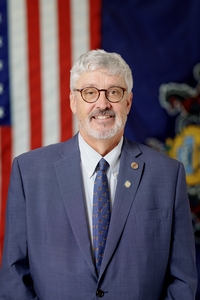
Tim Kearney
100% support rate
Top opponent
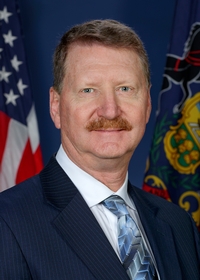
Elder Vogel
0% support rate
Ranked legislators
10
5 support · 5 oppose
Key legislators

Who's moving air quality in Pennsylvania

Legislators moving air quality in Pennsylvania
Legislator Party Stance Support rate Votes
Tim Kearney
Tim Kearney Senate · District 26
D
Strong +
100% 8
Lindsey Williams
Lindsey Williams Senate · District 38
D
Strong +
100% 6
Nikil Saval
Nikil Saval Senate · District 1
D
Strong +
100% 6
Amanda Cappelletti
Amanda Cappelletti Senate · District 17
D
Strong +
100% 5
Art Haywood
Art Haywood Senate · District 4
D
Strong +
100% 5
Elder Vogel
Elder Vogel Senate · District 47
R
Strong −
0% 8
Kim Ward
Kim Ward Senate · District 39
R
Strong −
0% 8
Rosemary Brown
Rosemary Brown Senate · District 40
R
Strong −
0% 8
Wayne Langerholc
Wayne Langerholc Senate · District 35
R
Strong −
0% 8
Devlin Robinson
Devlin Robinson Senate · District 37
R
Strong −
0% 7
Showing 1–10 of 15 bills

All environment bills

in committee · Pennsylvania · House May 27, 2026

HB 2537: An Act amending the act of January 8, 1960 (1959 P.L.2119, No.787), known as the Air Pollution Control Act, further providing for penalties.

This Pennsylvania bill strengthens penalties for violating the state's Air Pollution Control Act, specifically targeting emissions of bad smells or odors. It mandates that anyone who willfully or negligently breaks air pollution rules faces a fine of at least $1,000 or up to two years in prison for each offense. For violations involving malodors, the law sets escalating fines of $150,000, $200,000, and $250,000 for the first, second, and third offenses respectively. Additionally, if a business fails to fix a malodor problem after 30 days, it must stop operations until the issue is resolved and approved by the Department of Environmental Resources. These changes apply to all individuals and entities operating within Pennsylvania and take effect 60 days after the bill is passed.
Sub-Topics Air Quality
in committee · Pennsylvania · House May 13, 2026

HB 2515: An Act providing for commercial data center transparency regarding energy use, water use and noise pollution; imposing duties on the Department of Environmental Protection, the Department of Transportation and the Office of Attorney General; and imposing civil penalties.

This bill, known as the Commercial Data Center Transparency Act, requires large data centers in Pennsylvania to publicly disclose their energy, water, and noise impacts. It specifically targets facilities with a peak power demand of 25 megawatts or more, mandating that applicants reveal details in their permit applications regarding water usage, wastewater, air quality, and transportation needs. The law also obligates these facilities to report specific water consumption data to the Department of Environmental Protection if they use more than 100,000 gallons per day or consume 20,000 gallons daily. To ensure compliance, the bill imposes civil penalties on entities that knowingly fail to make required disclosures or submit false information.
Sub-Topics Air Quality
passed · Pennsylvania · Senate May 7, 2026

SB 1298: An Act amending Title 75 (Vehicles) of the Pennsylvania Consolidated Statutes, in inspection of vehicles, further providing for prohibition on expenditures for emission inspection program.

This bill updates Pennsylvania's vehicle inspection rules by exempting the newest model year vehicles from emission testing for five years and removing the gas cap test requirement for cars manufactured without one. While these newer cars are waived from emission checks, they must still undergo visual inspections to ensure emissions control parts have not been tampered with. Additionally, the legislation directs the state to stop spending money on the enhanced emission inspection program in several specific counties and to submit a revised plan to the federal government proving those areas can still meet air quality standards without it.
in committee · Pennsylvania · House Mar 10, 2026

HB 2272: An Act amending Title 75 (Vehicles) of the Pennsylvania Consolidated Statutes, in inspection of vehicles, further providing for prohibition on expenditures for emission inspection program.

This bill directs Pennsylvania's Department of Environmental Protection to remove a specific third-class county with a population between 215,000 and 216,000 from the enhanced vehicle emission inspection program within 60 days of the bill's effective date. The department must then submit a revised State implementation plan to the U.S. Environmental Protection Agency by January 1, 2027, demonstrating that the county can maintain federal air quality standards without the inspection program. The plan must comply with federal law and ensure it does not interfere with air quality goals or federal funding, with formal notifications sent to state legislative committee chairs upon EPA approval.
in committee · Pennsylvania · House Feb 9, 2026

HB 2208: An Act amending Title 75 (Vehicles) of the Pennsylvania Consolidated Statutes, in inspection of vehicles, further providing for prohibition on expenditures for emission inspection program.

HB 2208 removes counties with populations between 168,000 and 169,000 (based on the latest census) from Pennsylvania’s enhanced vehicle emission inspection program. It requires the Department of Environmental Protection to submit a revised state plan to the EPA by January 1, 2026, proving these counties can meet air quality standards without the inspection program. The plan must comply with federal requirements and avoid negatively impacting air quality goals or funding. The department must also notify specific legislative committees about the EPA submission.
in committee · Pennsylvania · House Oct 6, 2025

HR 280: A Resolution directing the Department of Corrections to conduct an environmental study of each State correctional institution to determine if individuals housed in each State correctional institution are being exposed to harmful, hazardous or unsanitary conditions and to ensure that individuals housed in each State correctional institution are receiving clean air and pure water.

HR 280 is a resolution requiring Pennsylvania's Department of Corrections to conduct environmental studies at all state correctional facilities. The studies must identify health hazards like poor air quality, mold, pests, or unsafe water, and assess their impact on both incarcerated individuals and staff. The resolution mandates the Department to collaborate with environmental and health agencies, estimate repair costs, and provide improvement recommendations. The Department must submit a final report to legislative leaders within 24 months. This resolution directly affects all individuals housed in Pennsylvania's state correctional institutions by addressing environmental conditions they currently face.
passed · Pennsylvania · House Jun 25, 2025

HB 27: An Act amending the act of July 19, 1979 (P.L.130, No.48), known as the Health Care Facilities Act, in licensing of health care facilities, providing for surgical smoke evacuation systems.

HB 27 amends the Health Care Facilities Act to require hospitals and surgical clinics to install systems that remove smoke generated during certain medical procedures. This directly affects healthcare facilities performing surgeries where smoke is produced, such as those using lasers or electrosurgery. The bill mandates these evacuation systems as part of facility licensing standards under the existing 1979 law. The change focuses on improving air quality and safety for both patients and medical staff during operations.
Sub-Topics Air Quality
passed · Pennsylvania · House Oct 8, 2025

HR 271: A Resolution directing the Joint State Government Commission to establish an advisory committee and conduct a comprehensive study regarding the indoor air quality for seniors and children in this Commonwealth.

HR 271 is a resolution directing the Joint State Government Commission to establish an advisory committee and study indoor air quality concerns affecting seniors and children in the Commonwealth. It requires the commission to conduct a formal review of current air quality standards and potential health impacts in these vulnerable groups' living environments. The key mechanism involves creating a committee to gather data, analyze risks, and recommend improvements to indoor air quality policies. This resolution does not create new laws but mandates a study to inform future policy decisions.
Sub-Topics Air Quality
in committee · Pennsylvania · House Apr 7, 2025

HB 1167: An Act prohibiting solar radiation modification or sunlight reflection methods, cloud seeding and polluting atmospheric interventions within this Commonwealth; imposing duties on the Pennsylvania State Police and sheriffs; and imposing penalties.

HB 1167, titled the Clean Air Preservation Act, bans cloud seeding, solar radiation modification, and other polluting atmospheric interventions within Pennsylvania. It directly affects any person or organization (including government agencies, corporations, or individuals) conducting such activities. The law requires Pennsylvania State Police or sheriffs to issue immediate cease-and-desist orders for suspected violations, treating these orders as court-enforceable. Violators face felony charges with penalties of at least $500,000 fines or two years in prison per violation, plus potential additional penalties under Pennsylvania’s existing Air Pollution Control Act.
in committee · Pennsylvania · House Mar 3, 2025

HB 761: An Act amending Title 75 (Vehicles) of the Pennsylvania Consolidated Statutes, in inspection of vehicles, further providing for prohibition on expenditures for emission inspection program.

HB 761 directs Pennsylvania's Department of Environmental Protection (DEP) to remove specific counties from the enhanced vehicle emission inspection program within 60 days. These counties are defined by exact population ranges (e.g., third-class counties with 215,000-216,000 residents). The DEP must demonstrate these counties can maintain air quality standards without the inspection program and submit revised plans to the EPA by January 1, 2026. The bill affects only the listed counties and requires coordination with federal air quality requirements.
Showing 1 to 10 of 15 bills
1 2 Next