Maddy summaryThis bill requires the District of Columbia government to stop policies that prevent sharing immigration status information with federal authorities or refusing to comply with federal immigration detainer requests. It directly affects DC government entities, including police and local officials, by mandating cooperation with federal immigration enforcement under specific conditions. Key provisions prohibit DC from restricting the sharing of immigration status data or refusing to honor DHS detainer requests, except when an individual is a victim or witness to a crime. The exception ensures DC can maintain protections for crime victims without violating the bill's requirements.
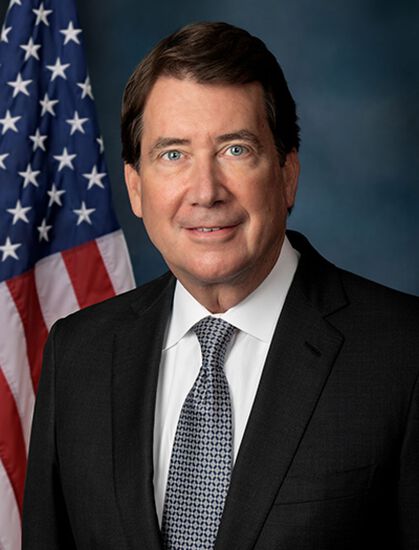
Sen. Bill Hagerty
Sponsored bills
Insurance Data Protection Act This bill limits the ability of federal entities to compel insurance companies to share information. Specifically, the bill eliminates the subpoena power of the Federal Insurance Office. Under current law, the office has the power to subpoena information from insurers to, among other purposes, identify issues that could contribute to a systemic crisis in the insurance industry or the U.S. financial system. The bill also eliminates the ability of the Office of Financial Research to subpoena insurance companies. When seeking to collect insurance company data under specified consumer protection laws, a financial regulator must obtain the data from other regulators or from publicly available sources if possible. Otherwise, the financial regulator may only collect this data directly from the insurance company if the regulator complies with the Paperwork Reduction Act.
Maddy summaryThe Stand with Israel Act would prohibit U.S. federal funds from being used to pay the U.S. share of United Nations dues or contributions to UN programs, specialized agencies, or related entities if the UN or a UN entity expels, downgrades, or suspends Israel's membership or restricts Israel's full and equal participation as a member state. This means the U.S. government would withhold payments to the UN in cases where the UN takes such actions against Israel. The bill directly affects the Department of State and other federal agencies responsible for UN funding, requiring them to block these payments under specified conditions. It does not compel the UN to act but would prevent U.S. financial support in response to UN decisions impacting Israel's membership status.
Maddy summarySRES 186 designates April 29, 2025, as National Fentanyl Awareness Day to raise public awareness about the dangers of counterfeit fentanyl pills. The resolution specifically aims to inform families and young people about how fake pills - often disguised as legitimate medications - contribute to overdose deaths, citing that illicit fentanyl was involved in 81% of drug deaths among youth aged 14-23 in 2023. It does not create new laws or funding but formally supports existing efforts to combat counterfeit pills and encourages awareness campaigns. The resolution highlights alarming statistics, including 51,010 fentanyl-related overdose deaths in 2024 and low youth awareness (only 55% of teens knew about counterfeit pills).
Maddy summaryThis bill amends federal murder law to treat fentanyl distribution causing death as first-degree murder. It specifically targets individuals who distribute fentanyl (or certain analogues) in quantities of 2 grams or more (or 0.5 grams for analogues) and who know or should know the substance contains fentanyl, resulting in death. Those convicted face the death penalty or life imprisonment. The law directly affects drug distributors whose actions cause fatal overdoses, shifting prosecution from drug trafficking charges to capital murder under federal law.
Break Up Suspicious Transactions of Fentanyl Act or the BUST FENTANYL Act This bill revives a requirement for the President to identify foreign opioid traffickers and extends opioid trafficking sanctions to new categories of foreign persons (individuals and entities) whose actions support such trafficking. Specifically, the bill revives through 2030 a requirement that the President annually submit a report to Congress identifying foreign opioid traffickers. (For those listed in the report, the President must select certain sanctions to impose on them, such as bans on loans, foreign exchange transactions, and property transactions.) The bill also specifies that such reports must prioritize the identification of Chinese nationals and entities involved in the shipment of fentanyl, fentanyl-related chemicals, and fentanyl manufacturing equipment to Mexico or any other country involved in the production of fentanyl trafficked to the United States. The bill extends such foreign opioid trafficker sanctions to additional categories of foreign persons, including those that have knowingly (1) engaged in significant activities or financial transactions that materially contributed to opioid trafficking; or (2) provided financial, material, or technological support for such activities or transactions. The bill also authorizes the President to impose these sanctions on foreign government entities, including government owned or controlled financial institutions, that are involved in activities that contribute to opioid trafficking. Additionally, the President may impose property-blocking sanctions on senior officials of these foreign government entities who knowingly facilitate such activities.

Maddy summaryThe Combating Organized Retail Crime Act amends federal law to strengthen legal tools for addressing organized retail crime, including theft from stores, online, and supply chains. It establishes a new Organized Retail and Supply Chain Crime Coordination Center within the Department of Homeland Security to coordinate Federal, State, local, and tribal law enforcement efforts. The Center will share information, assist with investigations, track crime trends, and provide training to combat these crimes. The bill expands legal definitions to include organized retail crime as a specific category and requires annual reports on the Center's activities. The Center will operate for 7 years before sunset.
Maddy summaryThe LIABLE Act (S 1487) removes jurisdictional immunity for international organizations in U.S. courts when they are involved in terrorism-related acts. It allows lawsuits seeking money damages for personal injury or death caused by torture, extrajudicial killing, aircraft sabotage, hostage taking, or material support for such acts - when committed by an organization's official, employee, or agent. This applies only if the organization conspired with, aided, or materially supported a designated foreign terrorist group (under 8 U.S.C. 1189), and the victim was a U.S. national, military member, or U.S. government contractor. Claims must be filed within 20 years of the incident. The bill directly affects international organizations operating in the U.S. or involved with designated terrorist groups.
Maddy summaryThe NO FAKES Act of 2025 establishes legal rights for individuals to control how their voice and visual likeness is used in AI-generated digital replicas. It defines "digital replicas" as highly realistic computer-generated representations that are readily identifiable as an individual's voice or appearance, granting individuals (and their heirs) the right to authorize or prohibit such uses. The law creates liability for unauthorized use of digital replicas or distribution of products designed to create them without authorization, while providing safe harbors for online services that follow specific procedures for handling claims. It preempts state laws regarding voice and visual likeness rights in digital replicas (with limited exceptions) and establishes a 10-year post-mortem right that can be renewed for additional 5-year periods if there's active public use.
Maddy summaryThis bill modifies tax reporting rules for payment platforms like Venmo or PayPal. It reinstates a higher reporting threshold, requiring third-party payment processors to report transactions only if a user's total exceeds $20,000 or 200 transactions in a year - reverting to pre-American Rescue Plan rules. The law directly affects payment processors and small businesses/freelancers who receive frequent small payments through these platforms. It takes effect for 2025 calendar years, reducing administrative burdens for low-volume transactions.