

Maddy summaryThis bill authorizes the U.S. Mint to produce commemorative $5 gold and $1 silver coins marking the 25th anniversary of the September 11, 2001, terrorist attacks. The coins must feature designs honoring victims and first responders (including the inscription "Never Forget") and will be sold only during 2027-2028. All surcharges ($35 per gold coin, $10 per silver coin) collected from sales will fund the National September 11 Memorial and Museum at the World Trade Center, with no net cost to the federal government. The coins are legal tender but primarily intended for collectors, not circulation.
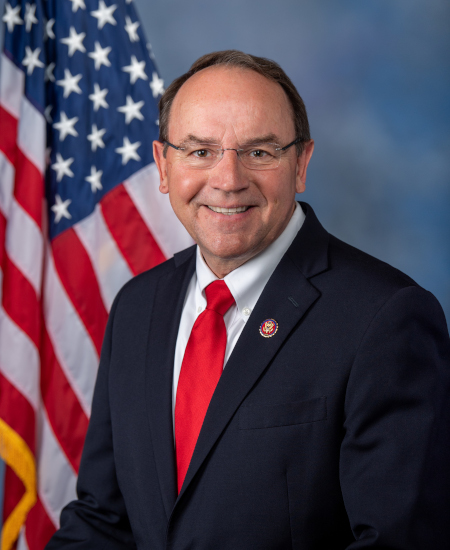
Rep. Thomas P. Tiffany
Sponsored bills
Maddy summaryHR 6260 amends federal law to clarify that fraud involving bail arrangements falls under existing fraud statutes. Specifically, it adds "including the posting of monetary bail, criminal bail bonds, and Federal immigration bail bonds" to a section of Title 18, U.S. Code. This change directly affects federal prosecutors and courts handling cases where individuals commit fraud related to securing bail. The bill does not create new penalties but ensures these bail-related fraud activities are explicitly covered under current legal definitions. It has no direct impact on the public or defendants beyond clarifying prosecutorial authority.
Maddy summaryHR 6444 establishes a VA-DoD task force to improve care for veterans and active-duty service members diagnosed with blast-related injuries like traumatic brain injury (TBI) or PTSD. The task force will coordinate research on specific issues (e.g., sleep therapy, gut health, brain inflammation), develop clinical baselines, and create guidelines for evaluating disability claims related to blast exposure. It must report annually to Congress on research progress and claim evaluation recommendations, and will expire on September 30, 2029. The bill directly affects veterans and service members with blast exposure symptoms by focusing research and care coordination on their specific health needs.
Nationwide Consumer and Fuel Retailer Choice Act of 2025 This bill amends the Clean Air Act to address the limitations on Reid Vapor Pressure (a measure of gasoline's volatility) that are placed on gasoline during the summer ozone season. Specifically, the bill applies the waiver for Reid Vapor Pressure requirements that is applicable to gasoline blended with 10% ethanol (E10) to gasoline blended with up to 15% ethanol (E15). This change allows gasoline that is blended with 10% to 15% ethanol to be sold year-round. Currently, states may be excluded from the waiver for Reid Vapor Pressure requirements by submitting documentation supporting that the waiver would increase air pollution. The bill nullifies existing state exclusions, but states may submit documentation after enactment of the bill to be excluded going forward. The bill also modifies the Renewable Fuel Standard Program, which requires transportation fuel sold or introduced into commerce in the United States to contain minimum volumes of renewable fuel. Under the existing program, obligated parties, such as small refineries, must satisfy the volume obligations by either blending renewable fuels into their gasoline or diesel fuel products or by acquiring credits that represent the required renewable fuel volume. The bill directs the Environmental Protection Agency to return compliance credits to small refineries under certain circumstances.
Maddy summaryThe Taiwan PLUS Act would designate Taiwan as a member of the "NATO Plus" community (currently including Japan, Australia, South Korea, Israel, and New Zealand) for defense cooperation purposes. This would require the U.S. to apply the highest-tier congressional notification process for defense sales to Taiwan and eliminate the need for prior notification on military equipment maintenance, streamlining defense transfers similar to treatment for other NATO Plus nations. The designation would last five years, with potential extensions if the Secretary of State certifies it serves U.S. national security interests. The bill directly affects how the U.S. government processes defense articles and services for Taiwan, without altering Taiwan's legal status.
Maddy summaryThis bill would amend federal law to strengthen penalties for organized retail crime by expanding definitions of theft to include digital goods, gift cards, and setting a $5,000 aggregate value threshold for charges over a 12-month period. It would establish a new "Organized Retail and Supply Chain Crime Coordination Center" under Homeland Security to coordinate Federal, State, local, and Tribal law enforcement efforts against cross-jurisdictional theft groups. The Center would share information with retailers, transportation companies, and law enforcement agencies, track crime trends, and produce annual reports on organized retail crime. This legislation directly affects retailers, supply chain businesses, and law enforcement agencies, while targeting organized crime groups responsible for a 93% increase in larceny incidents and rising safety concerns for retail employees. The bill aims to address significant financial losses and supply chain disruptions noted in the National Retail Federation's 2023 data.
Maddy summaryThis bill proposes a constitutional amendment to clarify how citizenship is determined at birth, directly affecting individuals born in the United States and their parents. It would restrict automatic citizenship to children born to parents who are U.S. citizens, lawful permanent residents, or active-duty military members, while also granting Congress the authority to pass laws enforcing these rules. By modifying the interpretation of the 14th Amendment, the measure aims to establish specific criteria for birthright citizenship that align with current immigration laws.
Maddy summaryThe Fuel STAR Act of 2026 amends the Renewable Fuel Standard to limit the volume of non-advanced biofuel required each year to match projected domestic ethanol consumption. It extends the use of credits earned between 2020 and 2022 for compliance through five additional years, while prohibiting the use of electric vehicle credits. The bill also expands exemptions for small refineries by adding specific economic hardship criteria and requiring the EPA to automatically approve exemption requests if it fails to respond within 90 days. Furthermore, the legislation allows for the year-round sale of E15 fuel blends containing 10 to 15 percent ethanol by removing previous restrictions on Reid vapor pressure limitations.
Maddy summaryThe Fair Air Standards Act allows states to request that the Environmental Protection Agency reclassify certain air zones from "nonattainment" to "attainment" status. This change is permitted if the state proves that its air quality would have met national standards for ozone had pollution from outside the state not been a factor. The process requires the state governor to submit evidence and modeling data, after which the EPA has 180 days to review and approve the redesignation. By shifting the focus to external pollution sources, the bill aims to provide a clearer path for states to improve their air quality designations.
Maddy summaryThe DAIRY PRIDE Act aims to amend the Federal Food, Drug, and Cosmetic Act to establish a specific definition for "dairy product." This bill directly affects food manufacturers and consumers by regulating how certain food names can be used. It defines a "dairy product" as food that is, contains as a primary ingredient, or is derived from, the lacteal secretion of hooved mammals. The act prohibits foods that do not meet this definition, or the requirements for an imitation food, from using names for standardized dairy products (like milk, yogurt, and cheese) in interstate commerce. Additionally, it requires the FDA to issue guidance on enforcement of these provisions and report to Congress on actions taken.