

Maddy summaryHR 1522, the Federal Retirement Fairness Act, changes federal retirement rules to include temporary employees' service after January 1, 1988, in retirement benefit calculations. It directly affects temporary federal employees (including U.S. Postal Service workers) and Members of Congress who served after that date. The bill removes a previous cutoff date in retirement law, allowing their temporary service to count toward retirement eligibility. This means eligible temporary workers can now have their full service period considered when calculating retirement benefits.
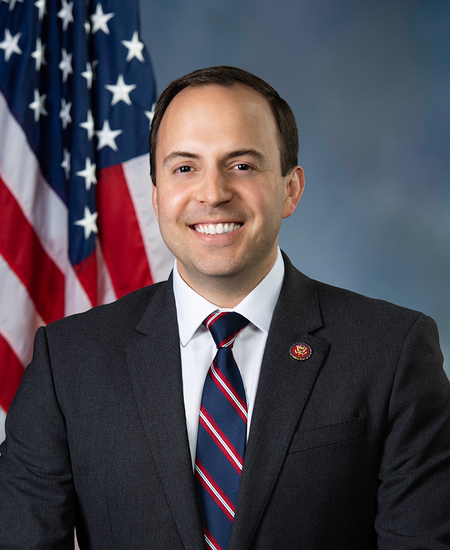
Rep. Lance Gooden
Sponsored bills
Maddy summaryHR 1919, the "Anti-CBDC Surveillance State Act," prohibits the Federal Reserve from developing, testing, or issuing any central bank digital currency (CBDC) or similar digital assets. It specifically bans the Fed from offering direct financial products to individuals, maintaining individual accounts, or issuing CBDCs directly or indirectly through intermediaries like banks. The bill also blocks the Fed from using any digital asset for monetary policy and clarifies that physical currency's privacy protections remain intact. This policy directly affects the Federal Reserve System's ability to create or manage digital monetary tools.
Maddy summaryThis resolution (HRES 583) condemns the July 7, 2025, attack on a U.S. Border Patrol facility in McAllen, Texas, where Ryan Louis Mosqueda injured agents and police. It expresses support for the affected personnel, wishes them a full recovery, and reaffirms the House’s backing of Border Patrol officers in their border security mission. The resolution directly addresses the McAllen community and Border Patrol staff impacted by the violence, serving as a symbolic statement of solidarity without creating new laws or policies.
Maddy summaryHRES 570 is a House resolution commending Petty Officer 3rd Class Scott Ruskan for rescuing 165 people during catastrophic July 2025 flooding in central Texas. The resolution honors Ruskan, a Coast Guard Aviation Survival Technician from Air Station Corpus Christi, for his role as the sole triage coordinator during the disaster. It recognizes his "exceptional courage" and "selflessness" in saving lives during the Guadalupe River flooding that caused extensive damage and loss of life. As a ceremonial resolution, it does not create new laws or policies but formally expresses the House's gratitude for Ruskan's service.
Maddy summaryThis bill requires drug manufacturers to pay rebates to Medicare when their "selected drugs" (cancer and complex therapies subject to negotiated maximum fair prices) are used. Manufacturers must calculate rebates based on the difference between current Medicare payment rates (ASP+6) and new negotiated rates (MFP+6), covering the gap for beneficiaries. This lowers patient coinsurance from the current 20% of ASP+6 to 20% of MFP+6 for these specific drugs during the negotiated price period. The rebates are paid to the Medicare trust fund and apply to Medicare Part B beneficiaries using these drugs, directly affecting drug manufacturers and patients covered under Medicare Part B.
Maddy summaryThis bill requires online contact lens sellers to provide a secure electronic method for customers to transmit their contact lens prescriptions, directly affecting online retailers. It mandates that such electronic transmissions comply with HIPAA privacy rules and that any protected health information sent via email must be encrypted. The law updates existing rules to modernize prescription verification for online sales while maintaining privacy protections.
Maddy summaryThis bill clarifies the Holocaust Expropriated Art Recovery Act of 2016 by preventing courts from dismissing claims based on time-related defenses (like laches or adverse possession) or other non-merits arguments (such as the act of state doctrine or forum non-conveniens). It specifically bars these defenses for claims seeking recovery of art looted by Nazis during World War II, ensuring cases are resolved on their merits. The bill applies to all pending cases and new claims filed after enactment, regardless of the victim's nationality. It strengthens the original law's purpose of enabling victims' heirs to pursue rightful recovery without procedural barriers.
Maddy summaryHR 875 amends immigration law to make non-citizens with DUI convictions inadmissible (preventing entry) and deportable (requiring removal after entry). It applies to any conviction for driving while intoxicated or impaired under state, tribal, or local law, regardless of whether the offense is classified as a misdemeanor or felony. The bill directly affects non-citizens convicted of driving under the influence of alcohol or drugs, including impairment from other substances. This policy change expands immigration consequences for DUI offenses beyond current standards.
Maddy summaryHR 4199, the Modernize the Au Pair Program Act of 2025, updates federal regulations for the au pair program to improve affordability and flexibility for host families. The bill requires the Department of State to propose new rules within 90 days, including a revised stipend formula reflecting room, board, and childcare costs without making the program prohibitively expensive. It also mandates greater program flexibility to accommodate military families, first responders, single parents, and shift workers with non-traditional schedules. The bill explicitly prohibits states from regulating the program, ensuring all rules remain uniform under federal law as intended by Congress. This directly affects American host families seeking affordable childcare and au pairs participating in the cultural exchange program.
Maddy summaryThis bill makes technical corrections to the Camp Lejeune Justice Act of 2022 to streamline claims for individuals harmed by water contamination at Camp Lejeune. It clarifies the evidence required (30+ days at the base plus a link between contaminants and health harm), specifies that cases must be handled in North Carolina courts (with limited transfer options), and sets attorney fee caps (20% before suit, 25% after). These changes directly affect veterans and civilians who lived at Camp Lejeune and filed claims under the 2022 law. The bill does not create new eligibility but aims to improve the legal process for existing cases.