Maddy summaryHR 5100 extends the Small Business Innovation Research (SBIR) and Small Business Technology Transfer (STTR) programs through fiscal year 2026, instead of ending on September 30, 2025. This bill directly affects small businesses and research institutions that rely on federal funding for research and development through these programs. The key mechanism is updating expiration dates across multiple program provisions in the Small Business Act to maintain funding authority and program operations for one additional year. The extension does not alter program eligibility, funding levels, or core requirements.
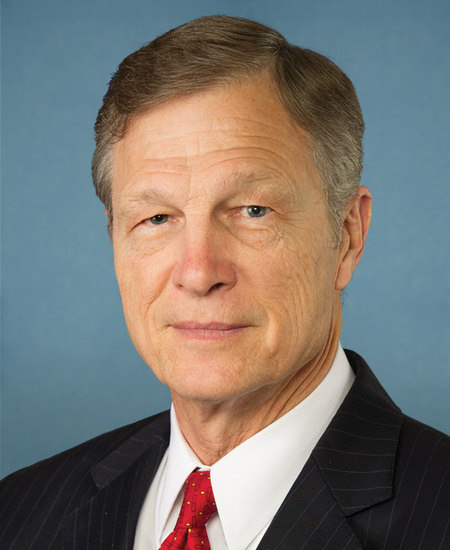
Rep. Brian Babin
Sponsored bills
Maddy summaryThis bill (HCONRES 48) is a ceremonial resolution authorizing the use of the U.S. Capitol rotunda for a "lying in honor" ceremony for Charles James Kirk, a recognized advocate for free speech, civil discourse, and youth political engagement. It grants permission for his remains to be displayed in the rotunda, with timing and duration to be determined by the House Speaker, Senate President pro tempore, and the Capitol Architect. The resolution does not create new laws or policies but formally permits a traditional honor reserved for individuals who have made significant contributions to the nation. It affects no specific group or legislation, serving only as a commemorative gesture for Kirk's legacy.
Maddy summaryHRES 702 is a symbolic resolution condemning the September 10, 2025, assassination of Charlie Kirk, founder of Turning Point USA and a conservative political activist. It expresses condolences to his family, praises first responders, and reaffirms the right to peaceful assembly. As a non-binding resolution, it does not create new laws or policies but serves as a formal statement of condemnation. The resolution directly addresses the House of Representatives' stance on this event, with no direct impact on constituents or legislation.
Maddy summaryHRES 695 is a commemorative resolution honoring Charlie Kirk, a conservative speaker and Turning Point USA leader, following his assassination on September 10, 2025, in Orem, Utah. The resolution condemns the attack, offers condolences to his family, and recognizes first responders. It reaffirms the First Amendment right to peaceful assembly and emphasizes that violence cannot silence democratic participation. This non-binding resolution does not create new laws or policies but serves as a symbolic tribute to Kirk's memory and the principles of democratic engagement.
Maddy summaryThe RESULTS Act (HR 5269) changes how Medicare calculates payment rates for clinical diagnostic laboratory tests. It requires Medicare to collect data on private payor rates for widely available non-Advanced Diagnostic Laboratory Tests (non-ADLTs) from a qualifying independent claims data entity (a national nonprofit organization meeting specific criteria) rather than relying on data reported directly by laboratories. For tests where data is unavailable, the bill establishes default payment rates based on previous years' rates adjusted for inflation. The law also requires Medicare to publicly explain payment rates with supporting data, affecting Medicare beneficiaries, clinical laboratories, and private payors that provide services covered by Medicare.
Maddy summary# Summary of the Weather Act Reauthorization Act of 2025 This comprehensive legislation reauthorizes and modernizes the National Oceanic and Atmospheric Administration's (NOAA) weather and climate programs through 2030, with several key focuses: ## Core Program Reauthorizations - **Commercial Data Program** ($100M annually): Establishes a formal program to acquire weather/environmental data from private sector entities, including standards, prioritization, and data assimilation practices - **Commercial Data Pilot Program** (15% of Commercial Data Program funds): Tests and evaluates private sector data for use in NOAA operations - **Advanced Weather Interactive Processing System**: Requires transition to cloud-based operations by 2030 to enable more flexible workforce ## Hazard Communication Improvements - **Hazardous Weather Risk Communication Program**: Focuses on simplifying and improving communication of weather hazards through social, behavioral, and risk science research - **Post-Storm Surveys**: Requires systematic surveys after significant weather events, with emphasis on vulnerable populations - **NOAA Weather Radio Modernization**: Expands coverage, enhances reliability, and transitions to internet protocol-based communications ## Operational Modernization - **National Weather Service Workforce**: Includes hiring assessments, health/morale evaluations, and designation of service hydrologists - **Aviation Weather Program**: Enhances turbulence forecasting, data acquisition, and coordination with the Federal Aviation Administration - **Data Management**: Establishes consistent data standards, infrastructure, and sharing practices across NOAA ## Specialized Programs - **Atmospheric Rivers Forecast Improvement Program**: Focuses on improving forecasts of atmospheric rivers that impact the western U.S. - **Coastal Flooding and Storm Surge Program**: Improves coastal inundation forecasting and warning systems - **National Integrated Drought Information System**: Enhances drought monitoring and forecasting capabilities - **National Mesonet Program**: Expands environmental observation networks across the U.S., with 15% of funds for financial assistance to state/local entities - **National Coordinated Soil Moisture Monitoring Network**: Supports soil moisture monitoring for agricultural and drought management - **Precipitation Forecast Improvement Program**: Aims to improve precipitation forecasting across all timescales ## Funding The bill authorizes significant funding across these programs, with annual appropriations ranging from $10M to $70M depending on the program, for fiscal years 2026-2030. The legislation represents a major effort to modernize NOAA's infrastructure, improve weather communication to the public, and better integrate commercial data sources while maintaining NOAA's leadership in weather and climate science.

Maddy summaryHR 5108 prohibits U.S. states from receiving federal Edward Byrne Memorial Justice Assistance Grant Program funds if they issue driver licenses to individuals without proof of U.S. citizenship or lawful presence, or if they restrict government entities from sharing immigration enforcement data with Homeland Security. States violating these rules must return unspent federal grant funds within 30 days and remain ineligible for future grants until they pass laws requiring driver license eligibility proof and permitting immigration data sharing. The bill directly affects states that currently issue licenses to undocumented immigrants or block information sharing with federal immigration authorities. It imposes concrete financial penalties rather than altering driver licensing rules themselves.
Maddy summaryHR 5031, the *Preserving Patient Access to Long-Term Care Pharmacies Act*, requires Medicare Part D plans and Medicare Advantage plans with drug coverage (MA-PD) to pay long-term care pharmacies an additional supply fee for each specified prescription dispensed to eligible beneficiaries during 2026 ($30) and 2027 (adjusted for inflation). This fee must be paid alongside existing reimbursements for drug costs and dispensing, with a $10,000 penalty for non-payment. The bill also directs the GAO to study long-term care pharmacy payment sustainability under Medicare, analyzing historical payments for brand/generic drugs and dispensing fees. It aims to ensure uninterrupted pharmacy access for Medicare beneficiaries in long-term care settings, particularly in rural areas.
Maddy summaryThis bill creates a federal database identifying state or local governments that conflict with immigration enforcement laws. It prohibits federal funding for any jurisdiction listed in this database, which includes entities that block cooperation with immigration detainers, restrict arrests of certain immigrants, or prevent officials from interviewing incarcerated individuals about immigration status. The database must be updated quarterly and made public within 90 days of the bill's enactment. This directly affects local governments that have policies limiting collaboration with federal immigration authorities.
Maddy summaryThis resolution (HRES 618) formally commends the U.S. Coast Guard, specifically Air Station Corpus Christi and the crew of helicopter CG-6553 (including Lt. Ian Hopper, Lt. Blair Ogujiofor, AMT3 Seth Reeves, and AST3 Scott Ruskan) for their rescue efforts during the July 4, 2025, catastrophic flooding in Texas. The bill highlights their actions in saving 165 lives and evacuating 15 people amid rapidly rising rivers and severe weather, including 3 aborted landing attempts due to poor conditions. It recognizes their response as one of the most consequential rescue operations in U.S. history, emphasizing Coast Guard professionalism during the disaster. As a commemorative resolution, it does not enact policy but serves as a formal expression of gratitude to the Coast Guard personnel and all first responders.