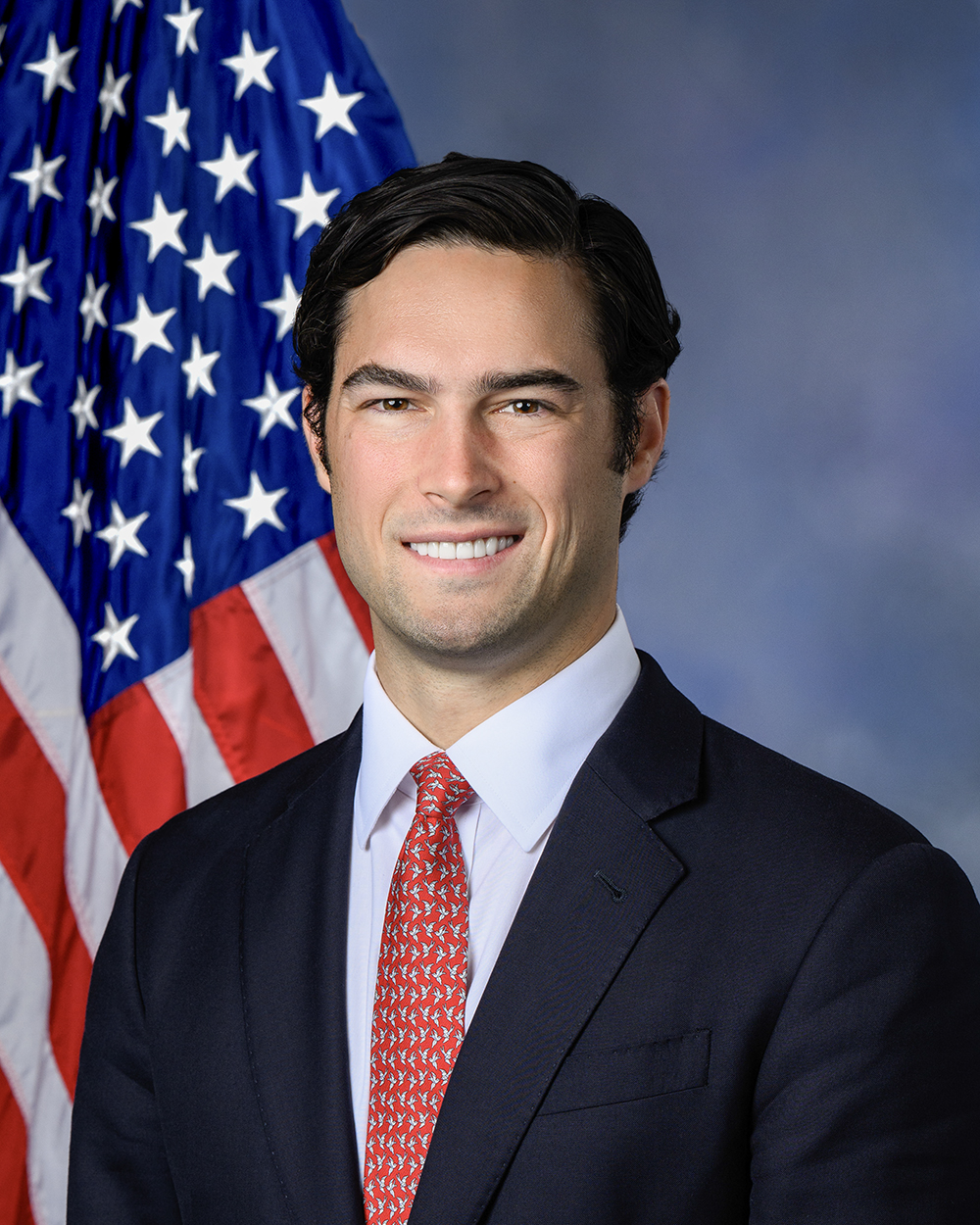
Photo of Brandon Gill
R United States House · District 26 · Texas On the 2026 ballot

Rep. Brandon Gill

Compare
Total votes
650
all sessions
Attendance
98%
12 missed
Near the chamber average
With party
91%
of cast votes
Lower than 92% of chamber peers
Bipartisan score
4%
crosses aisle rarely
Higher than 91% of chamber peers
Sponsored
352
bills & resolutions
Near the chamber average
Committees
9
assignments
352 bills and resolutions

Sponsored bills

Total
352
Primary
26
Co-sponsor
326
This page
352
matching current filters
Primary HR 7359
In committee · Oregon House · Lead sponsor
Somalia Immigration Moratorium Act

Maddy summaryThis bill prohibits most Somali citizens and nationals from obtaining U.S. visas or immigration status for 25 years after enactment. It amends immigration laws to block new admissions while allowing exceptions for those already lawfully admitted, lawful permanent residents, and individuals with specific diplomatic visas (A-1, G-1, etc.). The law directly affects Somali nationals seeking to immigrate to the U.S. and takes effect immediately upon passage. It creates a permanent policy change to restrict immigration from Somalia, with limited exceptions for existing residents and certain travelers.

In committee Feb 4, 2026 0 co-sponsors
Co-sponsor HR 7356
In committee · Oregon House · Co-sponsor
To amend the Help America Vote Act of 2002 to prohibit the use of Federal funds for election administration in States that permit ballot harvesting.

Maddy summaryHR 7356, the "No Federal Funds for Ballot Harvesting Act," amends the Help America Vote Act to block federal funding for election administration in states that permit third parties (non-voters) to collect and transmit mailed ballots for federal elections. It requires states to prohibit such collection by non-authorized individuals, with exceptions for election officials, USPS employees, and family/caregivers living with or assisting the voter. States failing to adopt this prohibition would lose federal funds for administering federal elections. The bill cites concerns about ballot chain-of-custody vulnerabilities and references the Supreme Court’s Brnovich ruling upholding state restrictions on ballot harvesting.

In committee Feb 4, 2026 1 co-sponsor
Co-sponsor HR 5438
In committee · Oregon House · Co-sponsor
Incentivize Savings Act

Maddy summaryThis bill modifies federal budget rules for unspent agency funds. It requires federal agencies to allocate 49% of unused funds to the next fiscal year, 49% toward paying the national debt, and 2% for retention bonuses (capped at 10% of an employee's base pay). Agencies must also limit future budget requests to the previous year's amount adjusted for inflation. The bill directly affects all executive branch agencies (excluding the Red Cross), altering how they manage leftover budget authority. It does not create new savings programs for individuals but changes government fiscal management procedures.

In committee Feb 4, 2026 1 co-sponsor
Co-sponsor HR 6675
In committee · Oregon House · Co-sponsor
DISPOSAL Act

Maddy summaryHR 6675, the DISPOSAL Act, requires the General Services Administration (GSA) to sell or lease six specific federal buildings in Washington, D.C. (including the Frances Perkins, Forrestal, and Humphrey buildings) at fair market value or for up to 99 years. The bill mandates relocating federal agencies currently occupying these buildings to other locations, prohibits foreign ownership of the properties, and exempts the disposal from certain environmental and historic preservation requirements. Proceeds from sales must first cover relocation costs and GSA implementation expenses before any remaining funds go to deficit reduction. The law expires on December 31, 2028, and does not allow judicial review of GSA actions under this bill.

In committee Feb 2, 2026 1 co-sponsor
Co-sponsor HR 4242
In committee · Oregon House · Co-sponsor
Innovate Less Lethal to De-Escalate Tax Modernization Act

Maddy summaryThis bill exempts certain less-than-lethal projectile devices from federal sales taxes and National Firearms Act restrictions. It directly affects manufacturers, importers, and producers of these devices, which are defined as non-lethal tools (like rubber bullets or beanbag rounds) designed not to cause serious injury and unable to be easily converted to use standard firearm ammunition. Key mechanisms include a 90-day classification process for manufacturers seeking exemption, an annual public list of approved devices, and annual congressional reports on devices excluded from the exemption. The policy change applies to devices meeting specific safety criteria, such as projectile velocity limits and design features preventing misuse as conventional weapons.

In committee Feb 2, 2026 1 co-sponsor
Co-sponsor HR 7296
In committee · Oregon House · Co-sponsor
SAVE America Act

Safeguard American Voter Eligibility Act or the SAVE America Act This bill requires individuals to provide documentary proof of U.S. citizenship when registering to vote, and requires photo identification to vote, in federal elections. Specifically, the bill prohibits states from accepting and processing an application to register to vote in a federal election unless the applicant presents documentary proof of U.S. citizenship. The bill specifies what documents are considered acceptable proof of U.S. citizenship, such as identification that complies with the REAL ID Act of 2005 that indicates U.S. citizenship. Further, the bill (1) prohibits states from registering an individual to vote in a federal election unless, at the time the individual applies to register to vote, the individual provides documentary proof of U.S. citizenship; and (2) requires states to establish an alternative process to demonstrate U.S. citizenship. Each state must take affirmative steps on an ongoing basis to ensure that only U.S. citizens are registered to vote, which shall include establishing a program to identify individuals who are not U.S. citizens using information supplied by certain sources. Additionally, states must remove noncitizens from their official lists of eligible voters. The bill (1) provides for a private right of action for certain violations, and (2) establishes criminal penalties for certain offenses. Individuals voting in federal elections must present an eligible photo identification document. An individual who votes by absentee ballot must submit a copy of their identification document with both the request for, and the submission of, the absentee ballot.


In committee Jan 30, 2026 1 co-sponsor
Co-sponsor HR 1295
In committee · Oregon House · Co-sponsor
Reorganizing Government Act of 2025

Maddy summaryHR 1295, the Reorganizing Government Act of 2025, amends federal law to streamline executive branch operations. It requires all executive departments (like the Departments of Defense or Education) to eliminate unnecessary programs, reduce federal employee numbers, and cut burdensome regulations that increase compliance costs. The bill updates deadlines for reorganization plans from 1984 to 2026 and explicitly mandates that all government operations must serve the public interest. These changes apply broadly across the federal government, focusing on efficiency and cost reduction.

In committee Jan 27, 2026 1 co-sponsor
Co-sponsor HR 7235
In committee · Oregon House · Co-sponsor
Protecting Motherhood Act

Maddy summaryHR 7235, the "Protecting Motherhood Act," requires all federal agencies to stop using the term "birthing person" in official documents and instead use specific terms like "female," "mother," "pregnant woman," or "woman." It directly affects federal agencies that produce regulations, forms, or communications, mandating the use of these defined terms when referring to individuals based on biological sex. The bill provides detailed definitions for terms like "female" (based on biological sex at conception) and "pregnant woman" (an adult human female carrying a child). The law takes effect 30 days after enactment. This is a procedural change focused solely on terminology in government documents, with no direct impact on healthcare access or services.

In committee Jan 23, 2026 1 co-sponsor
Co-sponsor HR 7156
In committee · Oregon House · Co-sponsor
SCAM Act

Maddy summaryHR 7156, the SCAM Act, would expand grounds for revoking U.S. citizenship (denaturalization) for naturalized citizens who commit specific offenses within 10 years of becoming citizens. It targets individuals convicted of defrauding federal, state, or local governments (e.g., $10,000+ in public benefit fraud), affiliating with foreign terrorist organizations, or committing aggravated felonies or espionage. If convicted in these categories, the government could automatically revoke citizenship retroactively (as if it never existed) based on evidence that the person lacked good moral character or loyalty to the U.S. at the time of naturalization. This bill directly affects naturalized citizens who commit these offenses within a decade of gaining citizenship, with revocation triggering immediate deportability.

In committee Jan 20, 2026 1 co-sponsor
Co-sponsor HR 7115
In committee · Oregon House · Co-sponsor
Jumpstart Savings Act

Maddy summaryThe Jumpstart Savings Act creates a new tax-advantaged savings program for state-run accounts that help individuals save for career-specific training and expenses. It directly affects workers, apprentices, and students pursuing certified trades or occupations by allowing tax-free contributions to accounts covering costs like community college tuition, apprenticeship fees, certification exams, trade tools, and business startup expenses. The bill enables rollovers from existing 529 college savings plans into these accounts and requires states to administer the programs with reporting rules similar to current 529 plans. The program will apply to taxable years beginning after December 31, 2025, and is designed to support career advancement in regulated fields.

In committee Jan 15, 2026 1 co-sponsor
Showing 71 to 80 of 352 bills
Previous 1 7 8 9 36 Next