

VA Beneficiary Debt Collection Improvement Act This bill addresses the administration of debt related to Department of Veterans Affairs (VA) programs and benefits. Specifically, the bill prohibits an individual from incurring a debt to the United States that arises from participation in a VA benefits program and is attributable to the failure of the VA to process information according to its timeliness standards. The VA must notify an individual if it has made an overpayment to the individual and include in the notice information on the right to dispute the overpayment or request a waiver of indebtedness. The VA is prohibited from taking action regarding an overpayment until 90 days after the notice is issued, except in specified circumstances. The VA is prohibited from charging interest or administrative costs for debts related to its disability compensation program, pension program, or educational assistance program. The bill extends from 180 days to one year the deadline by which an individual may request a waiver for relief from paying a debt related to VA benefits. Additionally, the VA is prohibited from seeking to recover a debt if it determines the cost to the VA to recover the debt would exceed the amount of the debt itself. The VA must establish an administrative process for the dispute of a debt's existence or the amount of the debt. The VA is prohibited from deducting from an individual's VA benefits to offset a debt if the amount of the debt is being disputed.
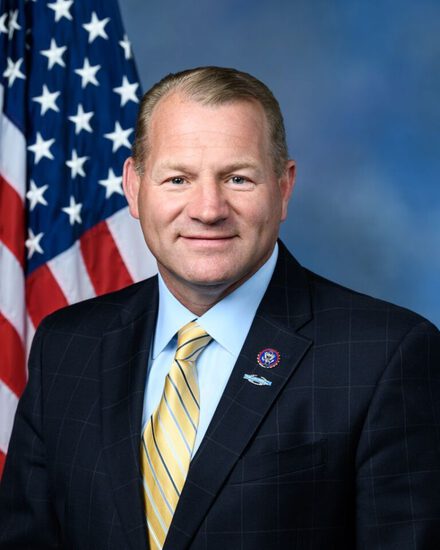
Rep. Troy E. Nehls
Sponsored bills
Preventing Outages With Enhanced Resilience and Operations Nationwide Act of 2021 or the POWER ON Act of 2021 This bill provides incentives for enhancing the resilience of the electric power grid to natural disasters and strengthening the emergency response and management of the grid. Specifically, the bill requires the Department of Energy (DOE) to establish an electric grid resilience program. Under the program, DOE must provide grants to states and Indian tribes for projects that enhance the physical resilience of the electric grid to natural disasters. In addition, DOE must establish a research, development, demonstration, and commercial application program to enhance resilience and strengthen emergency response and management of the electric grid. Under the program, DOE must award grants to improve the resilience of the electric grid by developing technologies and capabilities to withstand and address the current and projected impact on electric grid infrastructure of natural disasters, such as wildfires.
Resist Executive Amnesty on Defense Installations Act or the READI Act This bill prohibits the use of a military installation to house an alien who is unlawfully present in the United States or undergoing removal proceedings.
Return Excessive Migrants and Asylees to International Neighbors in Mexico Act of 2021 or the REMAIN in Mexico Act of 2021 This bill requires the Department of Homeland Security (DHS) to implement the Migrant Protection Protocols as outlined in the January 25, 2019, memo titled Policy Guidance for Implementation of the Migrant Protection Protocols . (The protocols generally required aliens who are not clearly admissible, including those seeking asylum, arriving by land along the U.S.-Mexico border to be returned to Mexico while their immigration proceedings are pending, rather than remain in the United States. On January 21, 2021, DHS stopped applying the protocols to newly-arrived individuals.)
Pain-Capable Unborn Child Protection Act This bill establishes a new criminal offense for performing or attempting to perform an abortion if the probable post-fertilization age of the fetus is 20 weeks or more. A violator is subject to criminal penalties—a fine, a prison term of up to five years, or both. The bill provides exceptions for an abortion (1) that is necessary to save the life of the pregnant woman, or (2) when the pregnancy is the result of rape or incest. A physician who performs or attempts to perform an abortion under an exception must comply with specified requirements. A woman who undergoes a prohibited abortion may not be prosecuted for violating or conspiring to violate the provisions of this bill.
Life at Conception Act This bill declares that the right to life guaranteed by the Constitution is vested in each human being at all stages of life, including the moment of fertilization, cloning, or other moment at which an individual comes into being. Nothing in this bill shall be construed to authorize the prosecution of any woman for the death of her unborn child.
No Taxpayer Funding for Abortion and Abortion Insurance Full Disclosure Act of 2021 This bill modifies provisions relating to federal funding for, and health insurance coverage of, abortions. Specifically, the bill prohibits the use of federal funds for abortions or for health coverage that includes abortions. Such restrictions extend to the use of funds in the budget of the District of Columbia. Additionally, abortions may not be provided in a federal health care facility or by a federal employee. Historically, language has been included in annual appropriations bills for the Department of Health and Human Services (HHS) that prohibits the use of federal funds for abortions—such language is commonly referred to as the Hyde Amendment. Similar language is also frequently included in appropriations bills for other federal agencies and the District of Columbia. The bill makes these restrictions permanent and extends the restrictions to all federal funds (rather than specific agencies). The bill's restrictions regarding the use of federal funds do not apply in cases of rape, incest, or where a physical disorder, injury, or illness endangers a woman's life unless an abortion is performed. The Hyde Amendment provides the same exceptions. The bill also prohibits qualified health plans from including coverage for abortions. Currently, qualified health plans may cover abortion, but the portion of the premium attributable to abortion coverage is not eligible for subsidies.
Security First Act This bill provides statutory authorization for the Operation Stonegarden program from FY2022 through FY2025 and contains other provisions related to border security. (Operation Stonegarden provides grants to enhance the border security capabilities of state, local, and tribal governments.) From FY2022 through FY2025, the money from unreported monetary instruments seized from individuals crossing the U.S.-Mexico border and transferred into the Department of the Treasury general fund shall be made available without further appropriation to the Department of Homeland Security (DHS) to fund Operation Stonegarden. DHS shall report to Congress on (1) DHS hiring practices from 2017 to 2020, and (2) whether certain Mexican drug cartels meet the criteria to be designated as foreign terrorist organizations. DHS shall also periodically report to Congress about the technology needed to secure the U.S.-Mexico land border.
Finish the Wall Act This bill requires the Department of Homeland Security (DHS) to resume activities related to the construction of a barrier system along the U.S.-Mexico border and addresses other border-related issues. DHS must resume all such construction activities that were planned or underway prior to January 20, 2021. DHS must also expend all funds appropriated or explicitly obligated since October 1, 2016, for construction of this barrier system. DHS may not cancel contracts for activities related to such construction entered into on or before January 20, 2021. Furthermore, within 14 days of this bill's enactment, DHS must certify to Congress that U.S. Customs and Border Protection facilities that process adults taken into custody at the border are fully compliant with certain laws related to the collection of DNA. (Among other things, these laws allow for the collection of DNA samples from non-U.S. persons detained under U.S. authority.)
Accelerate Long-term Investment Growth Now Act or the ALIGN Act This bill makes permanent the expensing of certain new business equipment. Expensing allows the deduction of the full amount of an expense item in the same taxable year.