United States Army Rangers Veterans of World War II Congressional Gold Medal Act This bill provides for the award of a single Congressional Gold Medal to the U.S. Army Rangers Veterans of World War II in recognition of their dedicated service during World War II.
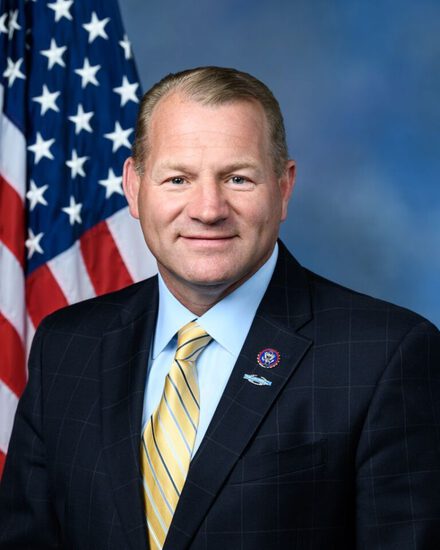
Rep. Troy E. Nehls
Sponsored bills
Gulf Conservation and Recreation Funding Act This bill requires the Department of the Interior to annually pay Gulf producing states (Alabama, Louisiana, Mississippi, and Texas) and each of their coastal political subdivisions an amount equal to the amount of revenue they will not receive due to moratorium on new oil and natural gas leases in offshore waters. The moratorium was established under Executive Order 14008 on January 27, 2021.
Air America Act of 2021 This bill establishes the service of Air America employees as qualifying service for purposes of the Civil Service Retirement System. (Air America was a government-owned airline that provided air transport for certain covert operations in Southeast Asia, including Laos and Vietnam, between 1950 and 1976.) The bill applies to U.S. citizens who were employees of Air America or another affiliated company, as specified, between January 1, 1950 and December 31, 1976. Benefit applications must be filed within two years of the date of enactment of this bill.
Washington Bureaucrat Accountability Act This bill rescinds funding that was provided to the Department of Transportation for certain unused earmarks. Under the bill, the term earmark generally refers to congressionally directed spending that would benefit a specific entity or state, locality, or congressional district other than through a statutory or administrative formula or competitive award process. The bill also requires (1) the rescinded funds to be deposited into the Treasury for the purpose of deficit reduction, and (2) federal agencies to submit certain reports regarding unobligated funds that were provided for earmarks.
Surface Transportation Advanced through Reform, Technology, and Efficient Review Act 2.0 or the STARTER Act 2.0 This bill addresses provisions related to federal-aid highway, transit, highway safety, motor carrier, innovation, and resiliency programs of the Department of Transportation (DOT). It also sets forth requirements for the operation of railroad freight cars in the United States. For example, the bill extends FY2020 enacted levels through FY2026 for federal-aid highway, transit, and safety programs. DOT must provide competitive grants for projects to provide parking for commercial motor vehicles on the federal-aid highway system; establish a discretionary program to award competitive grants for eligible projects that encourage economic viability of the nation, a metropolitan area, or a region; create a public awareness campaign to reduce instances of driving while under the influence of prescription and over-the-counter medications; and promulgate regulations to implement an apprenticeship program for licensed commercial motor vehicle drivers under the age of 21. The bill also establishes new competitive grant programs to spur innovation of connected vehicle applications into operational deployments and to test the safe integration of automated driving system technologies into the on-road transportation system. Additionally, the bill addresses projects to improve the resiliency of federal-aid highways and bridges on and off the National Highway System. Further, the bill prohibits the operation of railroad freight cars in the United States that have been manufactured or assembled by certain foreign countries or that contain sensitive technology from such countries.

Regulations from the Executive in Need of Scrutiny Act of 20 21 This bill revises provisions relating to congressional review of agency rulemaking. Specifically, the bill establishes a congressional approval process for a major rule. A major rule may only take effect if Congress approves of the rule. A major rule is a rule that results in (1) an annual effect on the economy of $100 million or more; (2) a major increase in costs or prices for consumers, individual industries, government agencies, or geographic regions; or (3) significant adverse effects on competition, employment, investment, productivity, innovation, or the ability of U.S.-based enterprises to compete with foreign-based enterprises. In addition, the bill establishes a congressional disapproval process for a nonmajor rule. A nonmajor rule may only take effect if Congress does not disapprove of the rule.
State Border Security Reimbursement Act of 2021 This bill requires the federal government to reimburse eligible states for their border security expenses. To be eligible, a state must have expended more than $2.5 billion on border security and enforcement in the 10 years before this bill's enactment. If such a state provides an accounting of all of its nonfederally funded border security expenses any time up to 180 days after this bill's enactment, the federal government shall reimburse the full amount.
Stop Forced Organ Harvesting Act of 2021 This bill establishes specified measures to combat forced organ harvesting and the international trafficking in persons for the purpose of removing their organs. These measures include (1) establishing property-blocking and visa-blocking sanctions, (2) prohibiting exports of certain surgery devices to entities that are identified as being responsible for forced organ harvesting or related human trafficking, and (3) requiring the Department of State to report on these practices.
One Federal Decision Act of 202 1 This bill provides statutory authority for the policy that requires federal agencies to coordinate environmental reviews and authorization decisions for major infrastructure projects. It also sets a goal for completing environmental reviews within two years. The Department of Transportation (DOT) must review existing practices, procedures, programmatic agreements, and applicable laws to identify potential changes that would facilitate an efficient environmental review process for projects. All authorization decisions for construction of a major project must be completed within 90 days of the issuance of a record of decision for the project, although the lead agency could extend the deadline in some cases. The lead agency must develop an environmental review schedule with the project sponsor that is consistent with an agency average of not more than two years for the completion of the environmental review process for major projects. DOT must also (1) establish a performance accountability system to track each major project, and (2) provide other relevant federal agencies with a list of categorical exclusions under the National Environmental Policy Act that are applicable to highway projects and that would accelerate project delivery. The bill also eliminates the two-year limitation on filing claims seeking judicial review of permits, licenses, or approvals issued by a federal agency for railroad projects.
Rolling Stock Protection Act This bill eliminates the exemption from the prohibition on procurement of rail rolling stock for use in public transportation with respect to executed contracts between public transportation agencies and certain rolling stock manufacturers. Such prohibited manufacturers include ones that, among other things, are owned or controlled by a company based in a nonmarket economy country that is flagged for monitoring by the United States Trade Representative.