

Hearing Protection Act This bill removes silencers from the definition of firearms for purposes of the National Firearms Act. It also treats persons acquiring or possessing a firearm silencer as meeting any registration and licensing requirements of such Act. The Department of Justice must destroy certain records relating to the registration, transfer, or making of a silencer. The bill also revises the definitions of firearm silencer and firearm muffler under the federal criminal code and includes such items in the 10% excise tax category.
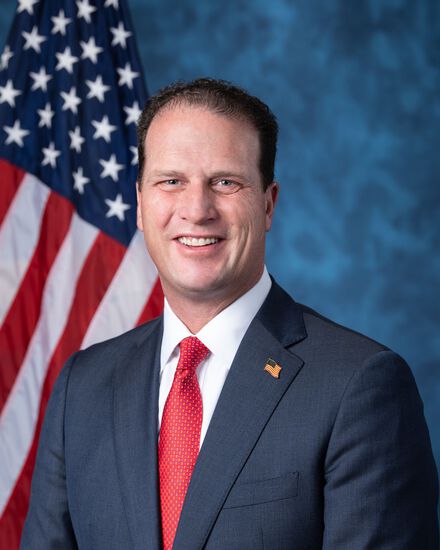
Rep. August Pfluger
Sponsored bills
Concealed Carry Reciprocity Act This bill establishes a federal statutory framework to regulate the carry or possession of concealed firearms across state lines. Specifically, an individual who is eligible to carry a concealed firearm in one state may carry or possess a concealed handgun (other than a machine gun or destructive device) in another state that allows its residents to carry concealed firearms. It sets forth requirements for the lawful concealed carry across state lines. The bill preempts most state and local laws related to concealed carry and establishes a private right of action for a person adversely affected by interference with a concealed-carry right established by this bill.
PPP Flexibility for Farmers and Ranchers Act This bill expands eligibility for agricultural producers under the Paycheck Protection Program, established to support small businesses in response to COVID-19 (i.e., coronavirus disease 2019), to include certain agricultural producers organized as partnerships. Currently, only certain agricultural producers that are sole proprietorships, independent contractors, or self-employed individuals may receive support under the program.
Keystone XL Pipeline Construction and Jobs Preservation Act This bill authorizes the TransCanada Keystone Pipeline to construct, connect, operate, and maintain the pipeline facilities in Phillips County, Montana, for the import of oil from Canada to the United States.
National Right-to-Work Act This bill repeals those provisions of the National Labor Relations Act and the Railway Labor Act that permit employers to make an agreement with a labor union to require employees to join such union as a condition of employment. Currently, at least 27 states have enacted laws prohibiting employers from compelling employees to become members of a union as a condition of employment.
Saving America's Energy Future Act This bill prohibits the Department of Agriculture and the Department of the Interior from declaring a moratorium on issuing new oil and gas leases and drill permits on certain federal lands. In addition, the bill prohibits the departments from declaring a moratorium on renewals of such permits.
Conservation Funding Protection Act This bill requires the Department of the Interior to hold at least two region-wide oil and gas lease sales per year in the Gulf of Mexico. Each lease sale must include areas in the Central Gulf of Mexico Planning Area and the Western Gulf of Mexico Planning Area. In addition, the bill establishes deadlines for completing environmental reviews of the lease sales.
This resolution opposes the use of the National Emergencies Act to declare a climate emergency and states that any policy-making actions taken to address global climate conditions should be undertaken by the legislative branch.
Recreational Lands Self-Defense Act of 2021 This bill requires the U.S. Army Corps of Engineers to allow an individual to possess a firearm at a Corps water resources development project as long as the individual's possession of the firearm is in compliance with the law of the state in which the project is located.
This resolution expresses the opposition of the House of Representatives to any plans by the Department of Defense to deliver COVID-19 (i.e., coronavirus disease 2019) vaccines to prisoners held at United States Naval Station, Guantanamo Bay, Cuba, until all Americans have had the opportunity to be vaccinated. Additionally, the resolution asserts that the government should prioritize U.S. citizens for COVID-19 vaccinations.