

This joint resolution proposes a constitutional amendment repealing the Twenty-third Amendment to the Constitution (allowing citizens residing in the District of Columbia to vote for presidential electors, who in turn vote in the electoral college for the President and Vice President).
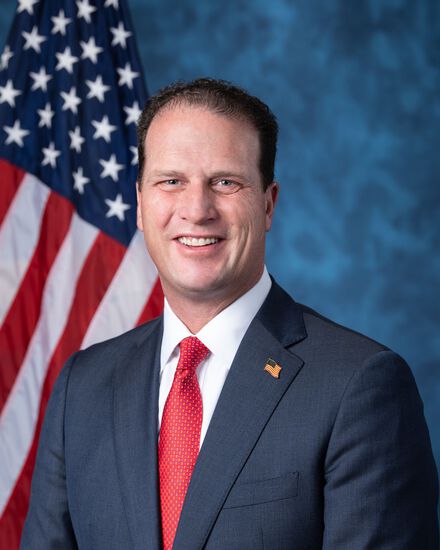
Rep. August Pfluger
Sponsored bills
Protecting Individuals with Down Syndrome Act This bill creates new federal crimes related to the performance of an abortion on an unborn child who has Down syndrome. It subjects a violator to criminal penalties—a fine, a prison term of up to five years, or both. It also authorizes civil remedies, including damages and injunctive relief. A woman who undergoes such an abortion may not be prosecuted or held civilly liable.
District of Columbia-Maryland Reunion Act This bill cedes the District of Columbia to Maryland after Maryland's acceptance of the retrocession. Furthermore, the bill declares that the National Capital Service Area in the District shall not be ceded and relinquished to Maryland and shall continue to serve as the permanent seat of the federal government. The bill maintains the exclusive legislative authority and control of Congress over the area. Finally, excluding the District Building, the area shall include the principal federal monuments, the White House, the U.S. Capitol, the U.S. Supreme Court Building, the federal executive, legislative, and judicial office buildings located adjacent to the Mall and the U.S. Capitol, and the Frances Perkins Building, including any portion of it north of D Street NW.
This bill revises requirements governing judicial review of federal agency action. If an agency does not prevail in an appeal of a court ruling, then the court must award the prevailing party reasonable attorney's fees and costs. The award must be paid out of the administrative budget of the office in the agency that filed the appeal.
This joint resolution proposes a constitutional amendment prohibiting total outlays for a fiscal year from exceeding total receipts for that fiscal year unless Congress authorizes the excess by a three-fifths roll call vote of each chamber. The prohibition excludes outlays for repayment of debt principal and receipts derived from borrowing. The amendment requires roll call votes of (1) three-fifths of each chamber of Congress to increase the public debt limit, and (2) a majority of each chamber for legislation increasing revenue. It also requires the President to submit a balanced budget to Congress annually. Congress is authorized to waive these requirements when a declaration of war is in effect or if the United States is engaged in a military conflict which causes an imminent and serious military threat to national security.
This joint resolution proposes an amendment to the Constitution to require that the Supreme Court consist of nine Justices.
This resolution honors Officers Brian Sicknick and Howard Liebengood of the U.S. Capitol Police, and it commends the bravery and service demonstrated by officers of the U.S. Capitol Police, the Metropolitan Police Department of the District of Columbia, and the other law enforcement agencies and protective entities that assisted in responding to the January 6, 2021, attack on the U.S. Capitol.
Protecting the Right to Keep and Bear Arms Act of 2021 This bill prohibits (1) the President or the Department of Health and Human Services from declaring emergencies or disasters for the purpose of imposing gun control; and (2) a federal officer or employee, or person operating under color of federal law, from banning the manufacture, sale, or transfer of firearms or ammunition while acting in support of relief from a major disaster or emergency.
Qualified Immunity Act of 2021 This bill codifies the defense of qualified immunity for law enforcement officers in any case under provisions regarding civil actions for deprivation of rights under color of law. Specifically, a law enforcement officer subject to such an action in his or her individual capacity shall not be found liable if the officer establishes that the right, privilege, or immunity secured by the Constitution or federal law was not clearly established at the time of the deprivation, or that at this time, the state of the law was not sufficiently clear that every reasonable law enforcement officer would have understood that the conduct alleged constituted a violation of the Constitution or federal law; or a court of competent jurisdiction had issued a final decision on the merits holding, without reversal, vacatur, or preemption, that the specific conduct alleged to be unlawful was consistent with the Constitution and federal laws. A law enforcement agency or unit of local government that employed a law enforcement officer subject to such an action shall not be liable if the officer is found not liable and to have been acting within the scope of his or her employment.
No Social Media Accounts for Terrorists or State Sponsors of Terrorism Act of 2021 This bill bars access to certain social media platforms by individuals designated as terrorists or senior officials of a government that is a state sponsor of terrorism. Specifically, the bill requires the President to prohibit providers of social media platforms (i.e., platforms that allow users to generate and share content and that have over 100,000 active users) from making such platforms available to barred individuals or officials. The bill does, however, allow officials to use these platforms solely for legitimate emergency alert purposes. Violations of this prohibition are subject to civil and criminal penalties. In addition, the President may waive the prohibition in the interests of U.S. national security. The Department of the Treasury must report to Congress on (1) the status and impact of the prohibitions of this bill, and (2) efforts to facilitate the free flow of information and access to communications technologies by civil society and democratic activists in Iran, Syria, North Korea, Cuba, and other countries controlled by authoritarian regimes.