

Maddy summaryThis bill modifies tax rules to provide financial incentives for small oil and gas producers operating in marginal or low-production areas. It changes how the percentage depletion tax deduction is calculated, allowing a higher deduction rate based on oil prices and adjusting that rate annually using an inflation measure called the Producer Price Index. The legislation also removes certain income limits that restrict how much of this tax benefit producers can claim and doubles the minimum oil production threshold from 1,000 to 2,000 barrels to qualify for the deduction. These tax changes would take effect for taxable years beginning after December 31, 2026, primarily affecting independent oil and gas companies and rural communities dependent on these industries.
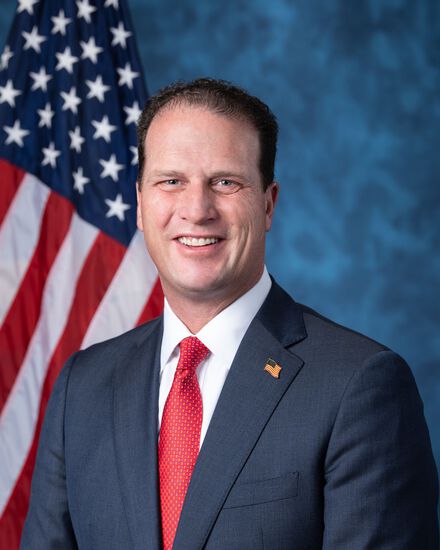
Rep. August Pfluger
Sponsored bills
Maddy summaryThe DETECT Nitazenes Act of 2026 updates federal law to include nitazenes alongside fentanyl and xylazine as priority drugs for detection and identification efforts. This change expands the scope of the Homeland Security Act, directing federal agencies to enhance their capacity to detect and identify nitazenes at border crossings and other entry points. The bill does not create new criminal penalties or funding, but rather modifies existing statutory language to ensure nitazenes are treated with the same detection focus as other synthetic opioids.
Deporting Fraudsters Act of 2026 This bill makes certain acts related to public benefits fraud grounds for (1) barring a non-U.S. national ( alien under federal law) from admission into the United States, or (2) deporting the individual. The bill also makes such an individual ineligible for immigration enforcement relief, including relief for an individual in danger of subjection to torture. Specifically, this bill applies to individuals who have been convicted of, admit to having committed, or admit to acts which constitute certain offenses. Offenses covered by this bill include (1) fraud involving Supplemental Nutrition Assistance Program (SNAP) benefits, (2) fraud involving Social Security benefits, (3) fraud involving programs that receive federal funds, and (4) the production of fraudulent identification documents.
Maddy summaryHR 556, the Protecting Access for Hunters and Anglers Act, prevents federal agencies from banning lead ammunition or tackle on public lands and waters managed for hunting or fishing. It directly affects hunters and anglers using federal lands (like national wildlife refuges, public forests, and BLM lands) by blocking nationwide restrictions on lead products. The bill allows limited exceptions only for specific locations where wildlife decline is directly linked to lead use, and the restriction must align with state law or get approval from the state wildlife agency. This changes how federal land managers can regulate lead, requiring state coordination for any local restrictions.
Maddy summaryHR 5688, the Non-Domiciled CDL Integrity Act, changes rules for issuing commercial driver's licenses (CDLs) to people who don't live in the state where the license is issued. It allows states to issue CDLs to foreign nationals with lawful U.S. immigration status and work-related visas (valid for up to one year or until their stay ends), requiring states to verify status before issuing and keep records for two years. For residents of U.S. territories like Puerto Rico, it requires proof of U.S. citizenship or permanent residency before issuing CDLs, with similar verification and record-keeping rules. The bill directly affects commercial drivers from foreign countries and U.S. territories seeking CDLs in states where they are not residents.
Enhanced Iran Sanctions Act of 2025 This bill imposes sanctions on certain foreign persons (individuals and entities) that are involved in Iran's petroleum sector as well as certain associated persons. The bill also requires or authorizes actions to facilitate the enforcement of sanctions on Iran. Specifically, the bill requires the President to impose visa- and property-blocking sanctions on any foreign person that, after the bill's enactment, knowingly engages in any transaction related to the processing, export, or sale of oil, condensates, gas, liquefied natural gas, or other petrochemical products in whole or in part from Iran. The President must also impose sanctions on certain foreign persons associated with a sanctioned individual or entity. For example, the President must sanction the subsidiaries and corporate officers of a sanctioned business. The bill provides certain exceptions to these sanctions, including specifying that sanctions do not apply to the importation of goods or to conducting or facilitating transactions for humanitarian assistance. The Department of State must establish an interagency working group that shall seek to establish a multilateral contact group to coordinate international efforts to enforce sanctions on Iran. The bill expands the State Department rewards program to authorize a reward payment to any individual who furnishes information leading to the identification of a person (1) subject to sanctions under this bill, or (2) that has attempted or is attempting to evade sanctions under this bill.
Maddy summaryThis bill, known as the Diabetes Foot Health Access and Modernization Act of 2026, makes two main changes to federal healthcare programs. First, it allows Medicaid to cover foot and ankle care services provided by podiatric physicians, ensuring patients have access to this specialized care. Second, it updates Medicare rules to clarify documentation requirements for diabetic shoes, specifying conditions under which patients can receive extra-depth or custom-molded footwear. The changes take effect on January 1, 2026, for Medicaid services and January 1, 2028, for Medicare shoe coverage.
Maddy summaryHR 7932, the HONOR Gold Star Families Act, increases the death gratuity paid to families of service members who died in the line of duty. It raises the current $100,000 payment to $200,000 for deaths occurring on or after January 1, 2026. The bill also adds an annual cost-of-living adjustment to this amount, increasing it each January 1 based on the previous year’s inflation rate as measured by the Consumer Price Index. This directly affects Gold Star Families - those who have lost a service member in military service - by providing a larger initial payment and ensuring future payments keep pace with inflation.
Maddy summaryThis bill creates the Extraordinary Protection Reimbursement Program within the Department of Homeland Security to provide financial reimbursement to state, local, Tribal, and territorial law enforcement agencies for costs related to protecting designated non-governmental properties of high-profile individuals. The program allows agencies to receive grants specifically for man-hours spent on protection duties and equipment purchases directly tied to securing these properties, with funds only usable when protected persons are physically present or traveling to and from the locations. To ensure accountability, the bill requires annual audits by the Department's Inspector General and mandates detailed reports on grant amounts, usage, and equipment acquisitions submitted to congressional committees. The legislation authorizes $61 million annually for fiscal years 2026 through 2028 to fund these reimbursement activities.
Maddy summaryThis bill, known as the Stop Child Care Funding Fraud Act of 2026, requires states to report on the rate of improper payments made with federal child care funds and outlines specific penalties for high error rates. States must submit reports by June 30 of each program period detailing payment errors and plans to reduce them, with penalties ranging from 5 to 15 percent funding reductions if improper payment rates exceed 6 percent. The law also mandates that states create corrective action plans when error rates are too high and requires the Secretary to publish state-by-state data on payment accuracy in annual reports. These provisions aim to increase transparency and accountability in how states manage federal child care block grant money.