

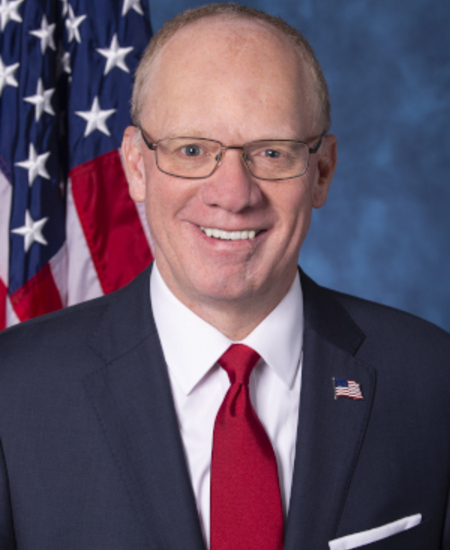
Photo of John W. Rose
R United States House · District 6 · Tennessee

Rep. John W. Rose

Compare
Total votes
2,818
all sessions
Attendance
96%
99 missed
Lower than 82% of chamber peers
With party
94%
of cast votes
Near the chamber average
Bipartisan score
3%
crosses aisle rarely
Near the chamber average
Sponsored
697
bills & resolutions
Near the chamber average
Committees
8
assignments
697 bills and resolutions

Sponsored bills

Total
697
Primary
34
Co-sponsor
663
This page
697
matching current filters
Co-sponsor HR 7548
In committee · Oregon House · Co-sponsor
SCAM Act

Maddy summaryThe SCAM Act requires online platforms that display paid advertisements (like social media sites) to verify advertiser identities, implement scam detection systems, and remove fraudulent ads within 24 hours of confirmation. It directly affects platforms that accept payment for ads, targeting scams such as fake giveaways, romance scams, and AI impersonations that cost consumers $195 billion in 2024 (per FTC data). Key mechanisms include mandatory identity checks for advertisers, active monitoring systems, and a 72-hour investigation window for reported scams. The law aims to reduce fraud by shifting responsibility to platforms, with enforcement by the FTC and state attorneys general.

In committee Feb 12, 2026 1 co-sponsor
Co-sponsor HR 5616
Passed · Oregon House · Co-sponsor
$2.50 for America’s 250th Act

Maddy summaryThis bill authorizes the U.S. Mint to produce two types of commemorative $2.50 coins for the 250th anniversary of the Declaration of Independence: a circulating coin for everyday use and a numismatic (collector) coin. Both would feature designs based on the 1926 Sesquicentennial coin - showing allegorical liberty holding the Declaration on one side and Independence Hall on the other - with "1776-2026" inscriptions. The bill requires the Mint to issue these coins by July 4, 2026, if technically and economically feasible, but does not mandate their production or affect any specific groups beyond the public who may purchase them.

Passed Feb 12, 2026 1 co-sponsor
Co-sponsor HR 5221
In committee · Oregon House · Co-sponsor
PART Act

Maddy summaryThe PART Act requires new vehicles to have catalytic converters marked with a unique identification number that links directly to the vehicle's identification number, stored in a law enforcement-accessible database. It establishes a $7 million grant program to help repair shops, dealers, law enforcement, and fleet owners purchase equipment for marking converters with visible, durable identifiers (using die or pin stamping and high-visibility paint). The bill also mandates that businesses buying catalytic converters keep detailed seller records (including vehicle information) for two years and use traceable payments, banning cash or cryptocurrency transactions. Additionally, it creates new federal criminal penalties for stealing or trafficking in catalytic converters, with potential sentences of up to five years in prison.

In committee Feb 10, 2026 1 co-sponsor
Co-sponsor HR 1566
In committee · Oregon House · Co-sponsor
REPAIR Act

Maddy summaryThe REPAIR Act requires motor vehicle manufacturers to provide car owners and independent repair shops with full access to vehicle data and repair information, prohibiting technological or legal barriers that restrict this access. It mandates that manufacturers share vehicle-generated data, critical repair information, and tools on equal terms with dealers and authorized service providers, without requiring consumers to use specific brands of parts or tools. The law establishes an advisory committee to monitor implementation and ensure fair competition in vehicle repair, while giving the Federal Trade Commission authority to enforce these requirements as unfair or deceptive practices. This legislation directly affects car owners, independent repair facilities, aftermarket parts manufacturers, and motor vehicle manufacturers by shifting control of repair information and data from manufacturers to consumers.

In committee Feb 10, 2026 1 co-sponsor
Co-sponsor HR 7421
In committee · Oregon House · Co-sponsor
SAFE Olympic Sports Act

Maddy summaryHR 7421, the SAFE Olympic Sports Act, requires national governing bodies for Olympic sports to maintain eligibility rules based on an athlete's biological sex as defined in the bill. It mandates that competitions must restrict participation to athletes whose sex at conception aligns with the event's category (e.g., female-only events for those biologically female). The bill defines "sex" as an immutable biological classification determined at conception, with specific biological criteria for male and female. This applies to Olympic, Paralympic, Pan-American, and other sanctioned amateur competitions, requiring governing bodies to continue sanctioning single-sex events they previously approved.

In committee Feb 9, 2026 1 co-sponsor
Co-sponsor HR 7368
In committee · Oregon House · Co-sponsor
Riley Gaines Act

Maddy summaryThe Riley Gaines Act allows female student athletes injured in women's sports competitions to sue schools or athletic associations that permitted biologically male athletes to compete in those events. It creates a legal pathway for victims to seek compensation for physical injuries, lost scholarships, or missed professional opportunities due to the inherent physiological advantages of male athletes. If a female athlete wins a lawsuit under this law, the court must also award them reasonable attorney fees. The bill directly affects institutions of higher education and athletic associations that oversee women's sports competitions.

In committee Feb 4, 2026 1 co-sponsor
Co-sponsor HR 3699
In committee · Oregon House · Co-sponsor
Energy Choice Act

Maddy summaryThis bill prevents state or local governments from banning or restricting energy connections (like installation, modification, or access) based on the type or source of energy, such as electricity, natural gas, or renewable fuels. It directly affects consumers choosing energy providers and energy companies seeking to offer services. The key provision prohibits local laws, regulations, or policies that limit energy services sold in interstate commerce, covering all energy types listed in the bill’s definitions. It does not create new programs but limits regulatory authority at the state or local level. The law aims to ensure open access to diverse energy sources without source-based restrictions.

In committee Feb 4, 2026 1 co-sponsor
Co-sponsor HR 7300
In committee · Oregon House · Co-sponsor
Make Elections Great Again Act

Maddy summaryThe Make Elections Great Again Act (HR 7300) would require voters to present photo identification to cast ballots in person or by mail for federal elections, with limited exceptions for religious objections or military voters. It would establish new requirements for proving U.S. citizenship during voter registration, including documentary proof of citizenship and proof of state residency. The bill would change mail-in ballot procedures by requiring voters to request mail-in ballots (rather than universal mail-in voting), implementing barcode tracking for mail-in ballots, and setting strict deadlines for ballot receipt. These provisions would apply to all states for federal elections held in 2027 or later, affecting how voters register, vote in person, and submit mail-in ballots for federal office elections.

In committee Feb 2, 2026 1 co-sponsor
Co-sponsor HR 6547
In committee · Oregon House · Co-sponsor
Least Cost Exception Act

Maddy summaryHR 6547, the Least Cost Exception Act, modifies the Federal Deposit Insurance Act to allow the FDIC (as the "Corporation") to select non-least-cost resolution methods for failing banks if certain conditions are met. It directly affects the FDIC, the Deposit Insurance Fund, and major global banking institutions by permitting exceptions to standard cost-minimization rules. Key provisions require the FDIC to determine that an alternative method limits further concentration among large banks, comply with specific cost and risk thresholds, and pay the Fund for cost differences over at least five years. The bill mandates annual reporting to Congress on such decisions and defines "covered alternatives" as the least-cost method involving sales to global systemically important banks.

In committee Feb 2, 2026 1 co-sponsor
Co-sponsor HR 6536
In committee · Oregon House · Co-sponsor
Rural Depositories Revitalization Study Act

Maddy summaryThis bill requires the Federal Reserve, Comptroller of the Currency, and FDIC to study how to improve growth, capital, and profitability for rural banks. The study will identify regulatory barriers in current federal laws or rules that may limit rural bank expansion or new bank openings in rural areas. The agencies must submit a report to Congress within six months of the bill's enactment. The bill itself does not change regulations or provide funding - only mandates the study.

In committee Feb 2, 2026 1 co-sponsor
Showing 61 to 70 of 697 bills
Previous 1 6 7 8 70 Next