

Maddy summaryThis bill amends the Small Business Act to require the Service Corps of Retired Executives to provide entrepreneurship counseling and training to individuals formerly incarcerated in federal prisons across the country. The program would offer one-on-one mentoring sessions over a year, workshops, and instructional materials designed to help formerly incarcerated people start or expand small businesses. Key services include assistance with creating business plans, identifying funding sources, and connecting with local business resources, along with regular surveys to measure participant satisfaction. The bill also mandates annual reports to Congress detailing the number of participants, hours of mentorship provided, demographic information, and an analysis of survey results.
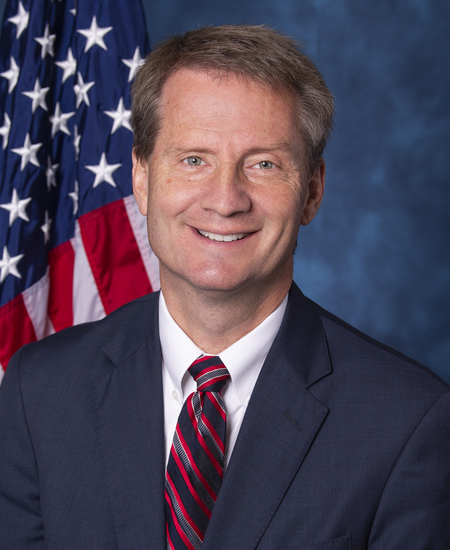
Rep. Tim Burchett
Sponsored bills
Maddy summaryThe Equal Treatment for Farmers Act removes references to 'socially disadvantaged farmers and ranchers' from multiple federal agricultural laws and programs. This bill amends various statutes including the Federal Crop Insurance Act, Consolidated Farm and Rural Development Act, and other agricultural legislation to eliminate special preferences or categories based on social disadvantage status. The legislation also prohibits the USDA from providing any preference, priority consideration, or enhanced benefits based on race or gender in its programs. These changes affect how federal agricultural assistance, loans, and benefits are categorized and distributed to farmers and ranchers.
Maddy summaryThe PEARL Act (HR 8366) aims to protect pharmacists who have sincerely held religious beliefs against dispensing or selling the abortion-inducing drugs mifepristone and misoprostol. It specifies that pharmacists, whether employed by private businesses or government agencies, cannot be required to dispense these drugs or be subject to punishment, such as license revocation or loss of federal funding, for refusing to do so based on their religious beliefs. The bill also establishes a private right of action, allowing pharmacists who are compelled or penalized in violation of this act to file a civil lawsuit in federal court for injunctive relief.
Maddy summaryThe "Taxpayer Protection and Somalia Accountability Act of 2026" aims to prevent the misuse of U.S. funds and foreign assistance in Somalia. It recommends that the President restrict certain money transfers from the U.S. to Somalia, particularly if they originate from government support programs or benefit the Somali government or terrorist organizations. The bill also suspends direct U.S. foreign assistance to the national Government of Somalia unless safeguards are established to prevent diversion. Additionally, it mandates visa restrictions and allows for sanctions against Somali officials and their families involved in corruption or aid diversion, while also authorizing rewards for information on fraud. These provisions primarily affect individuals sending money to Somalia, the national Government of Somalia, and specific Somali officials.
Maddy summaryThis bill, HR 8302, amends the Immigration and Nationality Act to change how certain driving offenses are treated for immigration purposes. It expands the definition of an "aggravated felony" to include offenses where a non-citizen drives while intoxicated or impaired and causes death or serious bodily injury to another person, regardless of whether the conviction is classified as a misdemeanor or felony under local law. Consequently, any non-citizen convicted of such an offense would be deemed "inadmissible" to the United States. These provisions take effect upon enactment and apply to relevant actions taken on or after that date, even if the underlying conviction occurred before the bill's passage.
Maddy summaryThe Swalwell Act aims to reform how workplace misconduct claims involving Members of Congress and senior staff are handled. It prohibits the use of federal or campaign funds to pay settlements or awards for such claims, making the individuals personally liable for the full amount. The bill mandates the creation of a public database disclosing details of these settlements and awards, including historical data, while protecting victims' identities. Additionally, it requires prompt referral of any allegations of criminal conduct by Members or senior staff to the Department of Justice, regardless of settlement agreements.
Maddy summaryThis bill directs the Secretary of Defense to shut down the All-domain Anomaly Resolution Office within 60 days and transfer its responsibilities to other parts of the Department of Defense. It also prohibits the creation of any new office within the Department of Defense or the Office of the Director of National Intelligence that would have centralized authority over investigating unidentified anomalous phenomena. The legislation repeals existing laws that established the office and updates related records and classification procedures to reflect its closure.
Maddy summaryThis bill proposes restricting Medicare and Social Security benefits to U.S. citizens and lawful permanent residents, excluding undocumented immigrants and other non-citizens from receiving these programs. It would also expand the Social Security payroll tax to cover wages paid to certain individuals currently exempt from such taxes. The changes would take effect for months beginning after the bill's enactment, directly affecting eligibility for federal retirement and healthcare benefits.
Maddy summaryHR 7605, the African Development Foundation Termination Act of 2026, abolishes the U.S. African Development Foundation (ADF) 120 days after enactment. The bill requires the Foundation to cease all new grants, loans, or agreements immediately, wind down operations within 120 days, and transfer all remaining funds to the Treasury’s general fund and assets/records to the Department of State for managing existing multi-year grants until completion. It also repeals the law creating the ADF (the African Development Foundation Act) and mandates a report to Congress for technical adjustments to the U.S. Code. This directly affects the ADF’s operations, employees (who would face reductions in force), and current grant recipients whose projects continue under State Department oversight.
Pilot Certificate Accessibility Act This bill allows a pilot to present a digital copy of certain certificates (e.g., an airman certificate or a medical certificate) when required to present such documentation by a Federal Aviation Administration (FAA) inspector. Under current FAA regulations, a pilot must present for inspection a physical copy of an airman certificate and other paperwork upon a request from the FAA; a federal, state, or local law enforcement officer; or an authorized representative of the Transportation Security Administration or the National Transportation Safety Board. This bill allows a pilot to present a certificate such as an airman certificate or a medical certificate to an FAA inspector as (1) a physical, original copy; or (2) a digital copy stored on an electronic device or cloud storage platform. The FAA must update current regulations to implement this change.