This resolution provides amounts for the expenses of the House Committee on Science, Space, and Technology for the 117th Congress.
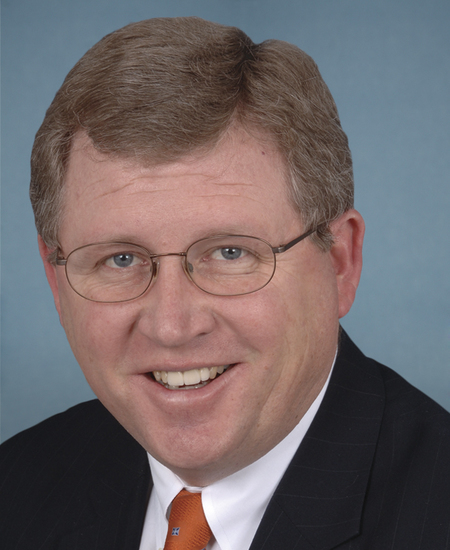
Rep. Frank D. Lucas
Sponsored bills
QUEST Act of 2021 This bill directs the Department of Energy to establish and carry out a program (to be known as the Quantum User Expansion for Science and Technology program or the QUEST program) to encourage and facilitate access to U.S. quantum computing hardware and quantum computing clouds for research purposes in order to (1) enhance the quantum research enterprise of the United States, (2) educate the future quantum computing workforce, and (3) accelerate the advancement of U.S. quantum computing capabilities.
Quantum Network Infrastructure Act of 2021 This bill directs the Department of Energy (DOE) to carry out a research, development, and demonstration program to accelerate innovation in quantum network infrastructure in order to (1) facilitate the advancement of distributed quantum computing systems through the internet and intranet, (2) improve the precision of measurements of scientific phenomena and physical imaging technologies, and (3) develop secure national quantum communications technologies and strategies. DOE shall submit to Congress a four-year research plan that identifies and prioritizes basic research needs relating to quantum network infrastructure.
Reviewing Urban and Rural Adjustments to Level Hospital Expenses and Lopsided Payments Act of 2021 or the RURAL HELP Act of 2021 This bill requires the Centers for Medicare & Medicaid Services to determine whether costs incurred by rural hospitals exceed costs incurred by urban hospitals under the Medicare inpatient prospective payment system and to adjust payments accordingly.
This resolution supports the designation of a National FFA Week. It also (1) recognizes the important role of the National FFA Organization (Future Farmers of America) in developing the next generation of leaders who will change the world, and (2) celebrates 50 years of National FFA alumni and supporters.
TRICARE Reserve Select Improvement Act This bill expands TRICARE Reserve Select eligibility to include members of the Selected Reserve who are enrolled or eligible to enroll in the Federal Employees Health Benefits Program.
Death Tax Repeal Act This bill repeals the estate and generation-skipping transfer taxes. It also makes conforming amendments related to the gift tax.
Rural Hospital Closure Relief Act of 2021 This bill allows additional hospitals to qualify as critical access hospitals (CAHs) that receive special payment under Medicare. Currently, in order to qualify as a CAH under Medicare, a hospital must either (1) be located more than 35 miles (or 15 miles in mountainous regions or areas with only secondary roads) from another hospital, or (2) have been certified prior to January 1, 2006, by the state as a necessary provider of services in the area. The bill allows a hospital to also qualify if the hospital is a small, rural hospital that (1) serves a health professional shortage area, or a high number of low-income individuals or Medicare or Medicaid beneficiaries; (2) has experienced financial losses for two consecutive years; and (3) attests to having a strategic plan to address financial solvency. In addition, the Center for Medicare and Medicaid Innovation must test a new delivery and payment model for rural hospitals that promotes financially sustainable access to care and must establish a corresponding transition process for CAHs.

This bill requires the Federal Communications Commission (FCC) to analyze and report on the demands associated with edge provider data transmitted over rural broadband networks during a specified six-year period. An edge provider is an entity that provides content, applications, or services over the internet (e.g., search engine providers, streaming video or music services, social media platforms, and retailers). Some edge providers generate revenue by selling products or subscriptions to their content, while others offer their content for free and generate revenue by selling advertising to users based on user-provided information. In its analysis, the FCC must retrospectively and prospectively estimate the quantity of edge provider data transmitted over rural broadband networks. It must also calculate costs to rural broadband providers that are not otherwise recovered for transmitting such data. These costs include (1) initial deployment of rural broadband networks, (2) operation and maintenance of those networks, and (3) the delivery of services to users over those networks.
This joint resolution proposes a constitutional amendment limiting Representatives to three terms and Senators to two terms. Terms beginning before the ratification of this amendment do not count towards these term limits.