

Maddy summaryHR 3774, the HUD Accountability Act of 2025, requires the Secretary of Housing and Urban Development (HUD) to provide annual testimony before specific congressional committees. This bill mandates the Secretary testify each year on seven key topics, including public housing conditions, FHA mortgage fund health, oversight of grantees to prevent fraud, progress on homelessness, and HUD's overall mission delivery. The testimony must cover HUD's current programs, physical housing conditions, financial health of insurance funds, and other ongoing activities. This procedural bill directly affects HUD leadership by establishing a formal requirement for annual congressional reporting on department operations.
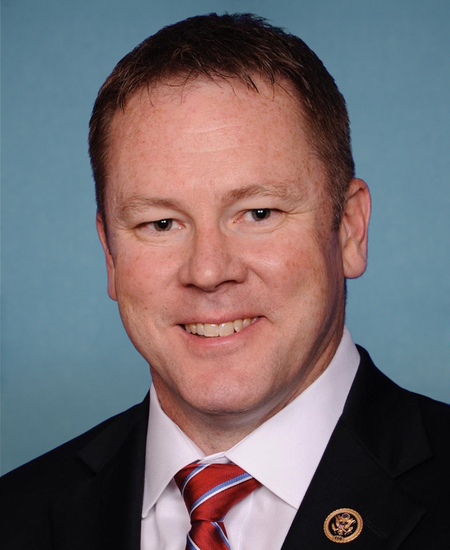
Rep. Warren Davidson
Sponsored bills
Maddy summaryHRES 475 (June 4, 2025) is a non-binding resolution that formally recognizes "Family Month" and ends the House of Representatives' recognition of Pride Month. It directs the House to "recognize the benefit of marriage and family" while stating it "no longer recognizes Pride Month," citing the resolution's view that traditional nuclear families are essential to society. The resolution does not create new laws or policies but changes the House's official acknowledgment of months. It specifically targets the House's ceremonial recognition, not federal law or programs affecting citizens. This is a symbolic procedural action with no direct impact on legislation or constituents.
Maddy summaryHR 3582, the "No revolving doors in FMS Act of 2025," prohibits former State Department or Defense employees who worked on foreign military sales from lobbying those sales within three years of leaving government. It directly affects individuals who participated in foreign military sales programs under the Arms Export Control Act. The bill creates a new criminal offense for knowingly communicating with officials to influence such sales during this three-year period. Violators face penalties under existing federal law (Section 216 of Title 18).
Maddy summaryHR 3533, the Blockchain Regulatory Certainty Act, creates a legal exemption for most blockchain developers and service providers. It prevents these entities from being classified as money transmitters, financial institutions, or subject to related licensing requirements under federal or state law - unless they personally control users' digital assets. The bill specifically exempts developers who create blockchain software or provide access to blockchain networks (like public ledgers for digital assets), as long as they lack unilateral authority over those assets. This provides regulatory clarity for the industry while preserving existing intellectual property laws and state regulations that align with the bill.
Maddy summaryHR 3512, the Tackling Predatory Litigation Funding Act, imposes a new annual tax on funds received by third-party investors who finance lawsuits through litigation financing agreements. It directly affects investors (including foreign entities) who provide funding to plaintiffs or law firms in exchange for a share of settlement or judgment proceeds, excluding small agreements under $10,000 or standard loans. The tax equals the top individual income tax rate plus 3.8 percentage points, with 50% withheld from settlement payments by parties involved in the lawsuit. The law also clarifies that such funds cannot offset losses and excludes certain typical legal fee reimbursements from taxation. The provisions take effect for taxable years beginning after December 31, 2025.
Maddy summaryHR 3437, the Insurance Data Protection Act, prevents duplicate data collection from insurance companies by requiring federal financial regulators to coordinate with state insurance regulators before gathering data already available through other channels. It reinforces confidentiality by ensuring that sharing nonpublic data with federal regulators does not waive privacy protections under federal or state law, and maintains existing confidentiality agreements. The bill also establishes that data shared with regulators can only be provided to state regulators through new agreements that comply with privacy laws. This directly affects insurance companies (as "covered entities"), federal financial regulators, and state insurance regulators. The key change is creating a formal process to avoid redundant data requests while strengthening data privacy for the insurance industry.
Maddy summaryHR 3432, the TDS Research Act of 2025, directs the National Institutes of Health (NIH) to study "Trump Derangement Syndrome" (TDS) through existing programs. The bill mandates NIH research on TDS's origins, long-term effects, contributing factors (like media coverage), and potential interventions, using current authorities without new funding. This research would be conducted by the National Institute of Mental Health and reported annually to Congress starting two years after enactment. The bill defines TDS as a phenomenon involving intense reactions to Donald J. Trump, but does not create new policy or directly affect individuals or communities. It is a procedural research directive, not a legislative change impacting public policy.
Maddy summaryHR 3406, the "Readiness Over Wokeness Act," prohibits individuals with a current diagnosis, history, or symptoms of gender dysphoria, or a history of gender-affirming care (like hormone therapy or surgery), from serving in the U.S. Armed Forces. It requires the military to administratively discharge affected service members, with the key provision that they won’t need to repay educational benefits or fulfill remaining service obligations. The bill also mandates security clearance reinvestigations for those discharged who previously held access to classified information. This policy directly affects transgender and gender-diverse service members who have sought gender-affirming care or received a gender dysphoria diagnosis. The bill focuses on altering military medical standards for service eligibility, not on broader societal or policy changes.
Maddy summaryHR 3330, the Energy Freedom Act, repeals numerous tax credits and incentives related to clean energy and energy efficiency. The bill specifically targets credits for residential energy improvements, clean vehicles, renewable energy production, biofuels, and energy-efficient buildings. These repeals would eliminate tax benefits for individuals and businesses that previously claimed these credits. The changes would take effect for property placed in service, vehicles acquired, or credits claimed after December 31, 2025, depending on the specific provision. The bill does not repeal all energy-related tax provisions, as section 7 modifies the Second Generation Biofuel Producer Credit rather than repealing it.
Maddy summaryThe SERVICE Act of 2025 creates a federal grant program to fund local veteran response teams within law enforcement agencies. These teams, composed of veteran officers and community partners, will provide 24/7 crisis response for at-risk veterans, coordinate with the Department of Veterans Affairs, and offer mental health training focused on military-related issues like PTSD. The program directly affects veterans in crisis and law enforcement agencies that receive grants to establish these teams. It requires teams to track outcomes and share best practices, with funding tied to existing crime control grants for fiscal years 2026-2030.