

Maddy summaryHR 4388, the PREP Repeal Act, removes legal immunity for pharmaceutical companies that developed or distributed pandemic-related products (like vaccines or treatments) during public health emergencies. It repeals key sections of the PREP Act that previously shielded manufacturers from lawsuits over injuries or harm caused by these products. The bill ensures people can still pursue civil lawsuits under existing federal or state law for harm from drugs, devices, biological products, or pandemic countermeasures. This change applies only to cases pending or filed after the law's enactment, preserving current legal rights while ending the broad liability protection.
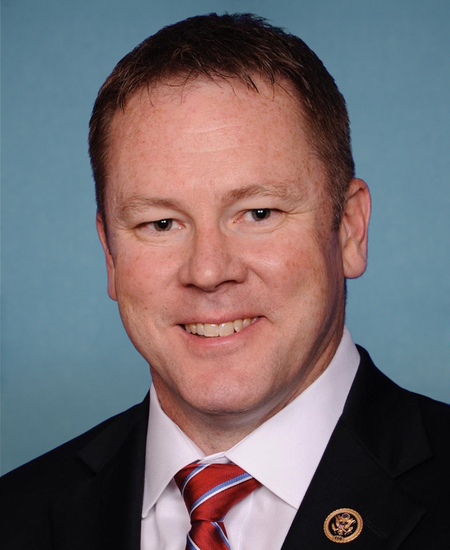
Rep. Warren Davidson
Sponsored bills
Maddy summaryHR 4382 authorizes the U.S. Mint to produce commemorative coins for the 2028 Los Angeles Olympics/Paralympics and 2034 Salt Lake City Winter Olympics/Paralympics. It specifies gold, silver, and half-dollar coin designs with defined mintage limits (e.g., up to 100,000 $5 gold coins for each event), all bearing inscriptions like "2028" or "2034" and standard coin features. A surcharge ($5-$50 per coin) is added to sales, with all funds directed to the respective Olympic committees to support event hosting and legacy programs like youth sports. The bill ensures no net cost to the government by requiring surcharge revenues to cover all design, production, and marketing expenses before funds are disbursed.
Maddy summaryHR 4370, the SAMS Act of 2025, codifies five existing executive orders into law to strengthen U.S. mineral supply chains. It gives legal force to orders focused on securing critical minerals (like lithium and rare earths) for national security and economic resilience, directly affecting federal agencies implementing these strategies. Key provisions require agencies to follow these established policies - addressing reliance on foreign mineral sources, supporting domestic mining, and prioritizing national security in mineral processing - without creating new regulations. The bill does not alter current mineral policies but formally enshrines them as binding federal requirements.
Maddy summaryHRES 548 is a symbolic resolution expressing the U.S. House of Representatives' "sense" of commendation toward President Donald J. Trump for his diplomatic role in deescalating a recent India-Pakistan armed conflict. It does not create new laws or policies but formally praises Trump's efforts, acknowledges cooperation from both India and Pakistan, and reaffirms U.S. support for regional peace. The resolution specifically commends Trump's "successful diplomatic efforts" in preventing further escalation between the nuclear-armed neighbors and encourages continued dialogue. As a non-binding resolution, it has no legal effect and solely serves to express congressional sentiment.
Maddy summaryHR 4167, the Expanding Access to Lending Options Act, amends the Federal Credit Union Act to extend the maximum time federally chartered credit unions can hold mortgage loans from 15 years to 20 years (or longer by NCUA regulation). This change directly affects federally chartered credit unions by allowing them to offer longer-term mortgage products to members. The key provision modifies Section 107(5) of the Federal Credit Union Act, specifically updating the time limit for mortgage loans held by credit unions. The bill also includes a non-binding sense of Congress statement emphasizing safety and soundness in NCUA oversight, but the core policy change is the extended mortgage holding period.
Maddy summaryThe LEDGER Act (HR 4091) requires the Treasury Department to create a system tracking every government payment within 180 days of enactment. It mandates that all federal departments, agencies, and branches (executive, legislative, judicial) must report disbursements from every funding source, including how long funds remain available for spending. This system will detail each payment's origin, recipient, and timing across all government accounts. The bill directly affects all federal spending entities by standardizing expenditure tracking previously handled inconsistently.
Maddy summaryThis bill amends the definition of "accredited investor" under securities law to expand eligibility for certain investment opportunities. It creates new categories for qualified professionals, including licensed brokers or investment advisers in good standing, and individuals with verified expertise in specific investments. The bill also updates the net worth threshold to $1 million (adjusted for inflation every 5 years) while excluding primary residences from asset calculations. This directly affects individual investors seeking to qualify for private investment offerings under current securities regulations. The changes require the Securities and Exchange Commission to revise related rules within 180 days of enactment.
Maddy summaryThis bill would make non-citizens deportable if they incite or participate in riots during civil unrest involving assaults on law enforcement or military personnel, or destruction of public property, and who were unlawfully present, had DACA, or were lawful permanent residents at the time of the offense. It permanently bars such individuals from reentering the U.S. or accessing any relief from deportation, including asylum, cancellation of removal, or future DACA benefits. During declared emergencies (such as national disasters or state emergencies), the law mandates expedited removal and mandatory detention for those covered, with no discretion for enforcement.
Maddy summaryHR 589, the FACE Act Repeal Act of 2025, would repeal a federal law (Section 248 of Title 18, U.S. Code) that prohibited obstructing access to reproductive health care facilities through physical means, intimidation, or violence. This repeal would eliminate the federal criminal penalty for such conduct, meaning federal prosecutors could no longer charge individuals under this specific law. The bill applies to all pending or future federal prosecutions related to these actions. It does not affect state laws that may still regulate access to reproductive health care facilities.
Maddy summaryThis bill requires the U.S. government to conduct a comprehensive audit of all gold reserves held by federal agencies, including gold stored in deep storage or held by third parties like the International Monetary Fund or foreign central banks. The audit, to be completed within nine months of enactment and repeated every five years, will cover physical inventory, security measures, all transactions (sales, leases, swaps) over the past 50 years, and any gold the government has an interest in through third parties. The Comptroller General must issue a public report detailing all findings, with minimal redactions (only for physical security details), and the Treasury must provide all relevant records without withholding information. This directly affects how the Treasury and Federal Reserve manage and disclose their gold holdings, increasing transparency for Congress and the public.