

Employer-Directed Skills Act This bill allows for an employer to sponsor skills development programs with partial federal reimbursement under the Workforce Innovation and Opportunity Act (WIOA). These new skills development programs are exempt from the program application and participant assessment requirements that typically apply to WIOA employment and training activities. However, these skills development programs must be conducted according to an employer-sponsored skills development agreement that includes, among other required provisions, a commitment by the employer to employ an individual upon successful completion of the program. The bill also requires the federal share of these skills development programs and the federal share of existing on-the-job training programs to be paid by reimbursement from employer-directed skills accounts that must be established by local one-stop operators.
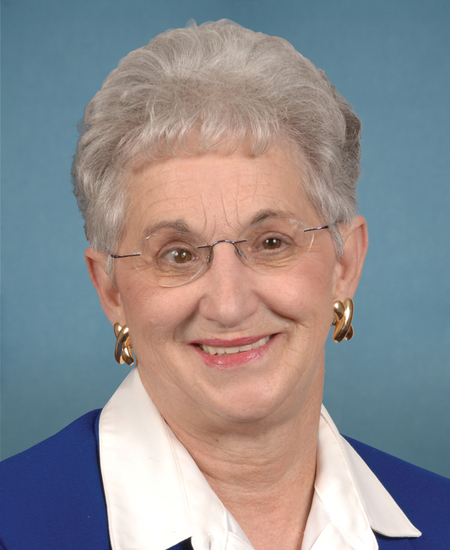
Rep. Virginia Foxx
Sponsored bills
Employee Retention Tax Credit Reinstatement Act This bill provides for a reinstatement of the employee retention tax credit through 2021. The credit was established to compensate employers whose businesses were negatively impacted by the COVID-19 pandemic for wages paid to their employees.
Crucial Communism Teaching Act This bill directs the Victims of Communism Memorial Foundation to develop a civic education curriculum and oral history resources for high school students to promote understanding of certain political ideologies (e.g., communism and totalitarianism) that conflict with principles of U.S. democracy.
Conscience Protection Act of 2021 This bill provides statutory authority for certain protections for health care providers that refuse to participate in abortions based on religious beliefs or other convictions. Health care providers include individual professionals, medical facilities, health insurance organizations, and social services providers that refer clients to health care services. The federal government and entities that receive federal funding for health-related activities, including state and local governments, may not discriminate against a health care provider that refuses to be involved in, or provide coverage for, abortions. Currently, similar requirements apply to various related activities, including certain employment or personnel decisions (the Church Amendments), abortion services training (the Coats-Snowe Amendment), qualified health plans offered through health insurance exchanges, and annual appropriations bills for the Department of Health and Human Services (HHS) and other federal agencies (the Weldon Amendment). The HHS Office for Civil Rights must investigate complaints of this kind of discrimination. Furthermore, HHS may terminate or reduce HHS funding for health-related activities if a person or entity fails to comply with nondiscrimination requirements. Additionally, the Department of Justice or any entity adversely affected by such discrimination may bring a civil action to obtain appropriate relief. A plaintiff does not need to seek or exhaust administrative remedies before bringing the action. A plaintiff may also bring an action, including one for money damages, against a governmental entity. In many cases, principles of sovereign immunity shield states and some localities from these kinds of actions.
Parents Bill of Rights Act This bill outlines various rights of parents and guardians regarding the elementary or secondary school education of their children. Among other requirements, the bill (1) directs local educational agencies to publicly post the curriculum for each elementary and secondary school grade level; and (2) requires schools to notify parents and guardians of their rights, including the right to review the school's curriculum and budget.
Fairness for Federal Contractors Act of 2021 This bill prohibits executive agencies from requiring contractors to receive a COVID-19 vaccination. The bill also requires the Government Accountability Office to study the degree to which Executive Order 14042 (Ensuring Adequate COVID Safety Protocols for Federal Contractors) caused disruptions to federal contracts, supply chains, and transportation systems.
This joint resolution nullifies a Department of Labor emergency temporary standard for preventing the transmission of COVID-19 in employment settings. Under the standard issued on November 5, 2021, employers with 100 or more employees must require their onsite employees to either be fully vaccinated against COVID-19 or undergo weekly COVID-19 testing.
This concurrent resolution declares that Congress should not impose any new performance fee, tax, royalty, or other charge relating to the public performance of sound recordings on a local radio station for broadcasting sound recordings over the air, or on any business for such public performance of sound recordings.
Temporary Family Visitation Act This bill establishes a new nonimmigrant visa classification for an alien temporarily entering the United States to visit a relative who is a U.S. citizen or lawful permanent resident. The maximum period of stay for a family visitor visa shall be 90 days. An alien seeking such a visa must have health insurance for the duration of the stay. An alien who holds such a visa may not change to another nonimmigrant visa classification except in certain limited instances. If an alien has been approved for a family-based immigrant visa and is waiting for one to become available, the alien may obtain a family visitor visa if the alien meets the eligibility requirements.
Protect and Serve Act of 2021 This bill establishes a new criminal offense for knowingly assaulting a law enforcement officer and causing serious bodily injury (or attempting to do so) in circumstances that affect interstate commerce. It imposes criminal penalties—a prison term, a fine, or both—on a violator.