

Maddy summaryThis bill provides a 3-year transition period for newly insured banks to meet federal capital requirements, easing compliance for institutions that recently became federally insured. It allows these banks to request temporary deviations from approved business plans, with regulators required to respond within 30 days (or the request is automatically approved). Small rural banks with less than $10 billion in assets located in rural areas receive a lower 8% leverage ratio requirement during this transition. Additionally, the bill expands lending authority for certain banks to include agricultural loans and requires a federal study on increasing new bank formations in underserved areas.
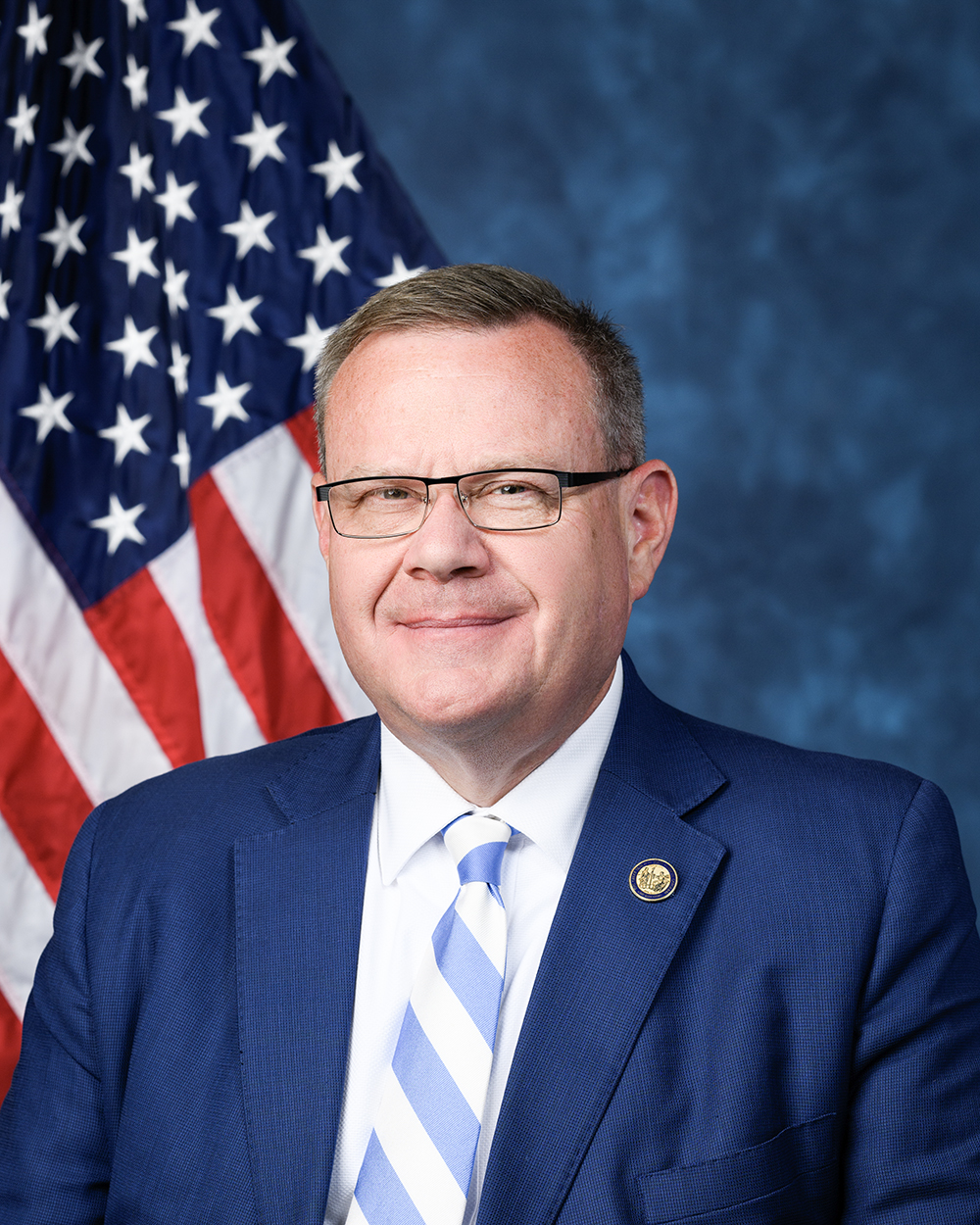
Rep. Tim Moore
Sponsored bills
Maddy summaryThis bill creates an Advisory Committee under the Financial Stability Oversight Council to study how Chinese military actions toward Taiwan could impact U.S. financial markets. The committee, composed of market experts and participants, will annually assess vulnerabilities like banking risks, market volatility, and potential losses from such scenarios, then recommend resilience strategies. It requires an annual public report detailing these findings and actionable steps for regulators - such as improving circuit breakers or coordinating responses - to strengthen market preparedness. The bill does not enact new regulations but mandates ongoing analysis and reporting on this specific geopolitical risk.
Maddy summary# Summary of the SHIPS for America Act This comprehensive legislation focuses on strengthening the U.S. maritime industry, shipbuilding capacity, and maritime workforce to enhance national security and economic competitiveness. ## Key Areas of Focus 1. **Shipbuilding & Maritime Infrastructure** - Establishes a United States Center for Maritime Innovation to accelerate adoption of commercial technologies - Creates a National Shipbuilding Research Program - Requires an annual survey of anticipated commercial vessel construction - Includes provisions for streamlined environmental reviews of maritime infrastructure 2. **Workforce Development** - Establishes the United States Merchant Marine Career Retention Program to maintain mariner qualifications - Creates Centers of Excellence for Domestic Maritime Workforce Training and Education - Implements military-to-maritime transition programs - Establishes a Maritime Career and Technical Education Advisory Committee 3. **Education & Training** - Expands educational assistance for merchant mariners - Creates eligibility for Naval Postgraduate School for merchant mariners - Establishes maritime education programs from K-12 through higher education - Provides for international exchanges for mariners and naval architects 4. **National Security & Strategic Readiness** - Requires reports on National Defense Reserve Fleet utilization - Includes measures to de-risk the maritime sector from Chinese influence - Enhances shipbuilding capacity for national security needs - Establishes programs to ensure sufficient mariner workforce for national defense 5. **Funding Mechanisms** - Authorizes appropriations from the Maritime Security Trust Fund - Includes funding for workforce programs, education, and shipbuilding initiatives - Establishes specific funding levels for various programs over multiple fiscal years The legislation aims to create a sustainable domestic maritime industrial base that supports both commercial shipping and national defense requirements, with a particular emphasis on developing and retaining a skilled U.S. maritime workforce.
Maddy summaryThe SALUTE Act establishes a 5-year pilot program to provide supplemental insurance for military members and their TRICARE-eligible dependents who face uncovered cancer-related costs. It requires the Secretary of Defense to partner with up to two insurance companies to offer fixed indemnity plans that pay direct cash benefits for cancer screening, diagnosis, and treatment expenses not covered by standard military health benefits. These plans must operate separately from existing coverage, be available through TRICARE's online portal, and be funded entirely by enrollee premiums with no government subsidies. The program targets active-duty service members (Army, Navy, Marine Corps, Air Force, Space Force) and their TRICARE-enrolled dependents facing out-of-pocket cancer costs.
Maddy summaryHRES 337 is a symbolic House resolution honoring linemen for their critical role in maintaining power infrastructure and responding to emergencies. It recognizes them as first responders who work in dangerous conditions 24/7 to keep electricity flowing, supporting schools and businesses during storms. The resolution formally supports designating April 18, 2025, as "National Lineman Appreciation Day" to publicly acknowledge their contributions. As a non-binding resolution, it has no direct policy impact or effect on affected individuals.
Maddy summaryHR 2950, the Disaster Relief Transparency Act, requires the Department of Housing and Urban Development (HUD) to explain how it distributes disaster relief funds to states, tribes, territories, and local governments. Specifically, HUD must submit annual reports detailing the process for allocating funds from the Community Development Block Grant Disaster Recovery and Mitigation Programs, including why allocations may vary between funding years. The first report must be submitted within 90 days of the bill’s enactment, examining funds from fiscal years 2024 and 2025, with subsequent reports due annually. These reports aim to improve the clarity and consistency of how disaster relief funds are distributed.
Maddy summaryThis bill amends the Elementary and Secondary Education Act to explicitly include accounting education as part of a well-rounded K-12 curriculum. It requires schools to develop and strengthen programs teaching accounting, including increasing access to high-quality accounting courses for students from groups historically underrepresented in accounting careers. The key provision inserts specific language into existing law, directing schools to promote accounting career awareness and expand course availability through grade 12. This directly affects K-12 students, particularly those from underrepresented backgrounds, by making accounting education a recognized component of career-focused learning.
Maddy summaryHJRES 92 is a congressional disapproval resolution targeting a specific regulatory rule. It seeks to block a rule issued by the Office of the Comptroller of the Currency (OCC) on September 25, 2024 (89 Fed. Reg. 78207), which outlined procedures for reviewing bank merger applications under the Bank Merger Act. If passed, this resolution would make the OCC's rule "have no force or effect," preventing it from being implemented. The resolution directly affects the federal process for reviewing bank mergers but does not change existing law or create new requirements.
Supplemental Oxygen Access Reform Act of 2025 or the SOAR Act of 2025 This bill establishes certain requirements with respect to the payment and provision of supplemental oxygen and related services under Medicare. For example, the bill provides for separate payments, indexed to inflation, of oxygen and related equipment, supplies, and services under Medicare (rather than under the competitive acquisition program). It also specifically covers services that are provided by respiratory therapists under Medicare and provides for an additional payment adjustment for these services. Additionally, the bill (1) requires the Centers for Medicare & Medicaid Services to develop an electronic template for providers to use when prescribing oxygen and related equipment, supplies, and services; and (2) establishes certain rights for beneficiaries receiving these items and services, such as the right to choose their suppliers and to receive clear communications and be informed about the services provided.
Maddy summaryThis bill provides tax relief for mobile mammography services by refunding federal excise taxes on fuel used in qualifying vehicles and exempting that fuel from retail taxation. Specifically, it requires the IRS to refund excise taxes paid on fuel used in highway vehicles exclusively designed for mobile mammography services, and it exempts such fuel from the retail excise tax under Section 4041. These changes directly benefit mobile mammography providers by reducing their operational costs for vehicle fuel. The provisions take effect upon the bill's enactment.