

Maddy summaryHR 7678, the Gun Owner Registration Information Protection Act, prohibits federal funding for state or local databases that track lawfully owned firearms or their owners. The bill allows federal funding for databases recording lost or stolen firearms but bans it for databases listing legal gun ownership. This means states cannot use federal money to create or maintain systems that compile information about legally owned guns. The bill directly affects state and local governments that rely on federal funds for firearm ownership databases.
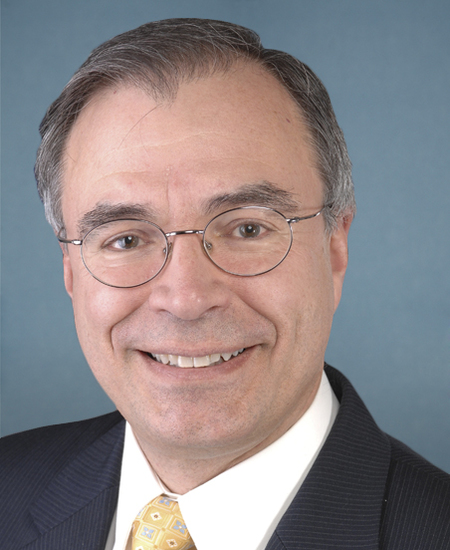
Rep. Andy Harris
Sponsored bills
Maddy summaryHR 7602, the State of Men’s Health Act, requires the Government Accountability Office (GAO) to study U.S. men’s health disparities and submit a report to Congress within one year of enactment. It also mandates the Department of Health and Human Services (HHS) to establish an Office of Men’s Health within 18 months to coordinate existing federal programs focused on preventive care for men, including screenings for prostate cancer, mental health, and cardiovascular issues. The bill does not authorize new funding; all activities must use existing appropriations. This legislation directly affects all men in the United States by aiming to improve health outcomes through better coordination of current federal health initiatives.
Maddy summaryThis bill is not a real legislative proposal but a widely circulated hoax. It falsely claims to prohibit federal funding for states that "prohibit dog ownership" while misrepresenting Sharia law as a threat to pet ownership - a claim with no basis in reality, as Sharia law does not regulate pet ownership and no U.S. jurisdiction prohibits dog ownership. The bill contains factual inaccuracies (e.g., falsely equating Sharia law with being "against the pursuit of happiness") and would be unconstitutional due to religious discrimination. It was never introduced in Congress and appears to be a satirical or misleading online post.
Protection of Women in Olympic and Amateur Sports Act This bill requires certified national governing bodies (NGBs) of amateur sports (e.g., USA Gymnastics) to prohibit a person whose sex is male from participating in an amateur athletic competition that is designated for females, women, or girls. Under the bill, male means an individual who has, had, will have—or would have, but for a developmental or genetic anomaly or historical accident—the reproductive system that at some point produces, transports, and utilizes sperm for fertilization.
Maddy summaryThe LASSO Act requires 10% of annual revenue generated from public lands managed by the Interior Department and Agriculture Department (including national forests and Outer Continental Shelf areas) to be deposited into the Social Security Trust Fund. This directly affects the Social Security Trust Fund by increasing its funding, while ensuring no fee hikes for public land activities or reductions in funds for states, tribes, or local governments. The bill mandates this transfer annually without altering existing revenue-sharing agreements or pricing structures. It aims to bolster Social Security finances through a specific, measurable mechanism tied to federal land management.
Maddy summaryThis bill requires Medicare plans (including Medicare Advantage and prescription drug plans) to base coverage decisions on medical necessity and evidence-based standards. It mandates that plans seek input from practicing physicians when creating or changing coverage rules, post all preauthorization requirements online in plain language, and publicly share statistics on approvals and denials. The bill also requires that adverse coverage decisions be made by licensed, board-certified physicians and prohibits denying coverage solely due to lack of evidence-based standards when none exist for a service. These changes aim to reduce unnecessary delays in care for Medicare beneficiaries by increasing transparency and clinical input in coverage decisions.
Maddy summaryThis bill (HR 7339) grants permanent resident status to a specific individual, Dr. Yue-Cheng Yang, by waiving standard immigration requirements. It allows him to apply for an immigrant visa or adjust his status without being barred by prior immigration issues (like removal orders or inadmissibility), provided he files the application with fees within two years of the bill's enactment. The bill also requires reducing the annual immigrant visa quota for Dr. Yang's country of birth by one visa when his status is approved. This is a case-specific relief bill affecting only Dr. Yang, not a general policy change.
Maddy summaryHRES 1022 is a non-binding congressional resolution expressing support for Catholic schools and celebrating the 52nd annual National Catholic Schools Week (January 25-31, 2026). It recognizes Catholic schools' contributions to education, noting their role in serving 1.7 million students across diverse backgrounds, with high graduation rates and community-focused values. The resolution specifically supports the week's goals, highlights the National Catholic Educational Association and U.S. Conference of Catholic Bishops' partnership, and applauds the 2026 theme "Catholic Schools: United in Faith and Community." It does not create new policies, allocate funding, or impose obligations.
Maddy summaryHR 6945 clarifies that states may use federal grants under Section 403 of the Social Security Act to support pregnancy centers meeting specific criteria. These centers must promote protecting both mother and unborn child life while providing services like counseling, pregnancy testing, and material support (e.g., diapers, baby clothes). The bill explicitly prohibits interpreting existing law as barring such funding for eligible centers. It does not create new funding but defines which pregnancy resource organizations qualify for existing grants.
Maddy summaryHR 7235, the "Protecting Motherhood Act," requires all federal agencies to stop using the term "birthing person" in official documents and instead use specific terms like "female," "mother," "pregnant woman," or "woman." It directly affects federal agencies that produce regulations, forms, or communications, mandating the use of these defined terms when referring to individuals based on biological sex. The bill provides detailed definitions for terms like "female" (based on biological sex at conception) and "pregnant woman" (an adult human female carrying a child). The law takes effect 30 days after enactment. This is a procedural change focused solely on terminology in government documents, with no direct impact on healthcare access or services.