

Maddy summaryHR 5401, the Pay Our Troops Act of 2026, ensures military personnel, civilian Defense workers, and supporting contractors receive pay during government funding gaps in fiscal year 2026. It appropriates emergency funds for active-duty service members, reserves, and their supporting personnel (including Coast Guard staff under DHS) if regular appropriations aren't enacted by the end of the fiscal year. The bill provides necessary pay and allowances during any period when full-year funding is unavailable, covering both active service and support roles. Funding expires when regular appropriations are passed, a funding resolution is enacted, or January 1, 2027, whichever comes first. This is a procedural measure to prevent pay delays for military and support staff during fiscal year 2026 funding lapses.
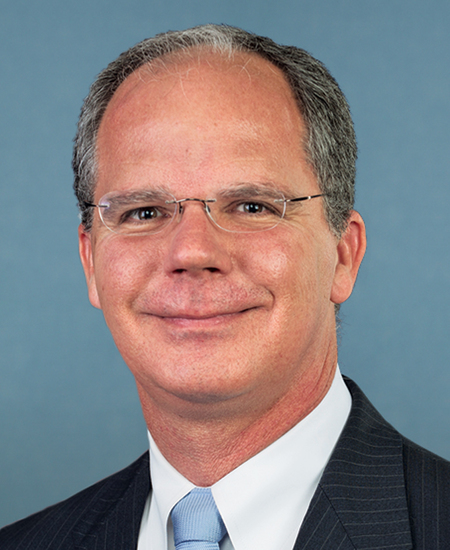
Rep. Brett Guthrie
Sponsored bills
Maddy summaryHRES 702 is a symbolic resolution condemning the September 10, 2025, assassination of Charlie Kirk, founder of Turning Point USA and a conservative political activist. It expresses condolences to his family, praises first responders, and reaffirms the right to peaceful assembly. As a non-binding resolution, it does not create new laws or policies but serves as a formal statement of condemnation. The resolution directly addresses the House of Representatives' stance on this event, with no direct impact on constituents or legislation.
Maddy summaryThe PARTNERS Act would provide federal funding to states to support regional industry partnerships that connect small and medium-sized businesses with workers through registered apprenticeships and other work-based learning programs. These partnerships would help businesses develop training programs while offering workers paid on-the-job training with classroom instruction, particularly targeting in-demand industry sectors. The bill requires partnerships to serve workers with barriers to employment and provide at least 12 months of support services, including job placement assistance and retention support. States would allocate funds to local partnerships that must track performance metrics related to program participation and outcomes, with specific reporting requirements for different demographic groups. The legislation aims to expand access to quality training pathways while connecting businesses with skilled workers in targeted industries.
Maddy summaryHRES 695 is a commemorative resolution honoring Charlie Kirk, a conservative speaker and Turning Point USA leader, following his assassination on September 10, 2025, in Orem, Utah. The resolution condemns the attack, offers condolences to his family, and recognizes first responders. It reaffirms the First Amendment right to peaceful assembly and emphasizes that violence cannot silence democratic participation. This non-binding resolution does not create new laws or policies but serves as a symbolic tribute to Kirk's memory and the principles of democratic engagement.
Maddy summaryThis is a symbolic House resolution (HRES 690) expressing support for designating September 2025 as "National Workforce Development Month." It does not create new laws, funding, or requirements. The resolution acknowledges the importance of workforce development programs - like those under the Workforce Innovation and Opportunity Act - and supports federal initiatives that help workers gain skills, reduce unemployment, and strengthen the economy. It specifically urges recognition of workforce development’s role in job training, economic growth, and supporting workers with barriers to employment.
Maddy summaryThis bill ensures U.S. Border Patrol Agents and Customs and Border Protection officers who continue working during a government shutdown receive their salaries. It authorizes funding from the Treasury for fiscal year 2026 to cover their salaries and expenses during any lapse in discretionary appropriations. The measure specifically applies to employees "excepted from furlough," meaning those required to work during shutdowns. It does not change eligibility for pay but guarantees funding for these personnel during funding gaps.
Maddy summaryThe FIREARM Act (HR 3770) changes how federal firearm licensees (like dealers) handle violations of firearms laws. It requires the Attorney General to give licensees 30 business days to correct minor, self-reported violations - such as clerical errors - with assistance and training, instead of automatically revoking licenses. The bill also adds a 15-day window for licensees to challenge revocations in federal court, where courts must review the case anew and only uphold revocations if the licensee willfully violated the law. Additionally, it applies retroactively to licensees whose licenses were revoked under a 2021 enforcement policy, allowing them to reapply if they meet compliance requirements.
Maddy summary# Summary of Proposed FEMA Reform Legislation (FEMA Act of 2025) This comprehensive legislative document proposes significant reforms to the Robert T. Stafford Disaster Relief and Emergency Assistance Act, with four main sections addressing: ## 1. Disaster Assistance Reforms - **Expanded eligibility** for assistance, including clarifying that absence of a fixed address doesn't disqualify individuals from sheltering assistance - **Improved rental assistance** with consideration of local post-disaster rent increases - **Direct assistance** for those unable to use financial assistance, with no requirement to show other assistance can cover costs (except insurance) - **Enhanced notices** for applicants, including documentation of denial decisions - **Clarification of displacement assistance** eligibility, stating insurance shouldn't be considered a duplication of benefits ## 2. Mitigation Program Enhancements - **Preapproved project mitigation plans** requiring states to develop plans with peer review processes - **Improved allocation of funds** with formulas prioritizing vulnerable communities, high-risk areas, and rural/economically distressed communities - **Resilient buildings** requirements for housing retrofits using the latest building codes - **Streamlined application processes** for hazard mitigation funds across multiple programs - **Study on mitigation benefits** to evaluate cost savings and effectiveness ## 3. Transparency and Accountability Measures - **Public dashboards** for both individual assistance (431) and public assistance (432) showing application status, approvals, denials, and funding - **Transparency requirements** for disaster declarations with detailed justifications for approvals/denials - **GAO studies** on numerous topics including: - Identity theft in disaster assistance (409) - Insurance utilization for public assistance facilities (410) - Wildfire management plans (411) - Effectiveness of alerting systems (412) - Cost savings of repair/rebuilding reforms (415) - **Prohibition on political discrimination** in assistance distribution ## 4. Workforce and Operational Improvements - **Study on workforce retention** in noncontiguous communities - **Pilot program** for preliminary damage assessments in remote communities - **Fast-moving disasters working group** to develop best practices for rapid response The legislation focuses on improving efficiency, transparency, and effectiveness of disaster relief programs while prioritizing vulnerable populations and communities with higher risk of disasters. It also emphasizes data-driven decision making through required studies and reports to continuously improve disaster management policies.
Maddy summaryHR 1919, the "Anti-CBDC Surveillance State Act," prohibits the Federal Reserve from developing, testing, or issuing any central bank digital currency (CBDC) or similar digital assets. It specifically bans the Fed from offering direct financial products to individuals, maintaining individual accounts, or issuing CBDCs directly or indirectly through intermediaries like banks. The bill also blocks the Fed from using any digital asset for monetary policy and clarifies that physical currency's privacy protections remain intact. This policy directly affects the Federal Reserve System's ability to create or manage digital monetary tools.
Maddy summaryHR 4382 authorizes the U.S. Mint to produce commemorative coins for the 2028 Los Angeles Olympics/Paralympics and 2034 Salt Lake City Winter Olympics/Paralympics. It specifies gold, silver, and half-dollar coin designs with defined mintage limits (e.g., up to 100,000 $5 gold coins for each event), all bearing inscriptions like "2028" or "2034" and standard coin features. A surcharge ($5-$50 per coin) is added to sales, with all funds directed to the respective Olympic committees to support event hosting and legacy programs like youth sports. The bill ensures no net cost to the government by requiring surcharge revenues to cover all design, production, and marketing expenses before funds are disbursed.