

Legislative Branch Agencies Clarification Act This bill revises the procedures for appointing and removing the Librarian of Congress, the Director of the Government Publishing Office (GPO), and the Register of Copyrights. The bill also establishes an Office of Inspector General within the Copyright Office and requires GPO to establish a human management system. Specifically, the bill requires the Librarian of Congress and the Director of GPO to be appointed by a bipartisan congressional commission, based on procedures outlined by the bill and without regard to political affiliation. (Currently, these positions are appointed by the President with the advice and consent of the Senate.) The Librarian of Congress and the Director of GPO may only be removed from office by a majority vote of the majority and minority leaders of the House of Representatives and the Senate. Additionally, the bill requires the Librarian of Congress and the Director of GPO to each appoint a deputy within a set time frame and outlines related procedures. The bill removes the Library of Congress's (LOC's) supervisory authority over the Copyright Office and instead transfers those powers directly to the Register of Copyrights. LOC and other legislative agencies may provide support services to the Copyright Office. The bill requires the Register of Copyrights to be (1) a U.S. citizen with a background and experience in copyright law, and (2) appointed by the President with the advice and consent of the Senate. (Currently, the Register is appointed by the Librarian.) Before the President makes the appointment, the chair and ranking minority member of each specified committee must jointly recommend three individuals whom the President may consider in making the appointment. The bill limits the term of office for the Register to 10 years, but the individual may be reappointed. The bill requires subordinate officers and employees of the Copyright Office to be appointed by the Register. Further, the bill requires the Register (instead of the Librarian) to appoint the three administrative judges of the Copyright Royalty Board. The bill also establishes an Office of Inspector General within the Copyright Office to, among other duties, conduct and supervise audits and investigations (excluding incidents involving violence and personal property) relating to the Copyright Office. The Register must appoint an Inspector General to head this office without regard to political affiliation. The Register may remove or transfer the Inspector General with prior congressional notification. The bill also requires GPO to establish and maintain a human capital management system and outlines the requirements for the system.
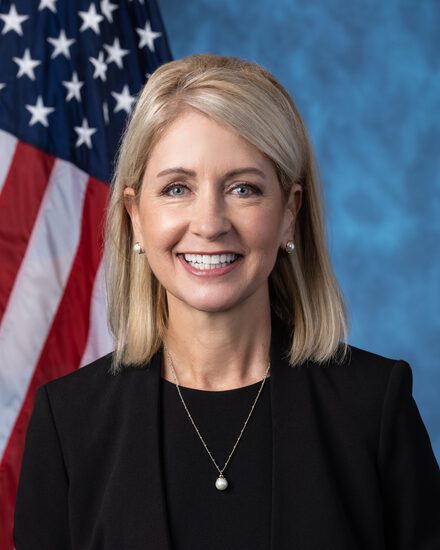
Rep. Mary E. Miller
Sponsored bills
Maddy summaryThis resolution expresses support for designating the week of May 31 through June 6, 2026, as "Our Roads, Our Safety Week." It directly affects all road users, including drivers of cars, trucks, buses, bicycles, and pedestrians, by highlighting shared responsibilities for road safety. The bill recognizes the Federal Motor Carrier Safety Administration's campaign aimed at reducing crashes involving large commercial vehicles through increased public awareness. It encourages government agencies to continue their outreach efforts and urges the public to learn specific safety rules for sharing the road with large trucks and buses.
Maddy summaryHR 7726 requires the federal government to withhold funding from child care providers who repeatedly violate safety or operational rules under the Child Care Development Block Grant program. The bill amends the Child Care and Development Block Grant Act to change the Secretary's authority from "may" (discretionary) to "shall" (mandatory), ensuring funds are withheld for repeat violations. This directly affects providers with multiple regulatory breaches, applying to all child care programs receiving federal block grant funds. The policy change focuses on enforcing consistent consequences for recurring noncompliance.
Maddy summaryThis resolution proposes to officially designate June as "Family Month" to highlight the importance of the traditional nuclear family. It also calls for the House of Representatives to stop recognizing Pride Month, which it argues has replaced the celebration of family values. The bill is sponsored by a group of representatives who believe that strengthening traditional marriage is essential for societal stability and population growth.
Maddy summaryThis bill, known as the Preventing International Surrogacy Exploitation Act, aims to stop foreign nationals from using U.S. surrogate mothers for commercial surrogacy arrangements. It would make any surrogacy contract void and unenforceable if the intended parents are foreign citizens or permanent residents, with a specific exception for married couples where at least one partner is a U.S. citizen or resident. Additionally, the law prohibits surrogacy brokers from facilitating these agreements and imposes criminal penalties, including fines and up to 10 years in prison, for those who knowingly or recklessly assist in such contracts. Children born through these invalid agreements would have their custody determined by the state where the surrogate lives, focusing on the child's best interests rather than the contract. Finally, the bill prevents foreign parents from using their U.S.-born children to gain immigration benefits or rights under U.S. immigration laws.
Maddy summaryThe Protecting Kids from Creeps Act prohibits surrogacy agencies, their employees, and sex offenders from participating in surrogacy agreements, directly affecting fertility clinics, staff, and individuals required to register as sex offenders. The bill mandates severe criminal penalties, including fines and prison sentences of at least 10 to 20 years, for knowingly or recklessly facilitating such agreements, while also stripping convicted agencies of their tax-exempt status and eligibility for federal grants. Any surrogacy agreement formed in violation of these rules is declared legally void and unenforceable, meaning it cannot be used to establish parental rights. In cases where a child is born from an illegal agreement, custody decisions will be made solely based on the best interests of the child under the laws of the state where the surrogate lives, ignoring any prior contracts. Additionally, the Attorney General can pursue civil penalties equal to the compensation received or offered for prohibited conduct.
Maddy summaryHRES 1314, the America 250 Commemorative Flag Act, designates a special flag featuring the number 250 within the circle of stars as an official United States flag for the 250th anniversary of the Declaration of Independence. This resolution authorizes the America 250 flag to be flown alongside the national flag and POW/MIA flags at all government buildings, embassies, and official U.S. locations worldwide during the commemoration year. The bill serves as a ceremonial measure to honor the nation's history and the sacrifices made by patriots, without altering any existing laws or policies.
Maddy summaryThis resolution expresses support for the Trump administration's efforts to combat fraud, waste, and abuse in Medicare, Medicaid, and other federal health care programs. It highlights specific actions taken, such as using advanced technology to detect fraud, suspending billions of dollars in suspected fraudulent payments, and coordinating with law enforcement to prosecute offenders. The document also acknowledges the creation of a new task force designed to lead a governmentwide strategy against fraud in federal benefit programs. Ultimately, the bill serves as a formal recognition of these initiatives rather than introducing new laws or policy changes.
Maddy summaryHR 2616, the PROTECT Kids Act, requires public elementary and middle schools receiving federal education funding to obtain parental consent before changing a student's gender markers, pronouns, or preferred name on school forms, or before assigning them to sex-based accommodations like locker rooms or bathrooms. The bill directly affects minor students in elementary school or middle grades (ages typically 5-14). Schools must secure this consent as a condition for maintaining federal funding under the Elementary and Secondary Education Act. The law focuses on specific administrative changes to student records and facility assignments, not broader educational content or curriculum.
Maddy summaryHR 5625, the Cashless Bail Reporting Act, requires the Attorney General to publish and regularly update a public list of all states and local governments that allow cashless bail (release without requiring money bonds). This list must be available within 30 days of the bill's enactment and updated quarterly. The bill does not change existing bail laws but increases transparency by making it easier for the public to see where cashless bail is used. It directly affects individuals seeking information about bail practices in different jurisdictions. The key mechanism is a mandatory, publicly accessible database maintained by the federal government.