HR 7726 United States House · 119th Congress

Stop Child Care Scams Act of 2026

HR 7726 requires the federal government to withhold funding from child care providers who repeatedly violate safety or operational rules under the Child Care Development Block Grant program. The bill amends the Child Care and Development Block Grant Act to change the Secretary's authority from "may" (discretionary) to "shall" (mandatory), ensuring funds are withheld for repeat violations. This directly affects providers with multiple regulatory breaches, applying to all child care programs receiving federal block grant funds. The policy change focuses on enforcing consistent consequences for recurring noncompliance.
Bill status passed 3 of 5 stages cleared
Introduction
Feb 2026
Committee Review
Jun 2026
House Passage
Jun 2026
Senate Passage
President
Introduced Feb 26, 2026 Last action Jun 4, 2026
Maddy AI version diff · 1 comparison

What changed between versions

Introduced in House Engrossed in House · 9 edits · Jun 3, 2026
MAJOR
The bill was substantially expanded from a narrow measure focused on withholding funds for repeat child care violations into a comprehensive anti-fraud package covering both the Child Care and Development Block Grant (CCDBG) program and the Child and Adult Care Food Program. The engrossed version adds permanent debarment of fraudulent providers, cross-program debarment between the two programs, state-level accountability requirements including corrective action plans and conditional ineligibility for high improper payment rates, periodic federal monitoring of state performance, elimination of the Secretary's authority to waive sanctions, and a GAO study on fraud prevention. The title was changed from 'No Funds for Repeat Child Care Violations Act' to 'Stop Child Care Scams Act of 2026,' reflecting the broader scope.
SCOPE

The bill's title changed from 'No Funds for Repeat Child Care Violations Act' to 'Stop Child Care Scams Act of 2026,' signaling a shift from a narrow funding-withholding measure to a broad anti-fraud framework.

REQUIREMENT

States must now include in their CCDBG plans descriptions of internal controls for program integrity, processes to investigate and recover fraudulent payments, sanction procedures, eligibility verification methods, and how they use data across state and local agencies with oversight of child care providers.

ENFORCEMENT

The Secretary is required to investigate fraud in the CCDBG program and must permanently debar any provider against whom a final determination of fraud is made. A 'final determination of fraud' is defined to include knowingly submitting false statements, misrepresenting ownership or enrollment, operating without a state license, making improper expenditures, or other conduct constituting fraud under federal or state law.

Cross-program debarment was established: providers debarred from the Child and Adult Care Food Program are automatically permanently debarred from CCDBG, and vice versa. This creates a unified enforcement mechanism across both programs.

The Secretary must conduct a comprehensive review of each state's performance at 3-year intervals and can designate states as 'high risk' based on unresolved audit findings, repeated failures to carry out corrective action plans, or noncompliance with state plans. High-risk states are subject to additional monitoring.

The Secretary's authority to waive sanctions imposed on states was eliminated across multiple provisions, making sanctions mandatory and non-discretionary.

ELIGIBILITY

If a state's improper payment rate exceeds 5 percent for a fiscal year, it must submit a corrective action plan. If the rate exceeds 5 percent for two consecutive fiscal years, the state becomes ineligible to receive CCDBG funds unless it demonstrates it will reduce the rate or make significant progress on its corrective action plan.

FISCAL

A GAO study is required to examine fraud prevention measures in Head Start, the Child and Adult Care Food Program, and CCDBG, with a report due within 2 years of enactment containing findings and regulatory or legislative recommendations.

DEFINITION

The definition of overpayments under CCDBG now explicitly includes fraudulent payments, and states must submit annual reports disaggregating improper payments into categories: suspected and verified fraudulent payments, non-fraudulent overpayments, underpayments, and technically improper payments.

Floor votes · House Jun 3, 2026

How they voted

217207
Passed · 6 other
Total votes 430
Jun 3, 2026
D Democratic212
4 Yea 207 Nay 1
97% Nay
I Independent1
1 Yea
100% Yea
R Republican217
212 Yea 5
97% Yea
Vote distribution
All Yea All Nay Mixed No data
Full legislative history

Actions timeline

Total actions
20
Key actions
6
Committee
6
Amendments
1
Jun 4, 2026
Committee
Received in the Senate and Read twice and referred to the Committee on Health, Education, Labor, and Pensions.
upper
Jun 3, 2026
Lower · Passed
On passage Passed by the Yeas and Nays: 217 - 207 (Roll no. 198). (text of amendment in the nature of a substitute: CR H3796-3797)
lower
Jun 3, 2026
Lower · Passed
Passed/agreed to in House: On passage Passed by the Yeas and Nays: 217 - 207 (Roll no. 198). (text of amendment in the nature of a substitute: CR H3796-3797)
lower
Jun 3, 2026
Lower · Passed
Mr. Subramanyam moved to recommit to the Committee on Education and Workforce. (text: CR H3805)
lower
Jun 3, 2026
Lower · Passed
Rules Committee Resolution H. Res. 1333 Reported to House. Rule provides for consideration of H.R. 8646, H.R. 7726, H.R. 7892 and H.R. 8872. The resolution provides for consideration of H.R. 8646 under a structured rule and H.R. 7726, H.R. 7892, and H.R. 8872 under a closed rule, with one hour of general debate on each bill. The resolution provides for one motion to recommit on each bill.
lower
Apr 6, 2026
Lower · Passed
Reported (Amended) by the Committee on Education and Workforce. H. Rept. 119-592.
lower
Mar 5, 2026
Introduced
Ordered to be Reported (Amended) by the Yeas and Nays: 20 - 15.
lower
Mar 5, 2026
Lower · Passed
Committee Consideration and Mark-up Session Held
lower
Feb 26, 2026
Committee
Referred to the House Committee on Education and Workforce.
lower
Feb 26, 2026
Introduced
Introduced in House
lower
1 primary · 0 co-sponsors

Sponsors

Role
Legislator
Party
State
District
P
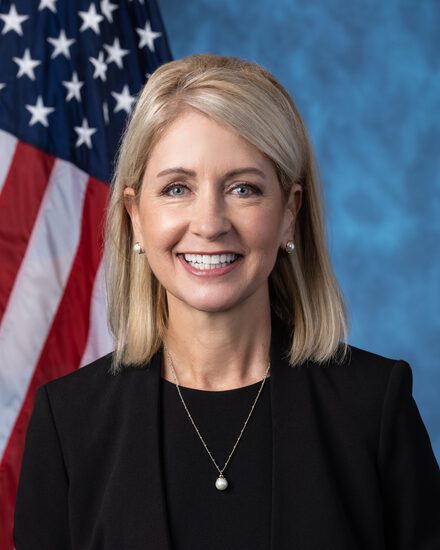
Photo of Mary E. Miller
Mary E. Miller
RRepublican
IL
15