

Maddy summaryThis bill would add pharmacist services to Medicare Part B coverage for beneficiaries, specifically covering pharmacist-led testing and treatment for illnesses like flu, COVID-19, or strep throat during public health emergencies. It defines covered services as those performed under state law, often requiring collaboration with a physician, and sets payment at 80% of the lesser of the actual charge or 85% of physician payment rates. Pharmacists would be prohibited from balance billing for these services, ensuring Medicare beneficiaries pay only their standard copayment. The changes would take effect January 1, 2026.
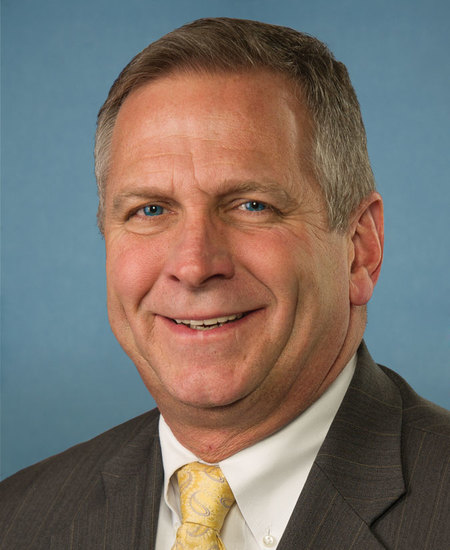
Rep. Mike Bost
Sponsored bills
Maddy summaryThe Smithsonian American Women’s History Museum Act authorizes the creation of a new Smithsonian museum dedicated to women’s history, to be located within the National Mall Reserve in Washington, D.C. If the site is managed by another federal agency, the bill requires that agency to transfer the land after notifying Congress and relevant committees. The museum must ensure exhibits and programs accurately represent diverse women’s experiences by consulting a broad range of experts and community voices. The Smithsonian will submit biennial reports to Congress detailing how the museum meets these representation standards.
Maddy summaryThe USDA Loan Modernization Act (HR 6779) updates eligibility rules for USDA farm loan programs by lowering ownership thresholds from "majority" to "at least 50 percent" for real estate, operating, and emergency loans. It introduces new categories like "qualified operators" and allows farm businesses with complex ownership structures (e.g., 75% owned by qualified operators) to qualify. This directly affects farmers and farm entities applying for these loans, particularly those with partial ownership stakes or embedded entity structures. The bill modifies existing provisions under the Consolidated Farm and Rural Development Act without creating new loan programs or changing loan terms.
Maddy summaryThe VISN Reform Act of 2025 reorganizes the Veterans Health Administration’s 23 regional networks (VISNs) into eight geographically defined networks. It requires consolidating specific existing VISNs (e.g., combining VISNs 1, 2, and 4 into one network) and limits each VISN headquarters to 50 employees (no more than 10 contractors). The bill mandates a reorganization plan within 180 days of enactment, focusing on reducing duplicate functions, aligning services with veteran needs, and ensuring headquarters staff do not reduce access to care. This directly affects VA healthcare operations, including facility management, staffing at VISN headquarters, and coordination with state/local veteran services. The reform aims to streamline administration while maintaining accountability through annual reports to Congress and triennial network reviews.
Maddy summaryThis resolution designates May 29, 2026, as "Mental Health Awareness in Agriculture Day" to highlight mental health issues within the farming and agricultural workforce. It aims to reduce the stigma surrounding mental illness by acknowledging the unique stressors faced by producers and workers, such as unpredictable weather, labor shortages, and market fluctuations. The bill also draws attention to available support resources, specifically the Farm and Ranch Stress Assistance Network, and encourages the public to observe the day as a way to promote well-being in the industry.
This concurrent resolution expresses support for law enforcement officers. It also appreciates the contributions and recognizes the sacrifices of law enforcement officers.
Recognizing Community Organizations for Veteran Engagement and Recovery Act or the RECOVER Act This bill requires the Department of Veterans Affairs to implement a three-year pilot program to make grants to established non-profit mental health care providers to provide culturally competent, evidence-based mental health care for veterans.
Nationwide Consumer and Fuel Retailer Choice Act of 2025 This bill amends the Clean Air Act to address the limitations on Reid Vapor Pressure (a measure of gasoline's volatility) that are placed on gasoline during the summer ozone season. Specifically, the bill applies the waiver for Reid Vapor Pressure requirements that is applicable to gasoline blended with 10% ethanol (E10) to gasoline blended with up to 15% ethanol (E15). This change allows gasoline that is blended with 10% to 15% ethanol to be sold year-round. Currently, states may be excluded from the waiver for Reid Vapor Pressure requirements by submitting documentation supporting that the waiver would increase air pollution. The bill nullifies existing state exclusions, but states may submit documentation after enactment of the bill to be excluded going forward. The bill also modifies the Renewable Fuel Standard Program, which requires transportation fuel sold or introduced into commerce in the United States to contain minimum volumes of renewable fuel. Under the existing program, obligated parties, such as small refineries, must satisfy the volume obligations by either blending renewable fuels into their gasoline or diesel fuel products or by acquiring credits that represent the required renewable fuel volume. The bill directs the Environmental Protection Agency to return compliance credits to small refineries under certain circumstances.
Maddy summaryThis bill would amend federal law to strengthen penalties for organized retail crime by expanding definitions of theft to include digital goods, gift cards, and setting a $5,000 aggregate value threshold for charges over a 12-month period. It would establish a new "Organized Retail and Supply Chain Crime Coordination Center" under Homeland Security to coordinate Federal, State, local, and Tribal law enforcement efforts against cross-jurisdictional theft groups. The Center would share information with retailers, transportation companies, and law enforcement agencies, track crime trends, and produce annual reports on organized retail crime. This legislation directly affects retailers, supply chain businesses, and law enforcement agencies, while targeting organized crime groups responsible for a 93% increase in larceny incidents and rising safety concerns for retail employees. The bill aims to address significant financial losses and supply chain disruptions noted in the National Retail Federation's 2023 data.
Maddy summaryHR 8603, the Dismemberment Abortion Ban Act of 2026, prohibits physicians from performing abortions that involve dismembering an unborn child and extracting it piece by piece or crushed from the uterus. The law allows exceptions only when the procedure is necessary to save the mother's life, while explicitly permitting other abortion methods for reasons such as rape or incest. It imposes criminal penalties of up to two years in prison or fines on physicians who violate the ban and creates a civil lawsuit system where women or parents of minors can seek monetary damages and attorney fees against providers. The bill also defines an 'unborn child' as a human organism from fertilization until birth and clarifies that the woman undergoing the procedure cannot be prosecuted or held financially liable.