

Maddy summaryThis bill directs the Assistant Secretary of Commerce for Communications and Information to conduct a comprehensive study on various broadband internet technologies, including fiber-optic cables, satellite systems, and mobile wireless networks. The study will examine specific factors such as workforce needs, deployment costs, internet speed and latency, equipment lifespan, and monthly subscription prices for consumers. The findings will be compiled into a report submitted to Congress within one year of the bill's enactment to inform future policy decisions regarding broadband infrastructure.
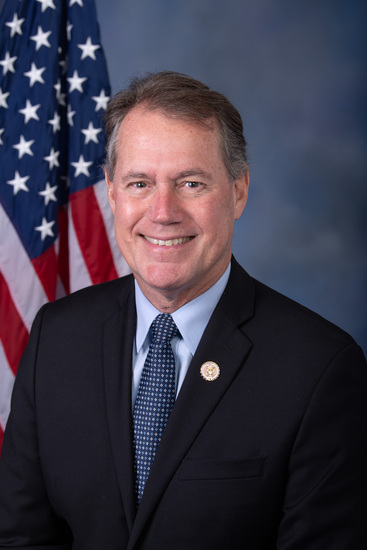
Rep. Ed Case
Sponsored bills
Maddy summaryThis bill creates a new tax incentive to encourage the construction and renovation of affordable housing near public transportation hubs. It directly affects developers and investors by increasing the Low-Income Housing Tax Credit for buildings located within half a mile of rail, bus, harbor, or waterway stations in high-density zones. The credit amount is boosted to 150% of the standard value, rising to 155% for projects in Hawaii, Alaska, or U.S. territories, with limits on how many areas can be designated in each region. Additionally, the bill requires the Department of Housing and Urban Development to study geographic cost-of-living differences and propose changes to how tax credit funds are distributed among states.
Maddy summaryThis resolution formally recognizes the Day of Portugal, Camões, and the Portuguese Communities to honor the legacy of the poet Luís Vaz de Camões and celebrate Portuguese heritage. It acknowledges the contributions of the approximately 1.3 million Portuguese Americans living in the United States and highlights the long-standing diplomatic friendship between the two nations. The measure serves as a symbolic gesture to reaffirm the partnership between the U.S. and Portugal, particularly noting Portugal's role in the America250 celebration.
Maddy summaryHR 5408, the Faster Labor Contracts Act, requires employers to begin negotiating a first contract with a newly certified union within 10 days of written request. If no agreement is reached within 90 days, the parties must seek mediation, and if unresolved after 30 days of mediation, the dispute moves to binding arbitration by a three-member panel. The arbitration decision, based on factors like employer finances, industry standards, and cost of living, becomes binding for two years. This bill directly affects newly certified unions and their employers during initial contract negotiations, aiming to reduce delays that currently average 465 days.
Maddy summaryThe BLANCHE Act of 2026 prohibits the United States government from entering into settlement agreements with the President that result in the President or a third party receiving any payment, including cash, goods, or legal fees. This rule applies to claims filed by the President or individuals who assumed office while a claim was pending, ensuring no such agreements are valid unless a federal court explicitly approves them. To gain court approval, the agreement must be proven to be between adverse parties, not collusive or fraudulent, and in the interest of justice, requiring a formal hearing with evidence presented by both sides. The law also mandates that the President file the proposed terms with the court if no separate civil action has already been initiated. These provisions aim to prevent potential conflicts of interest and ensure transparency in any legal settlements involving the highest office in the land.
Maddy summaryThe DOMINANCE Act aims to reduce U.S. reliance on strategic competitors like China for critical minerals by building international partnerships to secure diversified supply chains. It establishes a Minerals Security Partnership to coordinate diplomatic, development, and financial support for critical mineral projects with allies, creates a new Office of Energy Security Compacts to develop multi-year agreements with partner countries, and sets up a new Assistant Secretary position for Energy Security at the State Department. The bill also includes education programs like the Critical Mineral Mining Fellowship Program to build U.S. workforce capacity in mining. These measures are designed to enhance U.S. national security and economic competitiveness by ensuring reliable access to critical minerals needed for defense, technology, and energy systems.
Maddy summaryThis bill authorizes U.S. sanctions against foreign individuals, entities, and vessels involved in illegal, unreported, and unregulated fishing (IUU fishing), particularly targeting China as the primary perpetrator. It requires freezing assets and denying visas to those who own, captain, or operate vessels engaged in IUU fishing, while mandating annual reports on sanctions implementation. Exceptions include humanitarian aid, national security activities, and compliance with international agreements. The policy aims to protect global fisheries, coastal communities, and marine ecosystems from harmful fishing practices.
Maddy summaryHR 3429 establishes a formal US-Japan-ROK Inter-Parliamentary Dialogue to deepen trilateral cooperation. It creates a US delegation of up to 8 Congress members (2 each from House/Senate leadership, with committee requirements) to meet annually with Japanese and South Korean legislators. The bill mandates annual reports to the Foreign Affairs and Foreign Relations committees and requires the delegation to rotate leadership between House and Senate every two years. This legislation directly affects US congressional members appointed to the delegation and provides a structured mechanism for ongoing policy coordination among the three nations.
Maddy summaryThe Bonuses for Cost-Cutters Act of 2025 allows federal employees to receive cash awards of up to $20,000 for identifying spending their agency's Chief Financial Officer determines is not required for its intended purpose. Employees report potential wasteful expenses to their agency's Chief Financial Officer, who verifies if the spending qualifies under the new definition (funds not needed for their original purpose). If approved, the agency head can award the employee, and agencies must publicly report on these disclosures and awards. The Office of Personnel Management will monitor compliance, and the Comptroller General will report on the program's operation every three years.
Maddy summaryThe HEAR Act of 2026 makes it illegal for most people to import, sell, manufacture, transfer, or possess firearm silencers and mufflers. The law allows exceptions for law enforcement officers, campus security personnel, nuclear facility employees, and licensed manufacturers conducting authorized testing. To help individuals comply with the new restrictions, the bill requires the Attorney General to create a nationwide buy-back program that pays people who surrender their silencers. These changes would take effect 90 days after the bill is signed into law.