EAGLES Act of 2021 This bill reauthorizes the National Threat Assessment Center (NTAC) within the U.S. Secret Service. It reauthorizes the functions of NTAC through FY2025 and expands them to include the establishment of a national program on targeted school violence prevention.
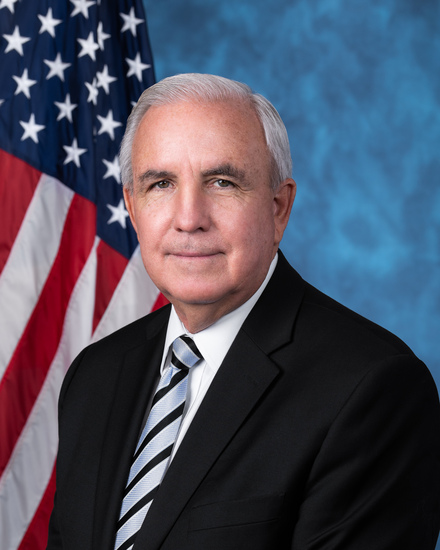
Rep. Carlos A. Gimenez
Sponsored bills
Return Excessive Migrants and Asylees to International Neighbors in Mexico Act of 2021 or the REMAIN in Mexico Act of 2021 This bill requires the Department of Homeland Security (DHS) to implement the Migrant Protection Protocols as outlined in the January 25, 2019, memo titled Policy Guidance for Implementation of the Migrant Protection Protocols . (The protocols generally required aliens who are not clearly admissible, including those seeking asylum, arriving by land along the U.S.-Mexico border to be returned to Mexico while their immigration proceedings are pending, rather than remain in the United States. On January 21, 2021, DHS stopped applying the protocols to newly-arrived individuals.)
Animal Cruelty Enforcement Act of 2021 This bill establishes a new section in the Environmental and Natural Resources Division of the Department of Justice to enforce federal laws concerning animal cruelty.
No Taxpayer Funding for Abortion and Abortion Insurance Full Disclosure Act of 2021 This bill modifies provisions relating to federal funding for, and health insurance coverage of, abortions. Specifically, the bill prohibits the use of federal funds for abortions or for health coverage that includes abortions. Such restrictions extend to the use of funds in the budget of the District of Columbia. Additionally, abortions may not be provided in a federal health care facility or by a federal employee. Historically, language has been included in annual appropriations bills for the Department of Health and Human Services (HHS) that prohibits the use of federal funds for abortions—such language is commonly referred to as the Hyde Amendment. Similar language is also frequently included in appropriations bills for other federal agencies and the District of Columbia. The bill makes these restrictions permanent and extends the restrictions to all federal funds (rather than specific agencies). The bill's restrictions regarding the use of federal funds do not apply in cases of rape, incest, or where a physical disorder, injury, or illness endangers a woman's life unless an abortion is performed. The Hyde Amendment provides the same exceptions. The bill also prohibits qualified health plans from including coverage for abortions. Currently, qualified health plans may cover abortion, but the portion of the premium attributable to abortion coverage is not eligible for subsidies.
This resolution recognizes the 500th anniversary of the founding of the city of San Juan, Puerto Rico.
Growing Climate Solutions Act of 2021 This bill authorizes the Department of Agriculture (USDA) to establish a voluntary Greenhouse Gas Technical Assistance Provider and Third-Party Verifier Certification Program to help reduce entry barriers into voluntary environmental credit markets for farmers, ranchers, and private forest landowners. A voluntary environmental credit market is a market through which agriculture and forestry credits may be bought or sold. Entities eligible to participate in the program are (1) providers of technical assistance to farmers, ranchers, or private forest landowners in carrying out sustainable land use management practices that prevent, reduce, or mitigate greenhouse gas emissions, or sequester carbon; or (2) third-party verifiers that conduct the verification of the processes described in the protocols for voluntary environmental credit markets. Among other requirements, USDA must publish (1) a list of protocols and qualifications for eligible entities; (2) information describing how entities may self-certify under the program; (3) information describing how entities may obtain the expertise to meet the protocols and qualifications; and (4) instructions and suggestions to assist farmers, ranchers, and private forest landowners in facilitating the development of agriculture or forestry credits and accessing voluntary environmental credit markets. USDA must also establish an advisory council to make recommendations regarding the list of protocols and qualifications, best practices, and voluntary environmental credit markets. The bill also rescinds certain funds provided in the American Rescue Plan Act of 2021 and makes the funds available for the certification program.
American Border Rescue Plan Act This bill establishes that funds made available for certain COVID-19 recovery programs may also be available to eligible law enforcement agencies for border enforcement-related purposes. To be eligible to receive such funds, a law enforcement agency must be (1) located in a state with an international border, and (2) involved in an active and ongoing U.S. Customs and Border Protection operation coordinated through a sector office.
Climate-Resilient International Development Optimization Act This bill directs agencies with direct international development programs and investments to incorporate climate resilience considerations into agency decision making. Agencies that participate in a multilateral entity must encourage the entity to incorporate climate-related risks into the decisions of the entity. The bill also establishes the Working Group on Climate-Resilient International Development in the Department of the Treasury to support such efforts.
Finish the Wall Act This bill requires the Department of Homeland Security (DHS) to resume activities related to the construction of a barrier system along the U.S.-Mexico border and addresses other border-related issues. DHS must resume all such construction activities that were planned or underway prior to January 20, 2021. DHS must also expend all funds appropriated or explicitly obligated since October 1, 2016, for construction of this barrier system. DHS may not cancel contracts for activities related to such construction entered into on or before January 20, 2021. Furthermore, within 14 days of this bill's enactment, DHS must certify to Congress that U.S. Customs and Border Protection facilities that process adults taken into custody at the border are fully compliant with certain laws related to the collection of DNA. (Among other things, these laws allow for the collection of DNA samples from non-U.S. persons detained under U.S. authority.)
CBRN Intelligence and Information Sharing Act of 2021 This bill expands the functions of the Office of Intelligence and Analysis of the Department of Homeland Security related to homeland-security focused intelligence and information sharing. The office shall support intelligence analysis and risk assessment of terrorist actors, their claims, and their plans to conduct attacks involving chemical, biological, radiological, and nuclear materials against the United States, including critical infrastructure; support intelligence analysis and risk assessment of global infectious disease, public health, food, agricultural, and veterinary issues; leverage existing and emerging homeland security intelligence capabilities and structures to enhance early detection, prevention, protection, response, and recovery efforts with respect to a chemical, biological, radiological, or nuclear attack; and share information and provide tailored analytical support on these threats to state, local, tribal, and territorial authorities and to relevant national biosecurity and biodefense stakeholders and other federal agencies.