

Maddy summaryThis bill prohibits the United States from providing any voluntary or assessed funding to the United Nations Relief and Works Agency for Palestine Refugees in the Near East. The restriction applies directly to the U.S. government's financial contributions to the agency, effectively cutting off official U.S. support. However, the law allows for humanitarian aid to individuals who receive help from UNRWA if that aid is delivered through other organizations that do not promote violence, terrorism, or antisemitism. Ultimately, the legislation mandates a complete halt to direct U.S. funding for UNRWA while permitting indirect assistance under specific conditions.
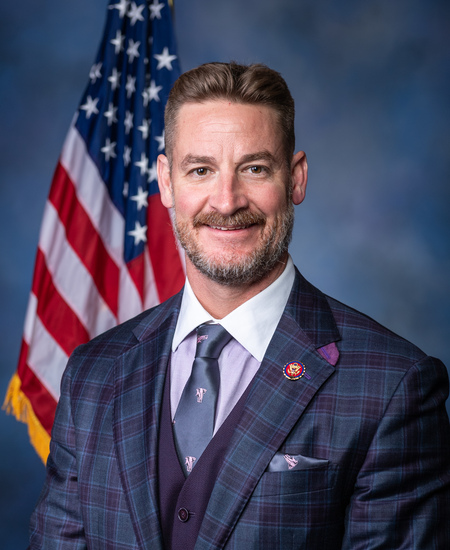
Rep. W. Gregory Steube
Sponsored bills
Maddy summaryThe Stop EU Overreach Act directs the United States Trade Representative to initiate a formal investigation within 30 days of enactment to determine if specific European Union environmental and sustainability regulations unfairly burden American commerce. These targeted measures include rules on corporate sustainability due diligence, reporting, deforestation traceability, and carbon border adjustments that apply to US companies based on their operations or supply chains outside the EU. If the investigation concludes that these foreign practices are unreasonable or discriminatory, the USTR is authorized to take retaliatory actions such as imposing duties on imports from EU member states or suspending trade agreement benefits. The bill includes a sunset provision that terminates its requirements for any specific EU measure once the USTR certifies that the European Union has repealed the rule or entered into a binding agreement to exempt US persons from its extraterritorial obligations.
Maddy summaryThis resolution sets up a special procedure to immediately consider a bill titled the Honey Integrity and Consumer Transparency Act, which aims to protect the quality and authenticity of honey sold in the United States. The proposed law would create a federal standard defining what constitutes real honey by setting strict limits on chemical markers that indicate processing or the addition of foreign sugars. It establishes a new testing program where imported honey faces rigorous scrutiny and fees, while domestic producers are largely exempt from these costs and testing requirements. Additionally, the bill mandates clear country-of-origin labeling on honey packages and creates a public database to track and expose companies found to be selling fraudulent or adulterated products.
Maddy summaryHR 2715, the *Destruction of Hazardous Imports Act*, expands the authority to destroy imported goods that pose public health risks. It amends the Federal Food, Drug, and Cosmetic Act to allow the Secretary of Health and Human Services to order the destruction of any refused import (not just drugs or devices) if it presents a significant health concern. The bill also prohibits the unauthorized movement, sale, or export of such refused goods. These changes apply to importers of hazardous refused articles 180 days after enactment, with the FDA required to finalize implementing regulations within 90 days.
Maddy summaryThe FORMULA Act of 2026 requires the U.S. Food and Drug Administration to set strict limits on contaminants in infant formula, including heavy metals, microplastics, and synthetic pesticides. Manufacturers must test their products to meet these new standards and keep records of their testing for at least two years after the formula's shelf life expires. The law also mandates that the FDA report annually to Congress on any violations and the progress made in reducing contaminant levels in the domestic supply chain. These regulations will take effect 180 days after the bill is signed into law.
Maddy summaryThis bill allows craft distilleries to ship distilled spirits directly to consumers in other states, provided both the sending and receiving states permit such transactions. To qualify, the distillery must be independently owned and produce no more than 250,000 gallons annually, while the shipment must be for personal use only and marked to require an adult signature upon delivery. The law also mandates that buyers affirm they are of legal age at the time of purchase, either by showing identification in person or confirming it online or over the phone. If these conditions are not met, state attorneys general can pursue civil actions under existing federal law. The legislation aims to clarify and enable interstate shipping rules specifically for small, independent alcohol producers.
Maddy summaryThis resolution formally impeaches Senior District Judge John Edwin Steele of the Middle District of Florida for high crimes and misdemeanors. The primary allegation is that he released Miakel Guerra Morales, a Cuban national convicted of aircraft piracy, from an ICE detention facility despite the individual posing a special danger to the public. The text claims the judge ignored federal regulations allowing detention for dangerous aliens and prioritized case management backlogs over national security and public safety. By ordering the release within 24 hours, the resolution argues the judge denied the executive branch time to pursue appellate review and protect the community. Consequently, the House seeks to remove the judge from office based on this specific judicial decision.
Maddy summaryThis bill, known as the Daughters of the American Revolution Membership Integrity Act, amends federal law to explicitly limit membership in the Daughters of the American Revolution to adult human females. It defines a female as someone who naturally possesses or would have the reproductive system capable of producing ova for fertilization, regardless of any congenital anomalies or medical disruptions. By adding this specific definition to the organization's governing code, the legislation clarifies the genealogical and biological requirements for joining the group. The change directly affects the organization's eligibility rules but does not alter its internal operations or funding.
Maddy summaryThe Essential Caregivers Act of 2026 requires nursing homes, long-term care hospitals, rehabilitation facilities, and intermediate care facilities to allow two chosen family members or friends to visit residents during times when regular visitation is suspended. These essential caregivers must agree to follow the facility's existing safety and infection control rules, which are no more restrictive than those applied to staff. While facilities can limit access for the first seven days of a suspension or deny entry if a caregiver shows symptoms of a serious infectious disease, they cannot block visits for end-of-life care. Additionally, the bill mandates that complaints about denied access to essential caregivers be investigated and resolved within three days.
Maddy summaryHR 7651, the Chloe Cole Act of 2026, prohibits healthcare providers from performing certain medical interventions on minors under 18 aimed at altering physical development to align with gender identity. These "covered interventions" include puberty blockers, hormone treatments, and specific surgeries, but exclude medically necessary care for conditions like disorders of sexual development or traumatic injuries. The bill creates a federal civil lawsuit right for affected minors or their parents against providers who perform such interventions, allowing claims for damages including emotional distress and punitive awards, with strict liability for providers after the law's enactment. It explicitly allows exceptions for legitimate medical treatments and requires providers to prove such exceptions apply if challenged.