

Transparency for Confucius Institutes Act This bill requires an institution of higher education (IHE) that participates in federal student-aid programs to enter into a program participation agreement if a Confucius Institute operates on the IHE's campus. (Confucius Institutes are Chinese government-funded centers for language education and cultural programming at IHEs.) The agreement must be entered into with the Office of Chinese Language Council International (i.e., Confucius Institute Headquarters, Hanban) and be made publicly available online. Among other requirements, the Confucius Institute must be physically located apart from the IHE's own Chinese language, history, and cultural programs.
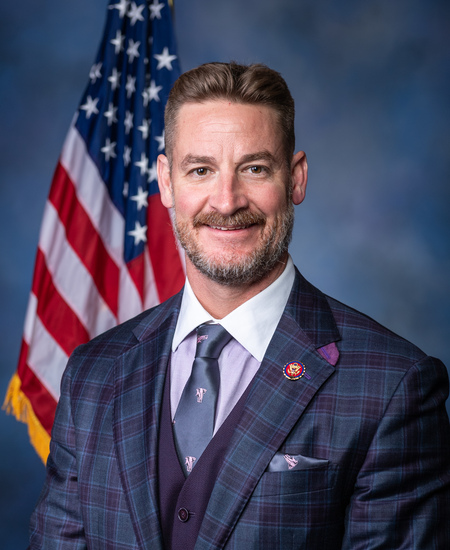
Rep. W. Gregory Steube
Sponsored bills
Increasing Access to Quality Cardiac Rehabilitation Care Act of 2021 This bill accelerates and expands certain changes that are scheduled to take effect relating to the coverage of cardiac, intensive cardiac, and pulmonary rehabilitation programs under Medicare. Currently, such programs require physician supervision. Effective January 1, 2024, physician assistants, nurse practitioners, and clinical nurse specialists may also supervise these programs. The bill expedites the effective date of these changes to January 1, 2022, and also allows these practitioners to administer programs in their offices, prepare and sign treatment plans, and prescribe exercise.
No Taxpayer-Funded Checks for Prisoners Act This bill prohibits individuals who were incarcerated in a federal prison on the enactment date of the American Rescue Plan Act of 2021 from receiving the recovery rebates provided by that Act.
Global War on Terrorism Memorial Location Act This bill authorizes the establishment of a National Global War on Terrorism Memorial in the area of the National Mall.
Do Your Job Act of 2021 This bill eliminates the use of official time by federal employees. Official time is paid time off from assigned duties to perform labor-management relations activities.
Healthy Workplaces Act This bill allows tax credits for employer expenses for protecting employees from COVID-19 (i.e., coronavirus disease 2019). Specifically, the bill allows a credit against certain employment taxes equal to 50% of the sum of qualified employee protection expenses, workplace reconfiguration expenses, and education and training expenses paid by the employer during a calendar quarter. The bill also allows a 50% income tax credit for qualified workplace reconfiguration expenses incurred by an employer in 2020. The bill defines qualified workplace reconfiguration expenses to include amounts paid by an employer to evaluate, design, and reconfigure retail space and employee work areas for the primary purpose of preventing the spread of COVID-19. The evaluation, design, and reconfiguration must be completed before January 1, 2022.
Veterans Cannabis Use for Safe Healing Act This bill prohibits the Department of Veterans Affairs (VA) from denying a veteran any VA benefit due to participation in a state-approved marijuana program. For veterans participating in these approved programs, the VA must ensure its health care providers (1) discuss marijuana use with such veterans and adjust treatment plans accordingly, and (2) record such use in the veterans' medical records. Under the bill, the VA shall authorize physicians and other VA health care providers to provide recommendations to veterans who are residents of states with approved programs.
This resolution expresses the sense of the House of Representatives that the global COVID-19 (i.e., coronavirus disease 2019) outbreak is a direct result of China's human rights abuses and propaganda campaign and that China should be held accountable for its handling of the outbreak.
Guard Reimbursement for Unhealthy Bites Act or the GRUB Act This bill requires the Department of Defense to pay National Guard members a per diem for each day they performed duty between January 26, 2021, and March 15, 2021, in response to the attacks on January 6, 2021, on the U.S. Capitol building and grounds. The per diem rate must be equal to the proportional meal rate determined by the Defense Travel Management Office for the National Capital Region.
Developing Responsible Individuals for a Vibrant Economy Act or the DRIVE-SAFE Act This bill directs the Department of Transportation to promulgate regulations to implement an apprenticeship program for licensed commercial motor vehicle drivers under the age of 21. Under the program, an apprentice must complete two probationary periods that total 400 hours of on-duty time, of which at least 240 hours must be driving time in a commercial motor vehicle. Additionally, the apprentice must be accompanied in the cab of the commercial motor vehicle by an experienced driver. Further, the bill requires all commercial motor vehicles used in the program for training to be equipped with safety technology such as active braking collision mitigation systems and video event capturing systems. An employer shall not knowingly allow, require, permit, or authorize a driver under the age of 21 to operate a commercial motor vehicle unless the driver is participating in, or has completed, an apprenticeship program that meets the requirements set forth in this bill.