

Maddy summaryHR 5359, the "No Bribes for Politicians Act of 2025," prohibits the President and Vice President from owning or managing for-profit businesses, using their name/likeliness for profit, or holding decision-making roles in such entities (with exceptions for retirement accounts). It also requires biannual financial disclosures for the President, Vice President, cabinet members, and their relatives (defined broadly as parents, spouses, siblings, etc.) starting in 2026, including reporting relatives' financial information. The bill further restricts the use of gifts over minimal value for presidential duties, requiring agencies to dispose of such gifts. These provisions directly affect the highest executive officials and their immediate families, aiming to prevent conflicts of interest through mandatory reporting and business activity bans.
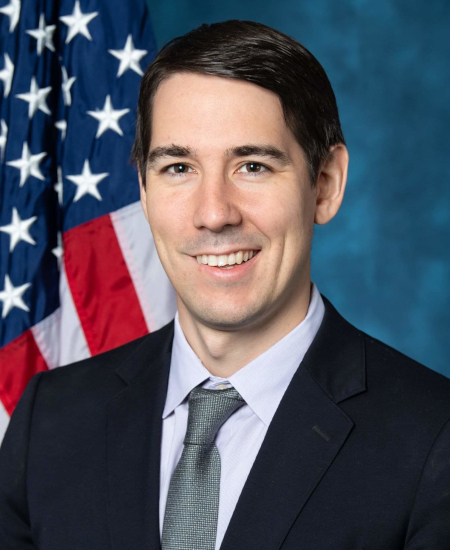
Rep. Josh Harder
Sponsored bills
Maddy summaryThis bill (HR 5332) mandates a federal review of liquid cooling technologies for data centers, requiring the Government Accountability Office (GAO) to assess their research needs, costs, benefits, and market adoption within 90 days. The study will evaluate how liquid cooling compares to air cooling for efficiency, safety, and heat reuse, including waste heat capture for secondary uses. It directly affects federal agencies operating data centers (like the Department of Energy) by informing future infrastructure decisions. The GAO report and subsequent Department of Energy assessment will guide potential policy but do not fund or require adoption of liquid cooling.
Maddy summaryHR 5309, the Congressional Tribute to Constance Baker Motley Act of 2025, authorizes a posthumous Congressional gold medal for Constance Baker Motley, a pioneering civil rights attorney and judge. The bill directs the Treasury Secretary to strike the medal with her image and name, to be presented to her son, Joel W. Motley III, and her niece, Constance Royster. It also permits the sale of bronze duplicates at cost to cover expenses, with proceeds going to the U.S. Mint fund. This is a commemorative measure with no substantive policy changes, honoring Motley’s legacy as the first African-American woman appointed to a federal judgeship.
Maddy summaryThis bill directs the U.S. Department of Energy to conduct a study on how artificial intelligence (AI) and data center growth affects energy resources, with specific focus on rural and remote areas. The study will examine infrastructure needs, alternative energy sources (like solar, wind, and hydro), impacts on energy costs and reliability, and ways to speed up permitting for these facilities. It requires a report to Congress within 180 days of enactment. The bill does not create new regulations or funding but aims to inform future energy planning for AI/data center development.
Maddy summaryHR 5145, the Bipartisan Premium Tax Credit Extension Act, extends enhanced federal subsidies for health insurance premiums through 2026. It directly affects individuals purchasing coverage through health insurance marketplaces who qualify for premium tax credits. The bill extends the period for increased credit amounts (through 2026 instead of 2025) and maintains the rule allowing tax credits for households earning above 400% of the federal poverty level. These changes apply to tax years beginning after December 31, 2025.
Maddy summaryHR 5141, the "Stop the Rate Hikes Act," limits electric utilities to requesting a single rate increase per year. This bill directly affects electric utilities by restricting how often they can seek higher rates from customers. The key provision amends the Public Utility Regulatory Policies Act of 1978 to require that each utility submit no more than one rate increase request annually. The policy change aims to reduce frequent rate adjustments for consumers, applying specifically to retail utility rates.
Maddy summaryThis bill requires the EPA to establish guidelines for indoor air contaminants like radon, formaldehyde, and carbon monoxide that affect schools and childcare facilities. It mandates a national assessment of indoor air quality in these buildings, with updates every five years, and provides technical assistance to schools and childcare providers to implement air quality improvements. The EPA must publish science-based guidelines with recommended concentration limits for key contaminants and support voluntary building certifications for healthier indoor environments. These provisions directly impact local schools, childcare centers, and state/local governments responsible for building maintenance and health standards.
Maddy summaryHR 5105, the UNLOCK Act, amends the Housing and Community Development Act of 1974 to expand eligibility for federal housing funds. It allows metropolitan cities, urban counties, states, local governments, insular areas, and tribal entities to use Section 106 funds for constructing new residential housing for low- and moderate-income residents, with or without nonprofit partnerships. The key change adds a new funding category (paragraph 27) to existing housing programs, streamlining access to resources for affordable housing projects. This bill directly affects local governments and tribal entities seeking to build or support affordable housing without requiring mandatory nonprofit involvement.
Maddy summaryHR 5085 exempts federal agencies from conducting environmental reviews under the National Environmental Policy Act (NEPA) for infill housing projects that meet specific criteria. These projects must be located on previously developed urban sites (under 20 acres, with 75% urban adjacency), pass required environmental assessments, and avoid high-risk wildfire/flood zones per FEMA data. The bill also shortens FEMA’s natural hazard risk assessment update cycle from every 5 to every 3 years. This directly affects federal agencies approving housing developments and developers seeking streamlined project approvals.
Maddy summaryHRES 670 is a symbolic resolution (not a law) expressing congressional support for designating September 22 as "National Military and Veterans Suicide Awareness Day." It aims to raise public awareness about mental health challenges and suicide prevention within military service members and veterans, acknowledging their sacrifices and the need to reduce stigma around seeking help. The resolution does not create new programs, allocate funding, or change existing policies - it simply encourages national attention during Suicide Prevention Awareness Month in September. This designation directly affects the military and veteran communities by promoting dialogue about their mental health needs.