

Ethan's Law This bill establishes a framework to regulate the storage of firearms on residential premises at the federal, state, and tribal levels. At the federal level, the bill establishes statutory requirements for firearms on residential premises to be safely stored if a minor is likely to gain access without permission or if a resident is ineligible to possess a firearm. An individual who violates the requirements is subject to criminal penalties. A firearm stored in violation of the requirements is subject to seizure and forfeiture. At the state and tribal levels, the bill requires the Department of Justice to award grants to implement functionally identical requirements for the safe storage of firearms.
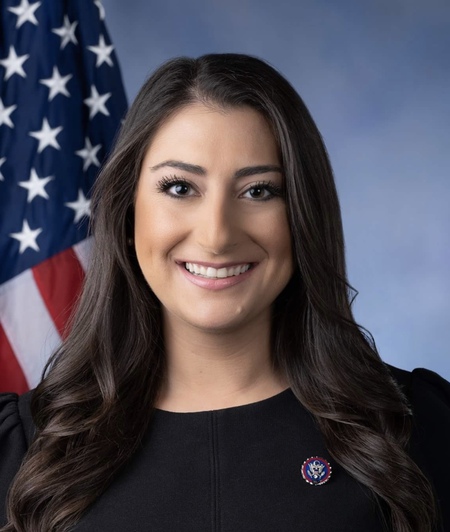
Rep. Sara Jacobs
Sponsored bills
This resolution condemns the military coup that took place in Burma (Myanmar) on February 1, 2021. It also calls on the Burmese military to (1) release all those detained arbitrarily in the coup, (2) restore all forms of communications, and (3) return to power all members of the civilian government.
War Powers Act Enforcement Act This bill prohibits the use of federal funds in contravention of the War Powers Resolution. That resolution provides procedures for Congress and the President to participate in decisions to send the Armed Forces into hostilities.
Better Utilizing Investments to Leverage Development and Generating Renewable Energy to Electrify the Nation's Infrastructure and Jobs Act or the BUILD GREEN Infrastructure and Jobs Act This bill directs the Department of Transportation (DOT) to establish a green transportation infrastructure program to provide competitive grants to states, local governments, and other entities for capital investments in electrified surface transportation infrastructure projects. DOT must select projects that maximize sustainability, including projects that (1) promote the electrification of all public transportation, (2) contribute to climate resilience and mitigation, (3) reduce air pollution and greenhouse gas emissions, and (4) achieve energy savings and reduce energy usage compared to other eligible projects. Additionally, DOT must prioritize projects that (1) serve a frontline, vulnerable, or disadvantaged community; (2) are located in an area that has experienced high adverse health and environmental impacts on minority and low-income populations; (3) require federal funds in order to complete an overall financing package; or (4) add a new green space or new state or local park units and outdoor recreational areas. Grants issued under the program may not be less than $2 million, with the exception of grants for project planning, preparation, or design, which are not subject to a minimum amount. The federal share of the cost of a project may not exceed 85% for planning, design, and construction purposes and 50% of the operation and maintenance costs of the project for its first 10 years.
Stephanie Tubbs Jones Uterine Fibroid Research and Education Act of 2021 This bill directs the Department of Health and Human Services (HHS) to expand research on, and take other actions to address, uterine fibroids. These are muscular tumors that grow in the wall of the uterus and may cause pain, heavy menstrual bleeding, and reproductive issues. In coordination with the National Institutes of Health and appropriate federal agencies, HHS must undertake research activities on uterine fibroids. In addition, HHS must establish a database of services furnished to individuals diagnosed with uterine fibroids under Medicaid or the Children's Health Insurance Program and must develop a report on federal and state expenditures for such services. Additionally, HHS must disseminate information on uterine fibroids to the public and to health care providers, including information on the elevated risk for minority women and available treatments.
This resolution reaffirms and recognizes the importance of partnerships between the United States and African countries, encourages greater and more strategic collaboration to achieve and sustain socioeconomic transformation in Africa, and encourages the United States to advance interests in Africa to reach specified goals.
Fostering Postsecondary Success for Foster and Homeless Youth Act of 2021 This bill establishes a program through which the Department of Education (ED) must annually recognize institutions of higher education (IHEs) that offer outstanding services and programs to foster care and homeless youth. Further, ED must establish a Center for Fostering Postsecondary Success for Foster and Homeless Youth to assist IHEs with creating and maintaining their programs for these youth.
Huntington's Disease Disability Insurance Access Act of 2021 This bill expedites payment of Social Security Disability Insurance (SSDI) benefits and eligibility for Medicare coverage for those with Huntington's disease. This is an inherited disorder that causes brain cells to die, including in areas of the brain that help to control voluntary movement. Specifically, the bill eliminates the 5-month waiting period for SSDI benefits and the subsequent 24-month waiting period for Medicare coverage for individuals with Huntington's disease. Under current law, individuals generally must wait five months after the onset of disability to begin receiving SSDI benefits and an additional 24 months to become eligible for Medicare.
Wise Investment in Children Act of 2021 or the WIC Act of 20 21 This bill expands eligibility for children to receive benefits under the Special Supplemental Nutrition Program for Women, Infants, and Children (WIC). The bill authorizes the Department of Agriculture to grant a waiver to a state, on request, that waives certification deadline requirements under the program if such state demonstrates there are unusual technological barriers to implementation, operational costs are not affordable within the nutrition services and administration grant of the state, or it is in the best interest of the program. If a waiver is granted, the bill extends eligibility for the program until the period that ends on the earlier of the sixth birthday of a child or when the child enters kindergarten; extends the certification period under the program for infants to up to two years, instead of the current one year; and increases the certification time under the program for postpartum women to a period of up to two years.
Child Care is Infrastructure Act This bill establishes grants for child care facilities and higher education loan repayment and scholarship programs for child care educators, among other provisions. The Administration for Children and Families must conduct long- and short-term assessments of child care infrastructure, including the effect of the COVID-19 (i.e., coronavirus disease 2019) pandemic on such facilities. The bill provides grants to (1) states to acquire, construct, or improve child care facilities; and (2) intermediary organizations with demonstrated experience in child care facilities financing to develop or finance child care facilities. The bill further provides for education loan repayments of up to $6,000 per year for up to five years for early childhood educators who agree to work for certain child care providers. Additionally, the bill establishes a program for institutions of higher education to award grants of up to $3,000 per academic year to individuals who are enrolled in early childhood educator programs and agree to serve in a state-licensed early learning program. Finally, the bill modifies and reauthorizes through FY2027 supports for campus-based child care for low-income parents enrolled in institutions of higher education and requires the Department of Housing and Urban Development to consider early learning facilities in planning and implementation grants under the Choice Neighborhoods Initiative.