

Maddy summaryHR 5658, the Child Care for Every Community Act, establishes a federal framework to create universal, high-quality child care and early learning programs available to all young children not yet required to attend school. The bill requires that covered children (children below compulsory school age) be entitled to participate in these programs, with no fees for low-income families and sliding-scale fees for others based on family income. Key provisions include requiring full-working-day, full-calendar-year care; setting national quality standards for staff qualifications and facilities; mandating comprehensive services including health, nutrition, and family support; and requiring coordination with schools to support children's transitions to kindergarten. The bill directly affects families seeking child care, child care providers, and local communities that would administer these programs through designated "prime sponsors."
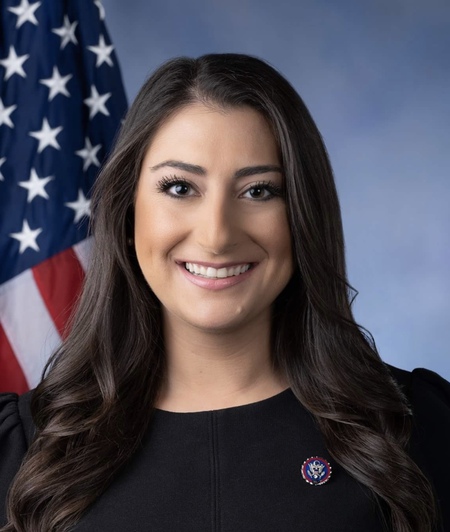
Rep. Sara Jacobs
Sponsored bills
Maddy summaryThe Connecting Communities Through Transit Planning Act of 2026 establishes a federal grant program to fund transit-oriented development planning, primarily affecting state and local governments, transit agencies, and communities seeking to improve public transportation access. It expands eligible projects to include fixed guideway bus rapid transit and corridor improvements in existing systems, while requiring grantees to conduct community engagement, accessibility assessments, and feasibility studies as part of predevelopment activities. The bill authorizes $75 million annually for fiscal years 2027-2031 to support these planning efforts, with specific mandates to improve access for people with disabilities, seniors, veterans, and other transit-dependent populations through infrastructure and connectivity planning.
Maddy summaryHJRES 144 is a congressional disapproval resolution targeting a specific rule issued by the Department of Veterans Affairs (VA) on December 31, 2025, which addressed "Reproductive Health Services" (90 Fed. Reg. 61310). This resolution directs Congress to disapprove the VA rule under Chapter 8 of Title 5, U.S. Code, meaning the rule would have no legal effect if passed. The bill directly affects the VA's implementation of reproductive health services for veterans, as it seeks to nullify the agency's existing policy. This is a procedural measure, not a substantive policy change, aimed solely at blocking the VA's rule through congressional action.
Maddy summaryHR 7271, the Evan Anzoo Memorial Act, requires the Comptroller General to produce a report investigating deaths linked to USAID service cuts. The bill mandates a one-year report estimating 2025 deaths and five-year future deaths due to USAID stop-work orders, plus an assessment of whether specific individuals (like Evan Anzoo, 5, South Sudan, who died after losing HIV treatment) died because of lost USAID services. It also requires an interim update within 180 days and a list of other verified deaths tied to these service disruptions. The act does not change USAID policy but directs a factual review of impacts from prior USAID service reductions.
Maddy summaryHR 7238 establishes a Commission to investigate historical discrimination against LGBTQ+ service members in the military, including policies that led to discharges and denied benefits. The Commission will gather testimonies from affected veterans and servicemembers, study impacts on mental health, benefits access, and force readiness, and recommend remedies like record corrections and compensation. This bill directly affects LGBTQ+ veterans and current service members who faced discharge or denial of care due to their sexual orientation or gender identity. The Commission must submit a final report to Congress within one year, outlining findings and proposed actions.
Maddy summaryHCONRES 68 would require the President to remove U.S. military forces from Venezuela unless Congress has explicitly authorized their use through a declaration of war or a specific law. This applies to any U.S. Armed Forces currently stationed in Venezuela without such authorization. The resolution is based on the War Powers Resolution, which mandates congressional oversight of military deployments. It directs the immediate withdrawal of unapproved forces without adding new time limits or conditions.
Maddy summaryThe Conflict Prevention Act (HR 7052) establishes a new Center for Conflict Analysis, Planning, and Prevention within the U.S. Department of State. This center, led by a Director reporting to the Under Secretary for Political Affairs, will develop conflict analysis tools, forecast potential conflict hotspots, and advise regional bureaus and diplomats on preventing violence and supporting peace processes. It directly affects State Department staff, including diplomats in conflict-affected regions, by providing them with analytical support, strategic planning, and training on conflict prevention. The center will operate with up to 20 full-time employees and focus on data-driven approaches to inform U.S. foreign policy decisions related to global conflicts.
Maddy summaryThe NO NATO for Purchase Act bans federal agencies from using government funds to buy land or assets in NATO member countries. It directly affects all federal departments and agencies by prohibiting such acquisitions as defined in the 1949 North Atlantic Treaty. The key provision blocks any action or expenditure related to purchasing territory within NATO nations. This prevents U.S. government purchases of foreign territory belonging to NATO member countries.
Maddy summaryHR 7100 establishes a Department of Justice Task Force on Anti-Sikh Hate and Discrimination to address systemic bias against Sikhs. The Task Force must draft a formal definition of anti-Sikh hate for DOJ use, develop educational programs for law enforcement and schools, and produce annual reports on hate crimes and trends. It requires quarterly collaboration with Sikh organizations and translation of materials into Punjabi. The bill directly affects Sikhs in the U.S. (who face disproportionate targeting as noted in FBI data) and mandates federal agencies to improve hate crime data collection and response. This is a policy-focused measure to standardize definitions, enhance reporting, and support community safety through DOJ action.
Maddy summaryHRES 996 is a resolution introduced by multiple House members to impeach Kristi Lynn Arnold Noem, the Secretary of Homeland Security, for alleged violations of law and the Constitution. It outlines three articles of impeachment: obstructing congressional oversight by denying access to detention facilities and withholding funds, violating public trust through warrantless arrests and excessive force (including tear gas on children), and self-dealing by awarding federal contracts to associates without competitive bidding. If approved by the House, this resolution would formally charge Noem, triggering a Senate trial to determine her removal from office. The resolution itself does not enact new policy but initiates the constitutional impeachment process against a sitting Cabinet official.