

Maddy summaryThis resolution (HRES 980) commemorates the one-year anniversary of the 2025 Southern California wildfires, which impacted communities like Pacific Palisades and Altadena. It honors the 31 people who lost their lives, commends first responders who fought the fires, and affirms the House's ongoing support for affected communities. The resolution is purely ceremonial and does not create new laws, allocate funds, or change existing policies. It directly affects the Southern California communities devastated by the wildfires and their residents.
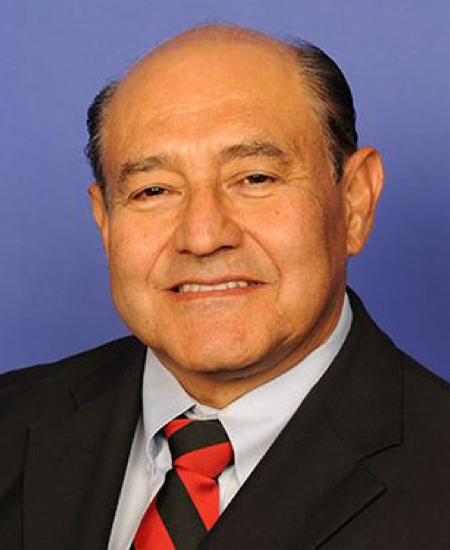
Rep. J. Luis Correa
Sponsored bills
Maddy summaryThis resolution (HRES 969) expresses support for designating the week beginning September 8, 2025, as "National Hispanic-Serving Institutions Week." It recognizes colleges and universities with at least 25% Hispanic undergraduate enrollment (known as Hispanic-Serving Institutions or HSIs) and their role in serving diverse, low-income students. The resolution does not create new policies or funding but encourages public observance through ceremonies and activities to honor HSIs’ contributions to higher education access and economic mobility. It applies symbolically to all 615+ HSIs across the U.S. and Puerto Rico.
Maddy summaryHR 4611 (EACH Act of 2025) requires all federally funded health programs - including Medicaid, Medicare, military health plans, and the Indian Health Service - to cover abortion services without restrictions, repealing the Hyde Amendment's long-standing ban on federal funding for most abortions. This directly affects millions of people enrolled in these programs, particularly low-income women, women of color (including 25% of Black women and 22% of Hispanic women on Medicaid), and young people. The bill mandates coverage in all federally administered health plans and prohibits state or private insurers from restricting abortion coverage in health insurance. It aims to eliminate current federal and state barriers that deny abortion access to people who rely on government health programs.
Maddy summaryThe Shadow Docket Sunlight Act of 2025 requires the U.S. Supreme Court to publish written explanations and disclose individual justice votes when issuing orders related to preliminary injunctions or stays of such injunctions. It mandates that these explanations evaluate specific legal criteria, such as the likelihood of success on the merits and public interest, for both granting/denying injunctions and granting/denying stays. The law applies to cases within the Court’s appellate jurisdiction (excluding purely administrative orders) and directs the Federal Judicial Center to report annually on compliance. This bill directly affects the Supreme Court’s decision-making process for emergency relief cases, aiming to increase transparency without altering legal standards or jurisdiction.
Maddy summaryHR 6767, the Health Equity and MENA Community Inclusion Act of 2025, amends federal health law to include Middle Eastern and North African (MENA) populations - such as Lebanese, Iranian, Egyptian, and Palestinian communities - within the definition of "racial and ethnic minority groups." This change directly affects approximately 3.5 million MENA individuals in the U.S., who have historically been excluded from federal health programs like the Office of Minority Health (OMH) due to data classification. The bill mandates the Department of Health and Human Services (HHS) to conduct a comprehensive health study, breaking down data by specific MENA subgroups to analyze disparities in areas like chronic disease, mental health, maternal outcomes, and access to care. HHS must also establish privacy safeguards for study participants and publish findings via a public online portal, enabling targeted health initiatives for MENA communities.
Maddy summaryThe Protect America's Workforce Act cancels an executive order issued on March 27, 2025, that excluded certain groups from federal labor-management relations programs, making it legally unenforceable. It also ensures that all collective bargaining agreements between federal agencies and labor unions, which were active as of March 26, 2025, remain fully effective until their agreed terms expire. This directly affects federal agencies, labor unions, and the employees covered by these agreements. The bill prevents federal funds from being used to implement the canceled executive order while preserving existing labor agreements.
Maddy summaryHRES 949 is a symbolic resolution expressing congressional support for designating the first Saturday in May as "National Lowrider Day." It recognizes lowrider culture as an integral part of U.S. history and cultural identity, originating in Chicano communities and reflecting creativity, community building, and resistance to discrimination. The resolution honors lowrider builders, artists, and clubs, acknowledges historical challenges like criminalization, and calls for public events and educational programs celebrating this cultural heritage. As a non-binding resolution, it does not create new laws but formally acknowledges the cultural significance of lowrider culture for affected communities nationwide.
Maddy summaryHR 6670 creates a new nonimmigrant visa category ("family purpose visas") allowing relatives of U.S. citizens or lawful permanent residents to visit temporarily for family events. It requires applicants to provide proof of financial support, short-term medical insurance covering U.S. travel, and a sworn statement to depart within 90 days per calendar year. The bill restricts petitioners from previously sponsoring relatives who overstayed their visas, and explicitly states that these visits do not count toward permanent residency eligibility. This directly affects extended family members (including grandparents, siblings, and nieces/nephews) seeking short-term U.S. visits for social or major life events.
Maddy summaryHRES 927 is a symbolic House resolution declaring support for "Design for Recycling" (DFR) initiatives. It encourages manufacturers to design products with the maximum number of recyclable components, aiming to reduce waste sent to landfills and promote circular economy practices. The resolution does not create new laws or requirements but formally endorses efforts to make products easier to recycle, which would directly affect manufacturers across industries like packaging, electronics, and textiles. It highlights the economic and environmental benefits of recycling, such as job creation and reduced raw material use, based on data from industry reports.
Maddy summaryThe Freedom to Heal Act of 2025 creates a new federal registration process for physicians to directly administer Schedule I investigational drugs under the "Right to Try" framework. It requires physicians to apply to the Attorney General with evidence of state compliance, manufacturer agreements, and training, and limits the amount of drugs they may possess based on approved applications. The bill mandates the Attorney General to issue interim rules within 240 days and final rules within two years covering drug delivery, storage, recordkeeping, and registration management. This affects physicians treating eligible patients with Schedule I drugs under federal Right to Try provisions, not the patients themselves.