

Maddy summaryThis bill amends Section 1983 of federal law (42 U.S.C. 1983) to explicitly allow lawsuits against federal officials who violate constitutional rights while acting under federal authority. It directly affects individuals whose constitutional rights were allegedly infringed by federal employees, such as law enforcement or agency staff. The key provision inserts "of the United States" before "of any State" in the statute, expanding the existing legal remedy for state officials to cover federal officials as well. This creates a clear, standalone legal path for citizens to seek redress for federal constitutional violations without relying on precedent.
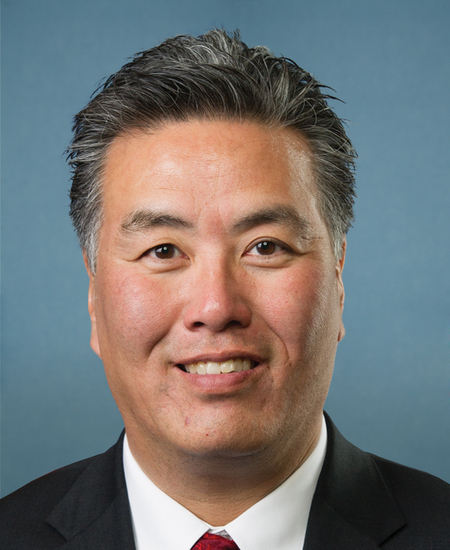
Rep. Mark Takano
Sponsored bills
Maddy summaryThis bill limits how many Medicare Advantage (MA) plans a single organization can offer under Medicare contracts. It prohibits the Medicare program from contracting with an MA organization for more than three plans in a single year, and requires that if an organization offers multiple plans, each must be meaningfully different in premiums, benefits, or out-of-pocket costs. The rule applies to new or renewed contracts starting one year after the bill becomes law. It directly affects MA plan providers and Medicare's contracting process, aiming to reduce plan complexity for beneficiaries.
Maddy summaryThis bill requires Medicare Advantage (MA) plan advertisements to disclose specific data about prior authorization denials. Starting one year after enactment, ads must include the number of denied prior authorization requests, how many were later approved after reconsideration, and the average time between denial and approval. These disclosures must cover the most recent plan year before the ad is published, using both verbal and visual methods where possible. The policy directly affects MA plan marketers and beneficiaries who view these advertisements, aiming to provide clearer information about plan coverage experiences.
Maddy summaryHR 6108 requires the federal government to automatically exclude from all federal health care programs anyone convicted of specific fraud-related crimes after a one-year implementation period. It targets convictions for health care fraud, theft, or financial misconduct in health care delivery or government programs (including non-health care programs funded by government). The bill mandates this exclusion without requiring additional administrative action by the Secretary. This directly affects health care providers and organizations found guilty of such offenses, barring them from participating in programs like Medicare or Medicaid.
Maddy summaryThis bill (HR 6110) requires Medicare Advantage plans to automatically reconsider coverage denials without needing an enrollee to request it. It directly affects Medicare Advantage beneficiaries whose initial coverage requests are denied. The key change amends existing law to eliminate the requirement for patients to submit a separate request for reconsideration, instead mandating that plans proactively review these denials. This streamlines the process for enrollees facing coverage rejections under their Medicare Advantage plan.
Maddy summaryHR 6114 prohibits using federal funds from previous appropriations to the Department of Health and Human Services for any activity that automatically enrolls Medicare beneficiaries in Medicare Advantage (MA) plans without their active choice. Specifically, it blocks the use of these funds to implement a system where individuals who fail to select a plan are deemed enrolled in MA by default. This directly affects Medicare beneficiaries who might otherwise be automatically enrolled in MA plans without actively choosing them. The bill’s key mechanism is a funding restriction that prevents HHS from using appropriated money to operate this default enrollment process under Medicare Part C. The policy change ensures beneficiaries must actively elect an MA plan to enroll, rather than being enrolled automatically.
Maddy summaryThis bill requires Medicare Advantage plans to have average monthly payments from the government that don't exceed the average cost of original Medicare (Parts A and B) for the same year. If a plan's payments exceed this cost, the government cannot allow new enrollments or re-enrollments in that plan for the following year. It directly affects Medicare Advantage plans and their enrollees, creating a financial check on plan pricing. An exception applies to specialized Medicare Advantage plans designed for individuals with specific health needs. The provision takes effect one year after the bill's enactment.
Maddy summaryThis bill (HR 6115) requires the U.S. Department of Health and Human Services to create and maintain a website for Medicare beneficiaries. The website would allow current and prospective Medicare users to search for healthcare providers participating in either Medicare Advantage (MA) plans or traditional Medicare (Parts A and B). Key features include searching for providers by name or location and identifying which providers are in each plan's network. The website must be operational within one year of the bill's enactment. This directly affects millions of Medicare beneficiaries seeking clear information about provider availability.
Maddy summaryHR 6056, the International Human Rights Defense Act of 2025, establishes a permanent Special Envoy at the State Department to lead U.S. foreign policy efforts addressing discrimination and violence against LGBTQI+ people globally. The bill requires the U.S. government to develop and update a biannual global strategy to prevent criminalization and violence against LGBTQI+ individuals, mandate detailed reporting on such abuses in annual country reports, and ensure all U.S. foreign assistance programs include inclusive nondiscrimination policies. This legislation directly affects U.S. foreign policy implementation, federal agencies receiving funding, and LGBTQI+ communities facing persecution worldwide. The bill aims to coordinate U.S. government efforts across departments and with international partners to advance LGBTQI+ rights globally through concrete policy mechanisms.
Maddy summaryHR 6014, the Right to Representation for Department of Veterans Affairs Workers Act of 2025, gives most VA employees the right to have a chosen representative present during examinations that could lead to disciplinary action. This applies to non-exempt VA workers (excluding senior executives, certain appointed staff, and political appointees) and requires the VA to allow representation during work hours if requested. The bill inserts a new section into VA employment law, mandating that employees be informed of this right and permitting representation at any examination where disciplinary action might result. It directly affects VA employees facing potential disciplinary proceedings, ensuring they can have support during these reviews.