

Maddy summaryHR 6597, the LET’S Protect Workers Act, increases civil penalties for employers violating key labor laws to strengthen worker protections. It raises fines for child labor violations to up to $700,000 per incident causing death or serious injury, and doubles penalties for repeated wage/hour violations (up to $50,000 per violation). The bill also significantly boosts OSHA penalties (e.g., up to $800,000 for serious violations), adds new retaliation penalties for mine safety violations (up to $200,000 for repeat offenses), and clarifies that recordkeeping violations continue until corrected. These changes apply to employers across sectors, including manufacturing, agriculture, and mining, under the Fair Labor Standards Act, Occupational Safety and Health Act, and Mine Safety Act.
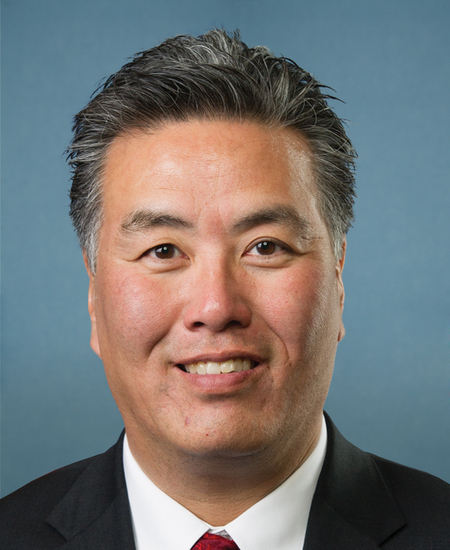
Rep. Mark Takano
Sponsored bills
Maddy summaryThis bill prohibits Department of Homeland Security (DHS) officers from arresting or detaining immigrants at immigration court facilities during hearings or while arriving/departing for hearings, except with a judicial warrant. It applies to all pending immigration cases, appeals, and motions to reopen, covering anyone whose removal order isn't final. Exceptions allow arrests only to prevent imminent threats to life, safety, or national security. The bill also requires DHS to report scheduled check-in arrests to the Inspector General and mandates annual oversight reports to Congress on compliance.
Maddy summaryHR 3309, the Autonomy for All Disabled Veterans Act, increases financial assistance for disabled veterans needing home modifications. It raises the maximum benefit amount for home improvements from $6,800 to $10,000 and for structural alterations from $2,000 to $10,000 under Section 1717(a) of Title 38, U.S. Code. The bill also establishes an automatic annual inflation adjustment based on construction cost index changes, starting each fiscal year. These changes directly affect disabled veterans who qualify for home health services through the VA, applying to those who first apply for benefits after the bill's enactment date.
Maddy summaryThe Dignity for Detained Immigrants Act establishes minimum standards for detention facilities operated by the Department of Homeland Security, requiring them to follow the American Bar Association's Civil Immigration Detention Standards. It mandates annual unannounced inspections by the DHS Inspector General, with penalties including fines for noncompliant private facilities and transfers of detainees from noncompliant facilities. The bill requires DHS to publicly report on facility compliance, phase out private detention facilities over three years, and prohibit solitary confinement. It also ensures detainees have access to legal orientation, counsel, and more frequent custody review hearings. The bill directly affects all individuals detained in DHS custody, including immigrants, asylum seekers, and refugees held in facilities operated by or contracted to DHS.
Maddy summaryHRES 922 is a symbolic resolution designating December 3, 2025, as "National Day of 3D Printing" to recognize the technology's benefits. It highlights 3D printing's role in reducing manufacturing waste, supporting industries like healthcare and aerospace, and boosting small business innovation. The resolution expresses congressional support for this designation and encourages public promotion of the technology. It does not create new laws, funding, or obligations - only a non-binding expression of support. This resolution directly affects the broader public by raising awareness of 3D printing's economic and industrial significance.
Maddy summaryThis bill requires Medicare Advantage and prescription drug plans to reimburse the Department of Veterans Affairs (VA) for health care services provided to veterans enrolled in those plans, including outpatient care, prescription drugs, and inpatient services. It establishes a new process for the VA to recover costs from Medicare plans, requiring these plans to respond to reimbursement claims within 45 days and face penalties for non-compliance, including triple damages for willful violations. The law modifies existing VA authority to recover costs for non-service-connected disabilities by clarifying recovery procedures and requiring Medicare plans to coordinate benefits with VA care. The provisions apply to Medicare plan years beginning January 1, 2026, and directly affect Medicare Advantage organizations and prescription drug plan sponsors that serve veterans. This policy change ensures veterans receive full benefits without double payments by requiring Medicare plans to reimburse the VA for services they cover.
Give Kids a Chance Act of 2025 This bill expands the Food and Drug Administration’s (FDA’s) authority with respect to research on rare pediatric diseases, including by permitting the FDA to take enforcement action against drug sponsors that fail to satisfy pediatric study requirements and by reauthorizing programs that support pediatric research. Specifically, the bill modifies requirements relating to molecularly targeted pediatric cancer investigations to permit research on new drugs in combination with active ingredients that have already been approved, provided certain conditions are met; permits the FDA to take enforcement action against drug sponsors that fail to comply with pediatric study requirements, if such sponsors demonstrated a lack of due diligence in satisfying the requirement; renews the FDA’s authority to award priority review vouchers to sponsors of new products intended to treat rare pediatric diseases through September 30, 2029; and reauthorizes through FY2027 certain funding for the National Institutes of Health to support priority pediatric research. The bill also provides statutory authority for the FDA’s interpretation of the orphan drug exclusivity period. The bill specifies, consistent with FDA regulations, that the seven-year market exclusivity period for drugs for rare diseases or conditions (i.e., orphan drugs) prohibits the approval of the same drug for the same approved use or indication with respect to the disease or condition. (In Catalyst Pharmaceuticals, Inc. v. Becerra , a court rejected the FDA’s interpretation and held that orphan drug exclusivity extends to all uses or indications for the disease or condition.)
Maddy summaryThis bill prohibits federal funding for White House construction or renovations during any government shutdown (funding gap), except for projects directly related to health or safety. It directly affects White House maintenance and development projects by blocking non-essential work when Congress fails to pass a budget. The key provision bans all non-essential spending on White House grounds during budget lapses, with explicit health/safety exceptions. The bill aims to prevent new projects from starting during shutdowns without altering existing contracts or ongoing work.
Maddy summaryHRES 899 is a symbolic House resolution recognizing the Transgender Day of Remembrance and memorializing transgender people killed by violence in 2024-2025. It directly affects transgender individuals, particularly transgender women of color, by acknowledging the epidemic of violence against them - citing 27 U.S. victims (including names like Rick Alastor Newman and Kyla Jane Walker) and 241 global cases in 2025. The resolution’s key provisions include formally recognizing the violence epidemic, memorializing specific lives lost, and affirming the need for solutions to protect transgender people. It does not create new laws but expresses congressional support for addressing systemic violence and discrimination faced by transgender communities.
Maddy summaryThe HEAR Act of 2025 adds Medicare coverage for hearing rehabilitation services and hearing aids. It directly affects Medicare beneficiaries with hearing loss who need new devices or services, requiring a comprehensive assessment and meeting specific criteria (like not having received hearing aids in the past three years). Key provisions include defining "hearing rehabilitation" to cover audiologist assessments, counseling, and device fitting, and specifying that covered hearing aids must meet FDA standards (excluding over-the-counter models). The bill also removes previous exclusions that blocked this coverage. These changes apply to services provided after a date set by the Health and Human Services Secretary, starting no earlier than January 1, 2026.